- Note BGG
- 7,1
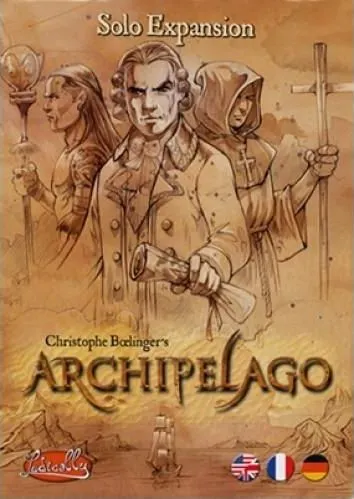
Archipelago: Solo Expansion
- 1 joueur
- 60 min
- Complexité 3,5/5
- 2012

2012
Aide aux règles de Archipelago
Des explications claires des tours, effets de cartes et situations litigieuses, avec des références aux sources officielles et un historique des questions sauvegardé.
Pour 2 joueurs
Que voulez-vous savoir ?
Les réponses viennent du livret officiel, avec la page à vérifier.
Archipelago est un jeu de société sorti en 2012 pour 2 à 5 joueurs, avec des parties de 30 à 240 minutes et à partir de 14 ans. Il a été conçu par Christophe Boelinger et ses principales mécaniques sont Take That, Trading et Auction / Bidding.





En anglais
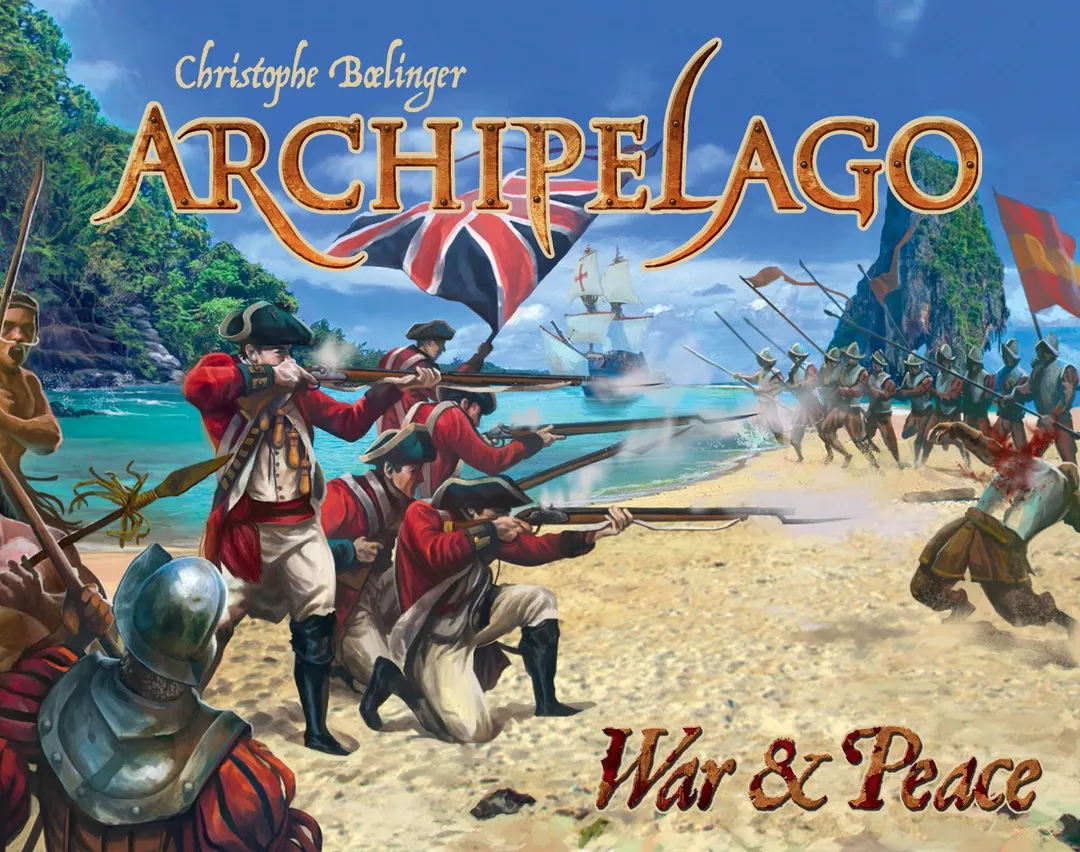
In Archipelago, players are Renaissance European powers competing in the exploration of a Pacific or Caribbean archipelago. They will explore territories, harvest resources, use those resources in markets both internal (for their use and that of the natives) and foreign (to sell it in Europe), build markets, harbors, cities and temples, and negotiate among themselves (and maybe betray each other) – all this to complete their secret objectives. They will also need to guess the secret objective of the other players to be able to benefit from them. But players also need to be careful of the natives; if they make them too unhappy or if too many of them are unoccupied, they could revolt and declare independence. Then everyone will lose! According to the author, what he's tried to create is a "German" economic worker-placement game, but without the two things he dislikes in them: the superficial theme and the lack of interaction. Indeed this game includes a very present theme and a lot of negotiation and potential backstabbing. The game includes three sets of objectives, enabling players to choose between a short, medium and a long game. Solo play is also possible with an expansion.
Selon le catalogue, Archipelago se joue de 2 à 5 personnes. Cette fourchette correspond au nombre de joueurs indiqué par l’éditeur : le jeu s’installe donc pour toute taille de groupe dans cette limite. La mise en place, certaines règles et le décompte peuvent varier selon l’effectif ; vérifiez la configuration exacte dans la règle de votre édition.
La durée indiquée pour Archipelago est de 30 à 240 minutes, selon l’estimation de l’éditeur pour une partie complète. La durée réelle dépend du groupe, de l’effectif et de la connaissance des règles : les premières parties sont plus longues, les groupes expérimentés terminent plus vite. Mise en place et explication des règles ne sont pas comprises.
Le catalogue indique Archipelago à partir de 14 ans. C’est la recommandation de l’éditeur ; elle tient compte de la lecture nécessaire, de la complexité des règles et des petits composants, pas seulement du thème. Les plus jeunes peuvent souvent participer avec l’aide d’un adulte : vérifiez l’âge indiqué sur votre édition et tenez compte de l’expérience de votre groupe.
Archipelago obtient une note de complexité de 3,7 sur 5 auprès des joueurs de BoardGameGeek, ce qui en fait un jeu de complexité moyenne. Cette note reflète la quantité de règles, de planification et de décisions qu’exige une partie typique. Prévoyez une explication plus longue pour les jeux exigeants et utilisez un guide de préparation avant la soirée.
Archipelago appartient à ces catégories : Economic, Exploration et Nautical. Ses principales mécaniques sont Take That, Trading et Auction / Bidding. Les catégories décrivent le thème et l’univers d’un jeu, tandis que les mécaniques décrivent ce que les joueurs font réellement pendant leur tour. Chaque mécanique mène à une page du catalogue avec des jeux similaires.
Les auteurs crédités pour Archipelago sont : Christophe Boelinger. Ces crédits proviennent des données publiées du jeu et désignent les personnes responsables de sa conception, et non les illustrateurs ou les éditeurs. Les pages d’auteurs sur MeepleRules regroupent les autres titres des mêmes auteurs, ce qui est utile lorsqu’un jeu vous plaît et que vous en cherchez de similaires.
Le catalogue présente Archipelago comme un jeu de base. Il se joue seul avec le matériel contenu dans la boîte et ne nécessite aucun autre titre. Les extensions, s’il en existe, y ajoutent du contenu ou des règles et sont répertoriées séparément dans le catalogue, avec un lien vers ce jeu de base.