
- Rang BGG
- BGG #3 932
- Note BGG
- 6,8
Billabong
- 2–4 joueurs
- 30 min
- Complexité 1,9/5
- 1992
1955
Aide aux règles de Bantu
Des explications claires des tours, effets de cartes et situations litigieuses, avec des références aux sources officielles et un historique des questions sauvegardé.
Que voulez-vous savoir ?
Les réponses viennent du livret officiel, avec la page à vérifier.
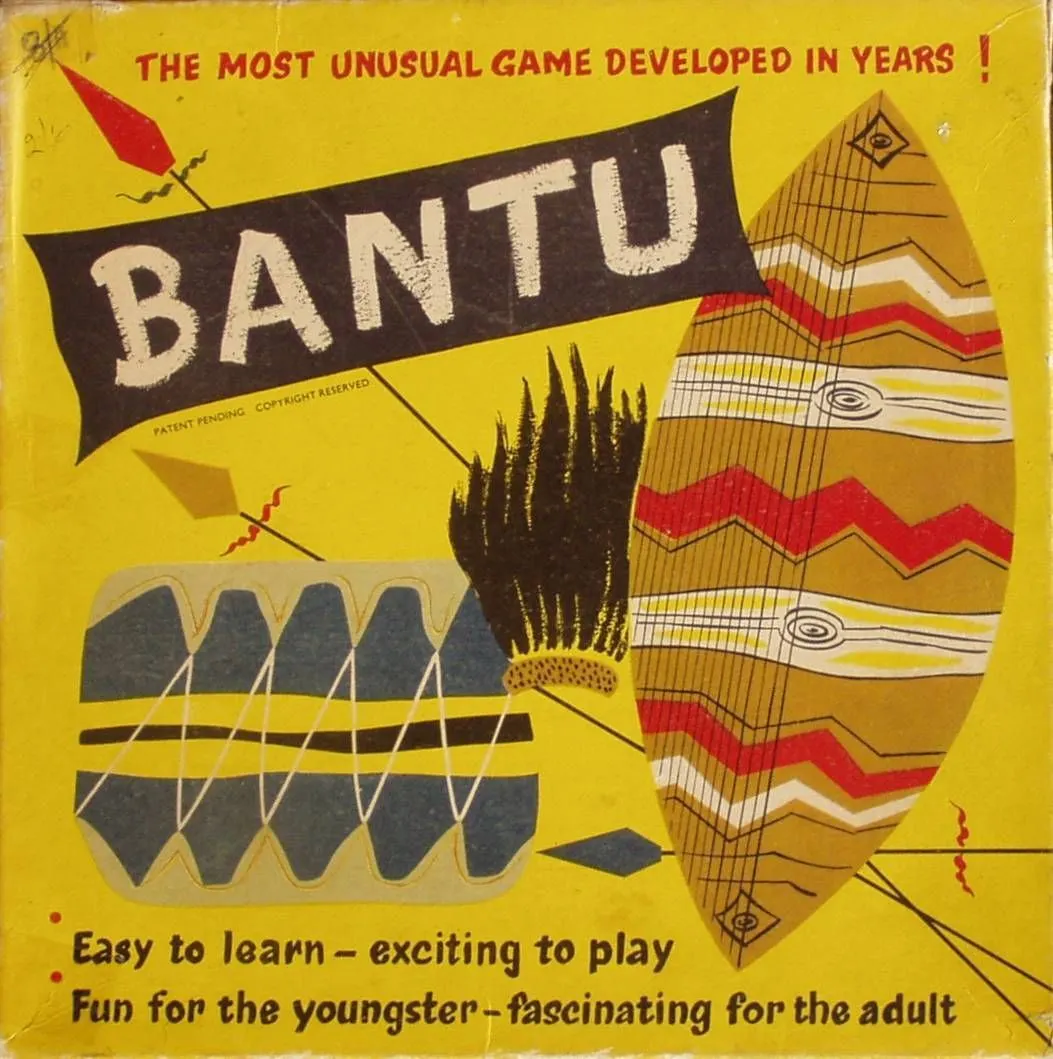
Bantu est un jeu de société sorti en 1955 pour 2 à 4 joueurs, avec des parties de 30 minutes et à partir de 8 ans.






En anglais
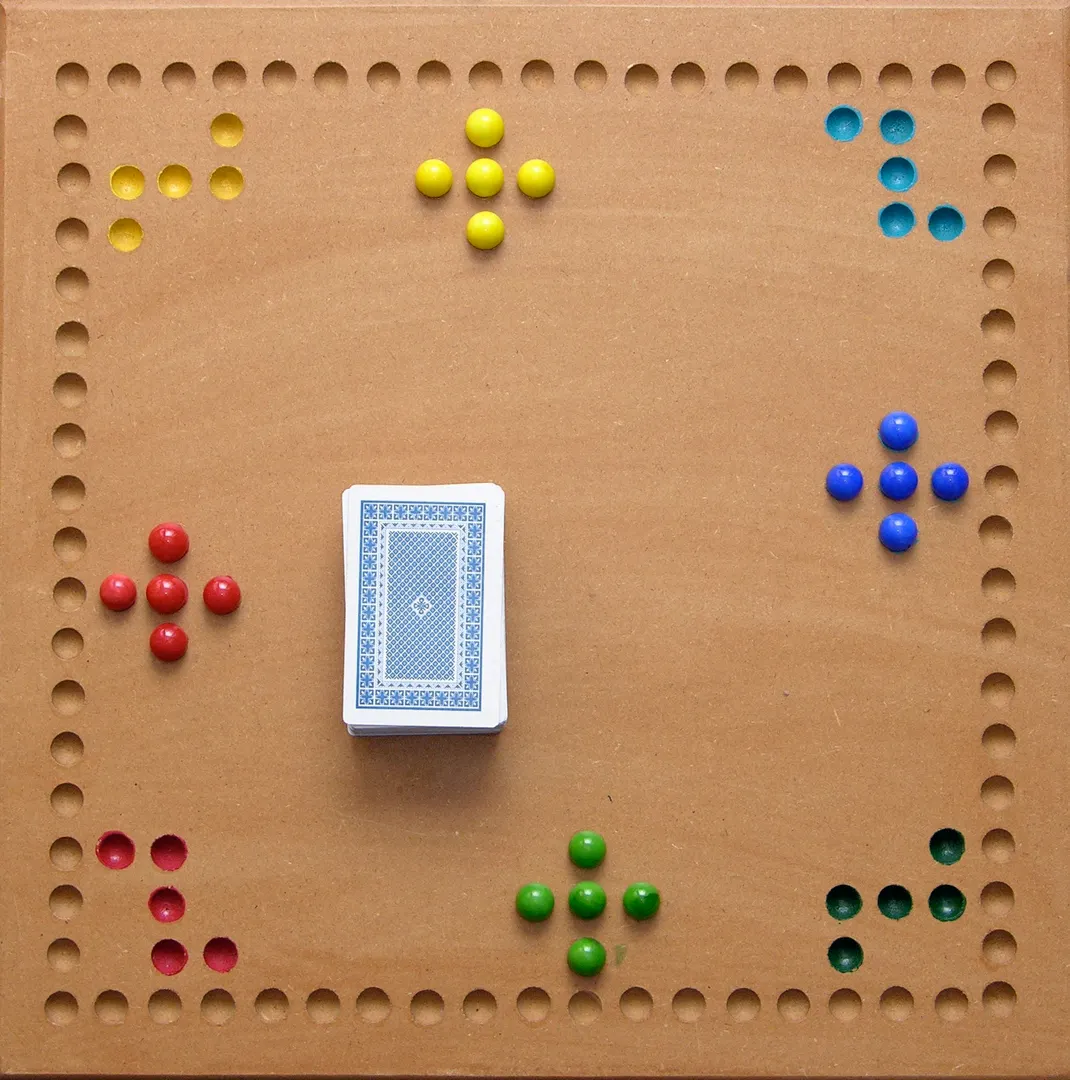
This is the earliest known racing game that does not use dice for the engine, or even contain any elements of luck (according to Parlett and others). A 2nd edition was never published. It was reviewed by Phil Orbanes in Games and Puzzles Magazine #68 under the heading of "Great Games that Never Made It." It has been modified slightly and released as a kit by Paul Jefferies, who renamed it Sack to fit his newly applied theme. In addition to Games and Puzzles #68 (reprinted in Games International (Issue 4 – April 1989)) and Parlett's The Oxford History of Board Games, Bantu has recently been discussed in Abstract Games Magazine. This is a racing game. The track is circular, with four lanes, with some interaction and crossing over between lanes. Each player (2-4) has four pawns numbered 1-4. This number indicates the distance the pawn may move per turn, and where it may be entered onto the board (the fastest pawn (4) must travel the full distance, but each successively slower pawn travels one fourth less distance than its predecessor, so that the (1) pawn travels only one quarter of the board). Pawns may not jump others nor may two pawns occupy the same space. Ending a turn on a space occupied by an opponent's pawn causes the opponent's pawn to be returned to its starting position. Pawns of any ownership that lie on spaces connected by a shaded background add their values together for determining movement. So a (red 1), (blue 4), (green 3) that all lie within the same shaded area would give the first pawn to move, 8 spaces. A player must use all movement without retracing his path on that turn. If the player can not use the entire movement then the pawn can not be moved. If none of his pawns may be moved the entire amount then the player forfeits that turn. First to bear all pawns off wins.
Selon le catalogue, Bantu se joue de 2 à 4 personnes. Cette fourchette correspond au nombre de joueurs indiqué par l’éditeur : le jeu s’installe donc pour toute taille de groupe dans cette limite. La mise en place, certaines règles et le décompte peuvent varier selon l’effectif ; vérifiez la configuration exacte dans la règle de votre édition.
La durée indiquée pour Bantu est de 30 minutes, selon l’estimation de l’éditeur pour une partie complète. La durée réelle dépend du groupe, de l’effectif et de la connaissance des règles : les premières parties sont plus longues, les groupes expérimentés terminent plus vite. Mise en place et explication des règles ne sont pas comprises.
Le catalogue indique Bantu à partir de 8 ans. C’est la recommandation de l’éditeur ; elle tient compte de la lecture nécessaire, de la complexité des règles et des petits composants, pas seulement du thème. Les plus jeunes peuvent souvent participer avec l’aide d’un adulte : vérifiez l’âge indiqué sur votre édition et tenez compte de l’expérience de votre groupe.
Bantu obtient une note de complexité de 2,0 sur 5 auprès des joueurs de BoardGameGeek, ce qui en fait un jeu plutôt léger. Cette note reflète la quantité de règles, de planification et de décisions qu’exige une partie typique. Prévoyez une explication plus longue pour les jeux exigeants et utilisez un guide de préparation avant la soirée.
Bantu appartient à ces catégories : Abstract Strategy et Racing. Les catégories décrivent le thème, l’univers et le style d’un jeu plutôt que ses règles. Filtrez le catalogue par la même catégorie pour trouver des jeux similaires si vous avez aimé Bantu et cherchez quelque chose de comparable pour votre prochaine soirée.
Le catalogue présente Bantu comme un jeu de base. Il se joue seul avec le matériel contenu dans la boîte et ne nécessite aucun autre titre. Les extensions, s’il en existe, y ajoutent du contenu ou des règles et sont répertoriées séparément dans le catalogue, avec un lien vers ce jeu de base.