- Note BGG
- 6,5
Aide aux règles de Between Light & Shadow: Magistra Artium
Des explications claires des tours, effets de cartes et situations litigieuses, avec des références aux sources officielles et un historique des questions sauvegardé.
- 1 joueur
- 60–120 min
- 14+

Assistant de règles pour Between Light & Shadow: Magistra Artium
Que voulez-vous savoir ?
Les réponses viennent du livret officiel, avec la page à vérifier.
Between Light & Shadow: Magistra Artium est une extension de Between Light & Shadow: Chapter I – Dawn sortie en 2024 pour 1 joueur, avec des parties de 60 à 120 minutes et à partir de 14 ans. Il a été conçu par Benjamin Schultz et Horst Bauer et ses principales mécaniques sont Dice Rolling, Grid Movement et Paper-and-Pencil.
À propos du jeu
En anglais
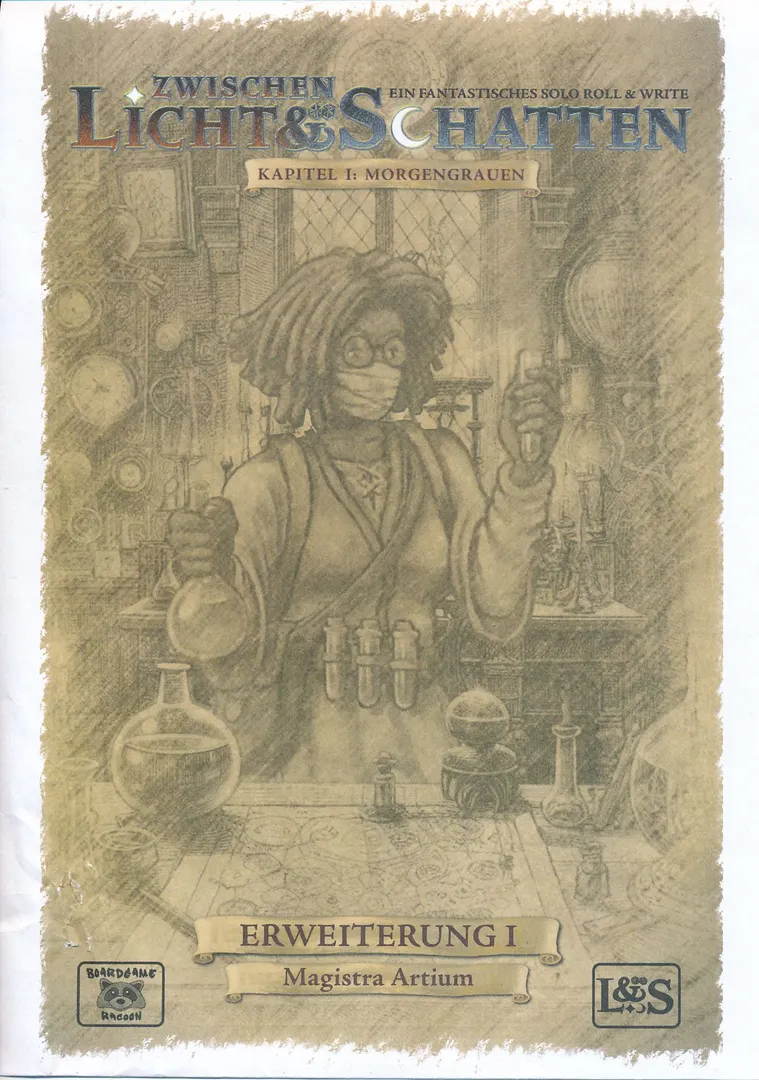
You step into the shoes of a daring alchemist apprentice, standing on the brink of her ultimate trial. The fate of her future rests on crafting a legendary elixir, forged from five distinct potions. To succeed, you must venture into mysterious realms, uncover ancient brewing techniques, and face formidable creatures lurking in the shadows. Set in the time before Scenario 1, this expansion weaves your choices into the fabric of the world itself, shaping the course of the campaign. This expansion brings a completely new scenario to the base game, consisting of 1 city card with tasks, 1 event card and another card that allows for the brewing of potions. This brewing card brings a new mechanic for using potions into the game. This scenario can be played either as a standalone scenario or as the new first part of the campaign. -description from designer
Mécanismes
Auteurs
Éditeurs
- Boardgame Racoon
Questions et réponses
Selon le catalogue, Between Light & Shadow: Magistra Artium se joue à 1 personne. C’est le nombre de joueurs indiqué par l’éditeur : le jeu est donc conçu pour exactement ce nombre de participants. Les variantes pour d’autres tailles de groupe, s’il en existe, sont décrites dans la règle de votre édition ; consultez-la avant d’installer une autre configuration.
La durée indiquée pour Between Light & Shadow: Magistra Artium est de 60 à 120 minutes, selon l’estimation de l’éditeur pour une partie complète. La durée réelle dépend du groupe, de l’effectif et de la connaissance des règles : les premières parties sont plus longues, les groupes expérimentés terminent plus vite. Mise en place et explication des règles ne sont pas comprises.
Le catalogue indique Between Light & Shadow: Magistra Artium à partir de 14 ans. C’est la recommandation de l’éditeur ; elle tient compte de la lecture nécessaire, de la complexité des règles et des petits composants, pas seulement du thème. Les plus jeunes peuvent souvent participer avec l’aide d’un adulte : vérifiez l’âge indiqué sur votre édition et tenez compte de l’expérience de votre groupe.
Between Light & Shadow: Magistra Artium appartient à ces catégories : Fantasy, Dice et Exploration. Ses principales mécaniques sont Dice Rolling, Grid Movement et Paper-and-Pencil. Les catégories décrivent le thème et l’univers d’un jeu, tandis que les mécaniques décrivent ce que les joueurs font réellement pendant leur tour. Chaque mécanique mène à une page du catalogue avec des jeux similaires.
Les auteurs crédités pour Between Light & Shadow: Magistra Artium sont : Benjamin Schultz et Horst Bauer. Ces crédits proviennent des données publiées du jeu et désignent les personnes responsables de sa conception, et non les illustrateurs ou les éditeurs. Les pages d’auteurs sur MeepleRules regroupent les autres titres des mêmes auteurs, ce qui est utile lorsqu’un jeu vous plaît et que vous en cherchez de similaires.
Le catalogue présente Between Light & Shadow: Magistra Artium comme une extension de Between Light & Shadow: Chapter I – Dawn. Les extensions ajoutent du contenu, des règles ou des scénarios au jeu de base et ne se jouent généralement pas seules : il vous faut donc Between Light & Shadow: Chapter I – Dawn pour l’utiliser. Vérifiez que votre édition de Between Light & Shadow: Chapter I – Dawn est compatible, car certaines extensions ont été révisées d’une édition à l’autre.