
- Rang BGG
- BGG #286
- Note BGG
- 7,5
Samurai
- 2–4 joueurs
- 30–60 min
- Complexité 2,4/5
- 1998
2021
Aide aux règles de Daimyo Senso
Des explications claires des tours, effets de cartes et situations litigieuses, avec des références aux sources officielles et un historique des questions sauvegardé.
Pour 1 joueur
Que voulez-vous savoir ?
Les réponses viennent du livret officiel, avec la page à vérifier.
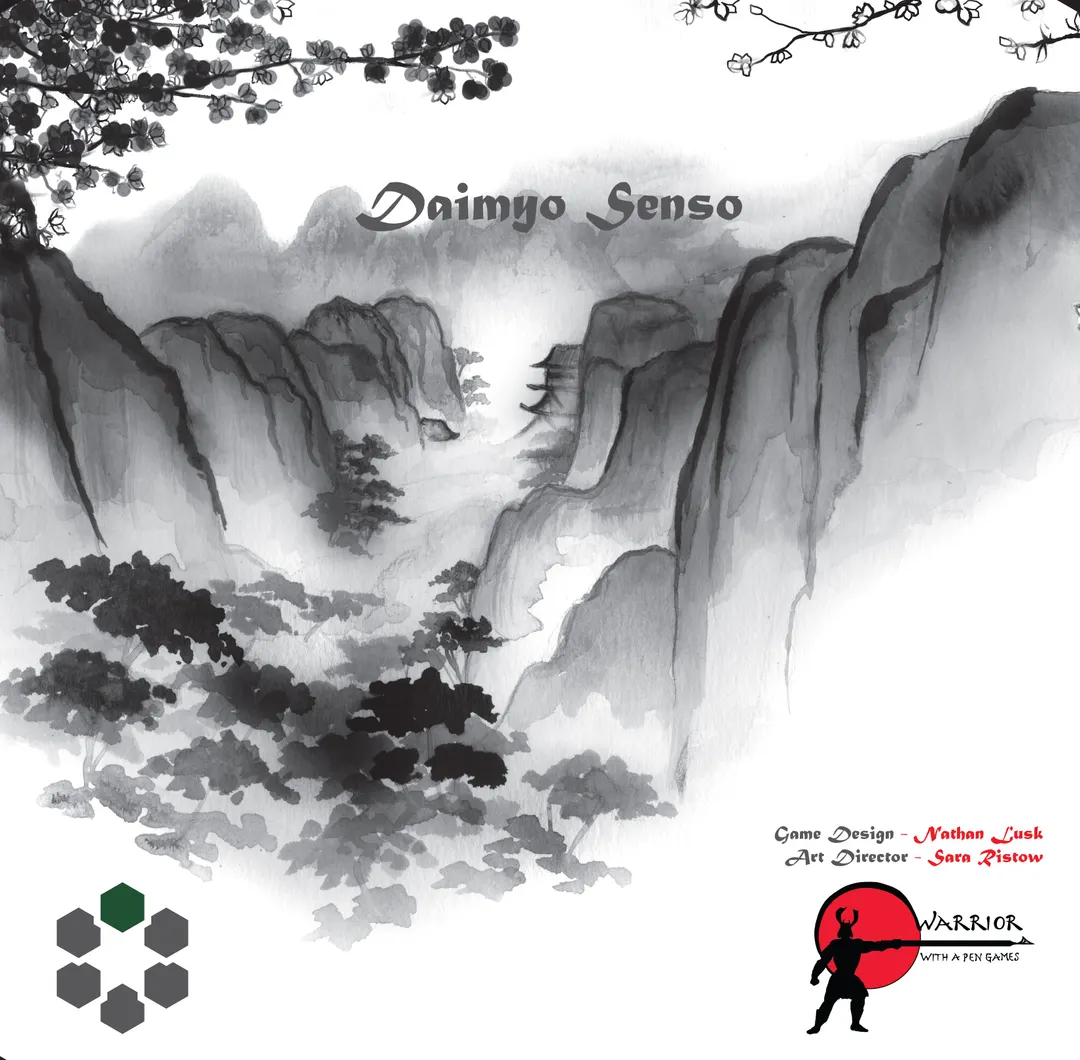
Daimyo Senso est un jeu de société sorti en 2021 pour 1 à 8 joueurs, avec des parties de 40 à 120 minutes et à partir de 12 ans. Il a été conçu par Nathan Lusk et ses principales mécaniques sont Once-Per-Game Abilities.





En anglais
Manufactured in the USA! Daimyo Senso is a 1-8 player game where each player takes the role of a 16th century Japanese daimyo in conquest to become the next Shogun. Players take turns during 4 seasons per year for 4 years, using predetermined commands during each season. Those commands are Move, Deploy, or Attack. Once per year, each daimyo may use one special skill, which amplifies the power of one of their commands. At the end of each year, players tally up their total Castles, Cities, and Fortresses and are awarded Honor based on that total. The game is over after 4 years, and the player with the most Honor wins. In single player, the board is set up with significantly more troops, and the player must battle through all of them to completely conquer 5 Regions within 4 years. This race against the clock also acts to help players understand the Actions and General Cards. Edit: There are now additional multiplayer rules for playing the game out until only one player is left. This is an optional way to play, and makes the game much longer, but is still as strategic and even more desperately gratifying when a long-term plan comes together through alliance, deceit, and careful planning. Another optional rule sets the board up with all daimyo present even in a less-than-8 player game. Each faction in the game is asymmetrical, and each has its own 4 special skills, called General Cards. The factions include: Oda - Beginning in south central Honshu, the Oda clan has powerful General Cards that allow him to wage war heavily and assign his armies to the most crucial battlefronts. Uesugi - The Uesugi clan's attacks are bolstered by powerful generals, and his tactical movements and deployments insure that his armies are where they need to be. Takeda - While the mighty Takeda war machine has deceptively light attack powers, their troop movements and deployments make them extremely able to defend their hard-won gains. Hojo - The Hojo employ shinobi, which allows them to completely fool their enemies. While an enemy may think the Hojo are weak on one front, their armies can immediately arrive on the opposite end of their kingdom, shocking enemies into submission. Miyoshi - The Miyoshi use deception and surprise tactics to hit their enemies where they're weakest. Their powerful navy insures their ability to suddenly appear on any coast at any time. Mori - The Mori clan uses cunning to thwart their opponents. Their swift advance through unoccupied territories and their ability to fight on multiple fronts at once make them a headache for any enemy to stop. Date - The Date clan can assault enemy castles with heroic actions, and their ferocity makes neighboring armies wither. Beware the city of Sendai, as the Date will fiercely defend it. Shimazu - From the southern tip of Kyushu, the Shimazu wage war with their enemies to the North and East. The Shimazu are supported by the people, who rush to join their cause. -description from designer
Selon le catalogue, Daimyo Senso se joue de 1 à 8 personnes. Cette fourchette correspond au nombre de joueurs indiqué par l’éditeur : le jeu s’installe donc pour toute taille de groupe dans cette limite. La mise en place, certaines règles et le décompte peuvent varier selon l’effectif ; vérifiez la configuration exacte dans la règle de votre édition.
La durée indiquée pour Daimyo Senso est de 40 à 120 minutes, selon l’estimation de l’éditeur pour une partie complète. La durée réelle dépend du groupe, de l’effectif et de la connaissance des règles : les premières parties sont plus longues, les groupes expérimentés terminent plus vite. Mise en place et explication des règles ne sont pas comprises.
Le catalogue indique Daimyo Senso à partir de 12 ans. C’est la recommandation de l’éditeur ; elle tient compte de la lecture nécessaire, de la complexité des règles et des petits composants, pas seulement du thème. Les plus jeunes peuvent souvent participer avec l’aide d’un adulte : vérifiez l’âge indiqué sur votre édition et tenez compte de l’expérience de votre groupe.
Daimyo Senso obtient une note de complexité de 3,0 sur 5 auprès des joueurs de BoardGameGeek, ce qui en fait un jeu de complexité moyenne. Cette note reflète la quantité de règles, de planification et de décisions qu’exige une partie typique. Prévoyez une explication plus longue pour les jeux exigeants et utilisez un guide de préparation avant la soirée.
Daimyo Senso appartient à ces catégories : Wargame et Abstract Strategy. Ses principales mécaniques sont Once-Per-Game Abilities. Les catégories décrivent le thème et l’univers d’un jeu, tandis que les mécaniques décrivent ce que les joueurs font réellement pendant leur tour. Chaque mécanique mène à une page du catalogue avec des jeux similaires.
Les auteurs crédités pour Daimyo Senso sont : Nathan Lusk. Ces crédits proviennent des données publiées du jeu et désignent les personnes responsables de sa conception, et non les illustrateurs ou les éditeurs. Les pages d’auteurs sur MeepleRules regroupent les autres titres des mêmes auteurs, ce qui est utile lorsqu’un jeu vous plaît et que vous en cherchez de similaires.
Le catalogue présente Daimyo Senso comme un jeu de base. Il se joue seul avec le matériel contenu dans la boîte et ne nécessite aucun autre titre. Les extensions, s’il en existe, y ajoutent du contenu ou des règles et sont répertoriées séparément dans le catalogue, avec un lien vers ce jeu de base.