
- Note BGG
- 7,9
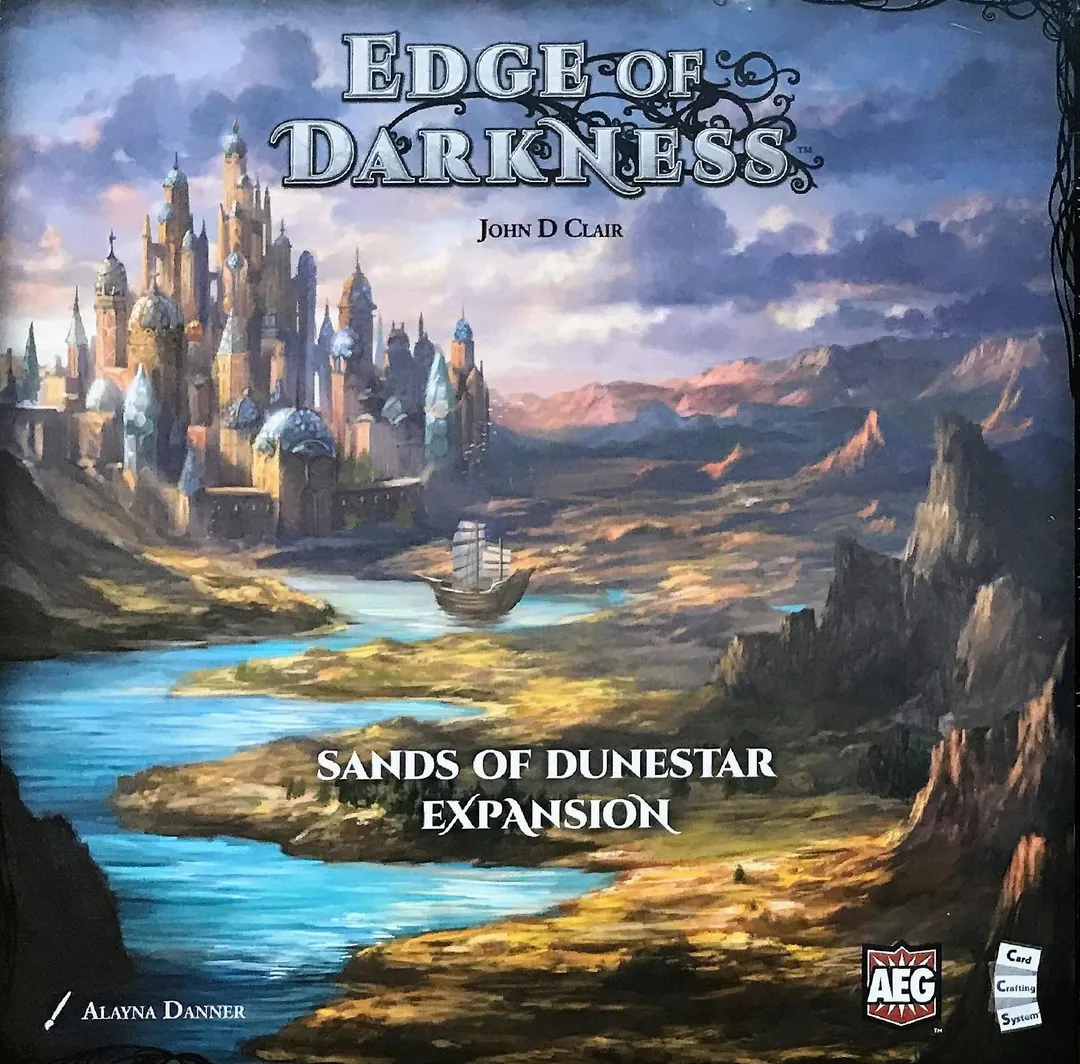
Edge of Darkness: Sands of Dunestar
- 1–4 joueurs
- 120 min
- Complexité 3,0/5
- 2019
2019
Aide aux règles de Edge of Darkness
Des explications claires des tours, effets de cartes et situations litigieuses, avec des références aux sources officielles et un historique des questions sauvegardé.
Pour 1 joueur
Que voulez-vous savoir ?
Les réponses viennent du livret officiel, avec la page à vérifier.
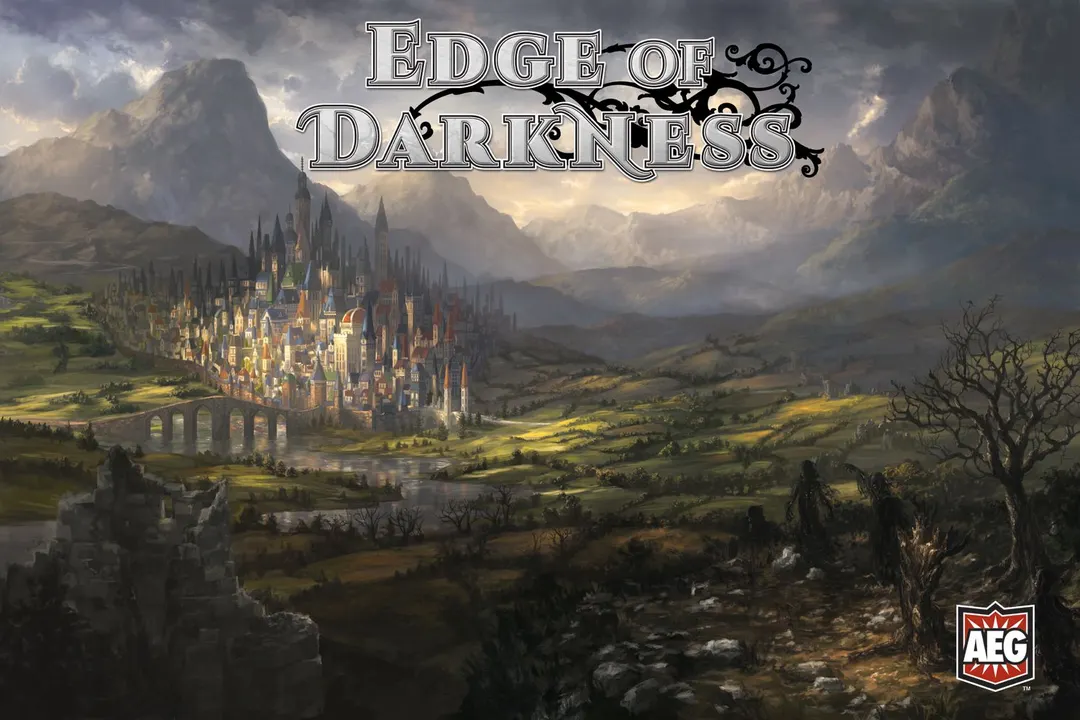
Edge of Darkness est un jeu de société sorti en 2019 pour 1 à 4 joueurs, avec des parties de 120 minutes et à partir de 14 ans. Il a été conçu par John D. Clair et ses principales mécaniques sont Variable Set-up, Layering et Solo / Solitaire Game.

En anglais
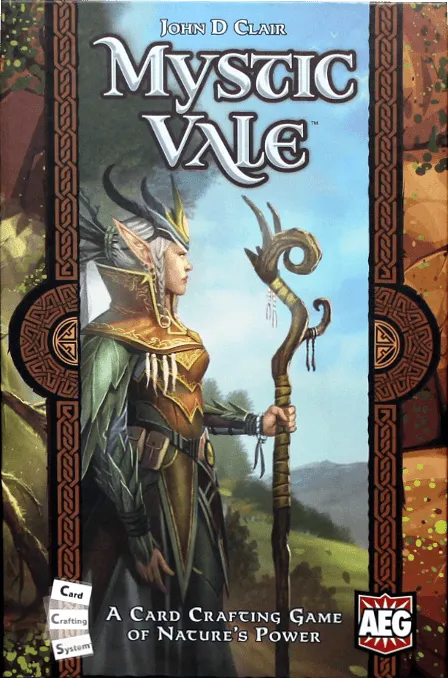
Edge of Darkness is the third Card Crafting Game from Alderac Entertainment Group designed by John D. Clair. Edge of Darkness combines Card Crafting, Worker Placement, shared deck-building, and a whole new Threat Challenge system in a medium-weight euro-style board game of 60 to 120 minutes for 1 to 4 players. Players are the heads of powerful guilds in the City. Each Guild vies with the others to become the leaders of the City in a desperate struggle against great evil. But the Guilds must also work together because the dangers facing the city can harm them all. The Guilds exert their control in the city by sending agents to various locations where they can generate resources or abilities and enable the Guild to take actions. Guilds grow in power as they maneuver their agents and loyalists into positions of importance in the districts and organizations of the City. Over time the Guilds can seek to create synergies between the places their agents have been assigned and the tendrils of influence the Guilds have connected to the City's infrastructure. To win a Guild must have the most power in the city when the game ends. Power is gained having the allegiance of important citizens and nobles, by accumulating wealth, and by undertaking actions beneficial to the City such as defending it from external and internal threats. Here are some highlights of the mechanics in the game: Card Crafting: Similar to the original card-crafting game, Mystic Vale, all cards are constructed of crafting slips which have game content on one third (1/3) of the slip and are transparent on the other two thirds (2/3). During the game players will construct cards, combining (sleeving) different effects onto one card (ideally in ways that make strategic sense). However, unlike Mystic Vale, the transparent cards are double-sided, and when you upgrade the "good" side of the cards (front), you also add strength to the "bad" side of the cards (back). Group deckbuilding using one shared deck: Rather than having your own deck, there is a central deck that all players draw from and discard to. Different players will have the allegiance of different cards in that deck. Using other players' cards means you have to pay them. During the game you can claim allegiance of more cards in the deck by sleeving a slip into the card with your color and seal. Card-driven worker placement: While your actions are card-driven, most costs in the game are in the form of opportunity cost. Advancements don't have a cost, instead they require the use of workers to a greater or lesser degree depending on the power of the card. e.g. many effects require placing or pulling workers from different city locations as dictated by the card effects. Since you have a limited number of workers to use, you will constantly be choosing to forgo one useful thing in order to do another. Threat Tower: There is a Threat Tower which dictates when and whom Threats will attack. Cards leave the shared deck and enter the Threat Board, where they accumulate Threat Cubes on each player's turn. These cubes are color-coded, and when a threshold number of cubes of a given color accumulate on a card, it attacks the City. If the color matches one of the players, it attacks that player. If the color is black, it attacks all players! Modular set up: Edge of Darkness will come with 12 Locations. Each game you use only 10 of these Locations, which can be specifically selected or chosen randomly, making for a lot of variety from game-to-game in the types of challenges you will face and the strategies you will need to employ. These Locations are comprised of a Location Board and Crafting Slips. Location Boards may specify special rules for worker placement, or extend the basic rules with all new systems. For example, a combination of Location Boards can be used to assemble a party of heroes to take the fight to the Threat Tower and engage in a Monster Hunt!
Selon le catalogue, Edge of Darkness se joue de 1 à 4 personnes. Cette fourchette correspond au nombre de joueurs indiqué par l’éditeur : le jeu s’installe donc pour toute taille de groupe dans cette limite. La mise en place, certaines règles et le décompte peuvent varier selon l’effectif ; vérifiez la configuration exacte dans la règle de votre édition.
La durée indiquée pour Edge of Darkness est de 120 minutes, selon l’estimation de l’éditeur pour une partie complète. La durée réelle dépend du groupe, de l’effectif et de la connaissance des règles : les premières parties sont plus longues, les groupes expérimentés terminent plus vite. Mise en place et explication des règles ne sont pas comprises.
Le catalogue indique Edge of Darkness à partir de 14 ans. C’est la recommandation de l’éditeur ; elle tient compte de la lecture nécessaire, de la complexité des règles et des petits composants, pas seulement du thème. Les plus jeunes peuvent souvent participer avec l’aide d’un adulte : vérifiez l’âge indiqué sur votre édition et tenez compte de l’expérience de votre groupe.
Edge of Darkness obtient une note de complexité de 3,5 sur 5 auprès des joueurs de BoardGameGeek, ce qui en fait un jeu de complexité moyenne. Cette note reflète la quantité de règles, de planification et de décisions qu’exige une partie typique. Prévoyez une explication plus longue pour les jeux exigeants et utilisez un guide de préparation avant la soirée.
Edge of Darkness appartient à ces catégories : Fantasy. Ses principales mécaniques sont Variable Set-up, Layering et Solo / Solitaire Game. Les catégories décrivent le thème et l’univers d’un jeu, tandis que les mécaniques décrivent ce que les joueurs font réellement pendant leur tour. Chaque mécanique mène à une page du catalogue avec des jeux similaires.
Les auteurs crédités pour Edge of Darkness sont : John D. Clair. Ces crédits proviennent des données publiées du jeu et désignent les personnes responsables de sa conception, et non les illustrateurs ou les éditeurs. Les pages d’auteurs sur MeepleRules regroupent les autres titres des mêmes auteurs, ce qui est utile lorsqu’un jeu vous plaît et que vous en cherchez de similaires.
Le catalogue présente Edge of Darkness comme un jeu de base. Il se joue seul avec le matériel contenu dans la boîte et ne nécessite aucun autre titre. Les extensions, s’il en existe, y ajoutent du contenu ou des règles et sont répertoriées séparément dans le catalogue, avec un lien vers ce jeu de base.