
- Rang BGG
- BGG #4 571
- Note BGG
- 6,7
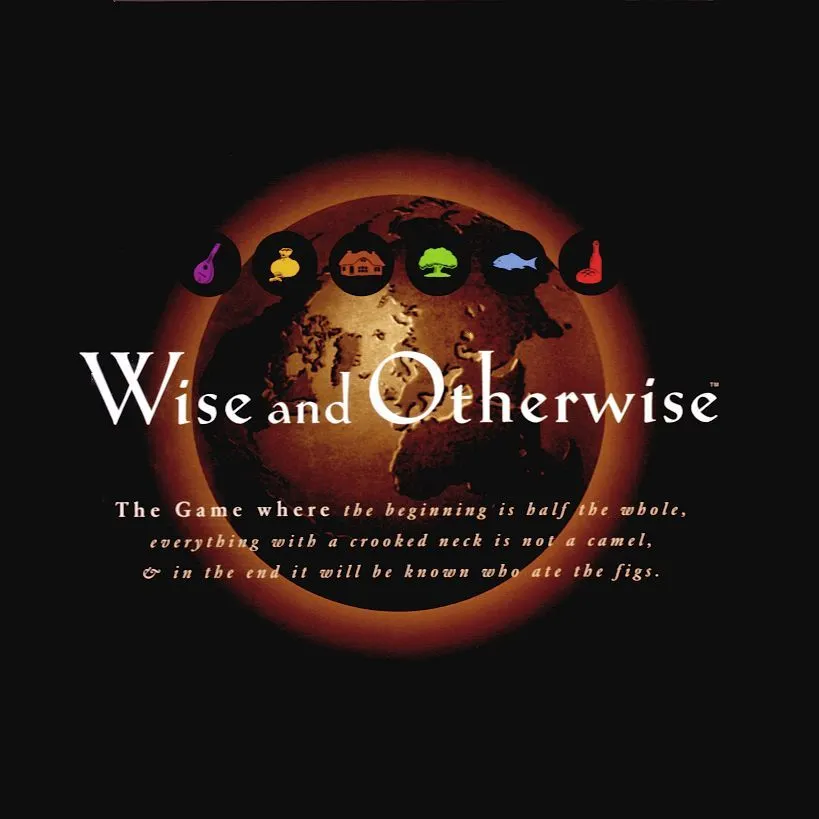
Wise and Otherwise
- 2–6 joueurs
- 45 min
- Complexité 1,5/5
- 1997
1992
Aide aux règles de Nobody Is Perfect
Des explications claires des tours, effets de cartes et situations litigieuses, avec des références aux sources officielles et un historique des questions sauvegardé.
Pour 3 joueurs
Que voulez-vous savoir ?
Les réponses viennent du livret officiel, avec la page à vérifier.
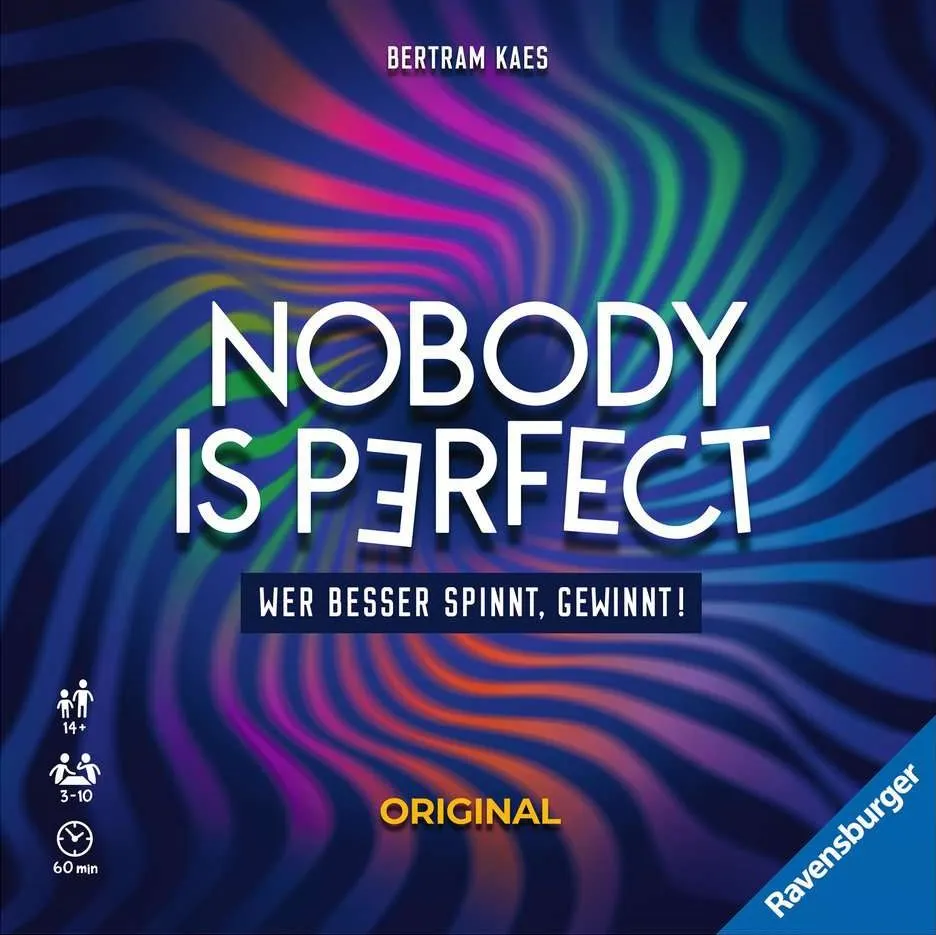
Nobody Is Perfect est un jeu de société sorti en 1992 pour 3 à 10 joueurs, avec des parties de 45 minutes et à partir de 14 ans. Il a été conçu par Bertram Kaes et ses principales mécaniques sont Simultaneous Action Selection et Voting.





En anglais
This is a party game. Each round the start player draws a card with a complicated word or technical term on it, with the meaning of that word given on the card as well, but only visible to himself. Everyone then invents an alternative meaning for that word and writes it down while the start players notes down the correct answer. He then presents all the explanations written down and asks everyone to choose between the answers. Each player then places a token on the answer they think is correct. All players who chose the correct answer score points. Players who made up explanations that the others found plausible enough to choose instead of the correct answer score even more points. The player who reaches the end of the track on the game board first wins. In older editions, there are also cards with pictures on them, but they work the same way as the word cards. Later editions replaced those cards with simple yes/no choices, and while the game initially only supported up to 6 players, more recent editions have increased the maximum number of players to 10.
Selon le catalogue, Nobody Is Perfect se joue de 3 à 10 personnes. Cette fourchette correspond au nombre de joueurs indiqué par l’éditeur : le jeu s’installe donc pour toute taille de groupe dans cette limite. La mise en place, certaines règles et le décompte peuvent varier selon l’effectif ; vérifiez la configuration exacte dans la règle de votre édition.
La durée indiquée pour Nobody Is Perfect est de 45 minutes, selon l’estimation de l’éditeur pour une partie complète. La durée réelle dépend du groupe, de l’effectif et de la connaissance des règles : les premières parties sont plus longues, les groupes expérimentés terminent plus vite. Mise en place et explication des règles ne sont pas comprises.
Le catalogue indique Nobody Is Perfect à partir de 14 ans. C’est la recommandation de l’éditeur ; elle tient compte de la lecture nécessaire, de la complexité des règles et des petits composants, pas seulement du thème. Les plus jeunes peuvent souvent participer avec l’aide d’un adulte : vérifiez l’âge indiqué sur votre édition et tenez compte de l’expérience de votre groupe.
Nobody Is Perfect obtient une note de complexité de 1,5 sur 5 auprès des joueurs de BoardGameGeek, ce qui en fait un jeu léger. Cette note reflète la quantité de règles, de planification et de décisions qu’exige une partie typique. Prévoyez une explication plus longue pour les jeux exigeants et utilisez un guide de préparation avant la soirée.
Nobody Is Perfect appartient à ces catégories : Humor, Word Game et Party Game. Ses principales mécaniques sont Simultaneous Action Selection et Voting. Les catégories décrivent le thème et l’univers d’un jeu, tandis que les mécaniques décrivent ce que les joueurs font réellement pendant leur tour. Chaque mécanique mène à une page du catalogue avec des jeux similaires.
Les auteurs crédités pour Nobody Is Perfect sont : Bertram Kaes. Ces crédits proviennent des données publiées du jeu et désignent les personnes responsables de sa conception, et non les illustrateurs ou les éditeurs. Les pages d’auteurs sur MeepleRules regroupent les autres titres des mêmes auteurs, ce qui est utile lorsqu’un jeu vous plaît et que vous en cherchez de similaires.
Le catalogue présente Nobody Is Perfect comme un jeu de base. Il se joue seul avec le matériel contenu dans la boîte et ne nécessite aucun autre titre. Les extensions, s’il en existe, y ajoutent du contenu ou des règles et sont répertoriées séparément dans le catalogue, avec un lien vers ce jeu de base.