
- Rang BGG
- BGG #6 376
- Note BGG
- 8,1
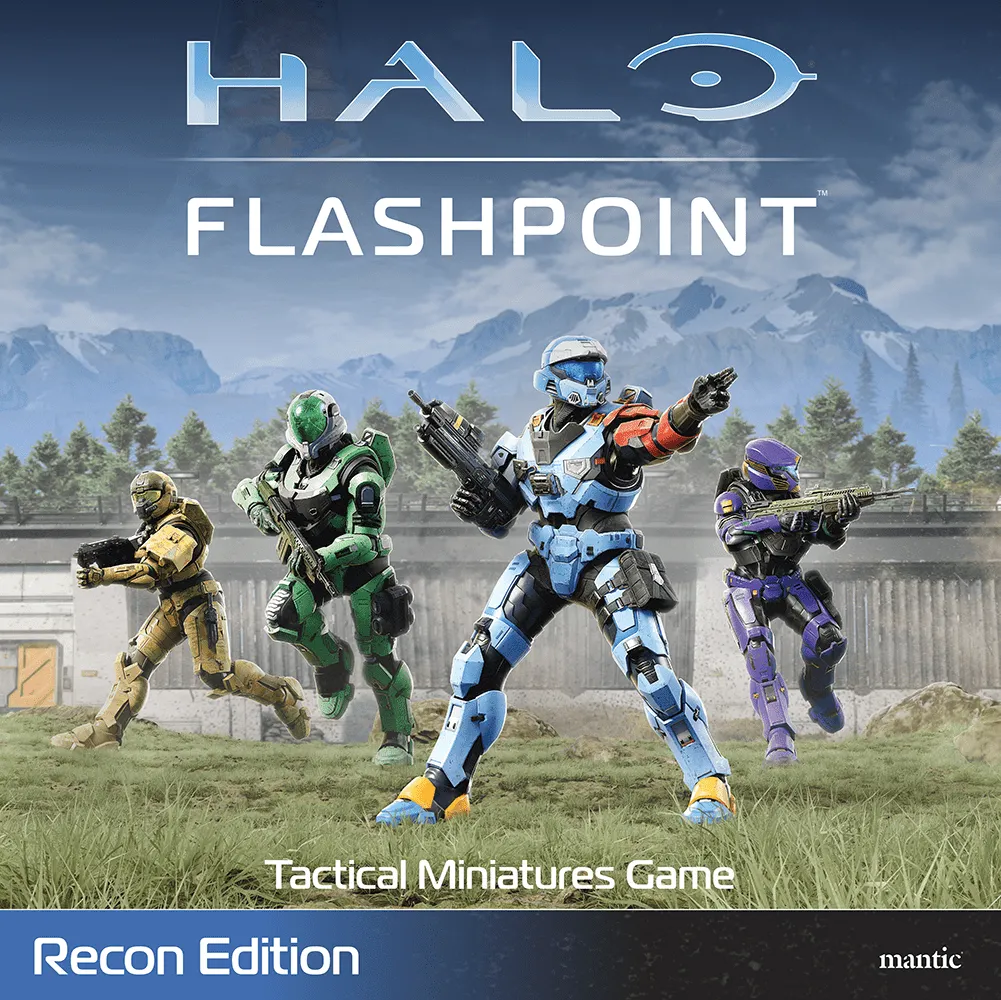
Halo: Flashpoint
- 2 joueurs
- 30–90 min
- Complexité 2,9/5
- 2024
2017
Aide aux règles de Paco Ŝako
Des explications claires des tours, effets de cartes et situations litigieuses, avec des références aux sources officielles et un historique des questions sauvegardé.
Pour 2 joueurs
Que voulez-vous savoir ?
Les réponses viennent du livret officiel, avec la page à vérifier.
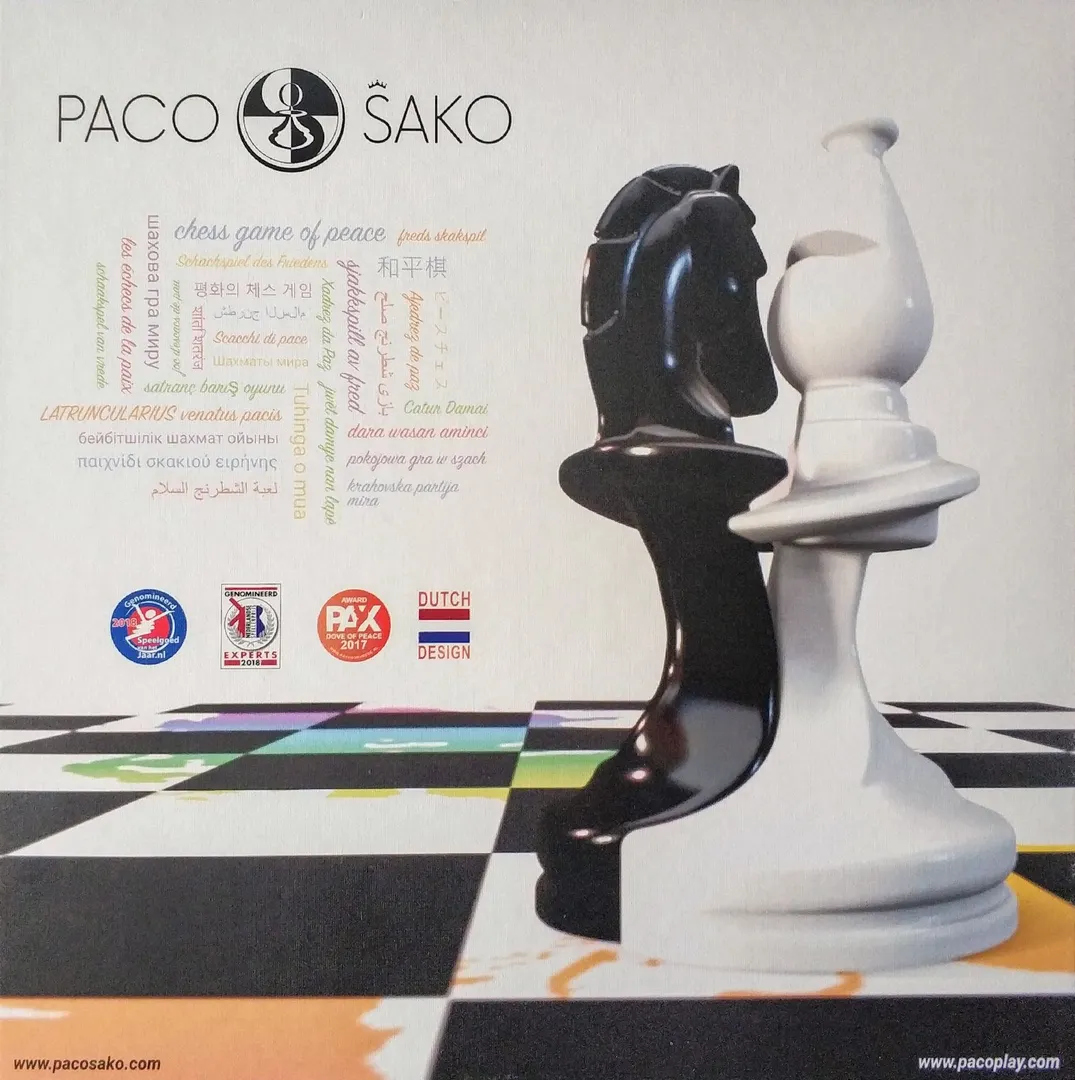
Paco Ŝako est un jeu de société sorti en 2017 pour 2 joueurs, avec des parties de 15 à 60 minutes et à partir de 4 ans. Il a été conçu par Felix Albers et ses principales mécaniques sont Area Majority / Influence, Square Grid et Moving Multiple Units.



En anglais
Paco Ŝako (Esperanto words for "peace chess": pronounce "PAH-tso SHAH-ko" = /'pat͡so 'ʃako/ IPA) is a form of chess created to be an expression of peace, friendship and collaboration. The aim is to find, through strategic gameplay, a way to "embrace" the other player's king. The game represents a constructive conversation or development in which the two sides merge their knowledge, ideas, and strength. During the game, both players try to bring forward good or ever better ideas than the other player by moving their chess pieces around. For both players, the aim is to stand strong for your knowledge, ideas and strength, but you will be open to receive input from the other player when it is their turn. Making the last move and bringing one of your pieces into a union with the other player's King will make you win the game. Paco Ŝako is played on the same board and with the same chess pieces as traditional/classic chess, though the Paco Ŝako chess pieces have a different functionality. Black and white pieces can be merged into a union and can stay together on one square. Because there are no pieces taken, all pieces stay on the board during the game. Once unions are created, both players can still move them; you can take over a union and release your piece out of a union by replacing it with another piece and eventually there is the chain reaction, which really brings out the Paco Ŝako gameplay. Taking over unions and releasing pieces mean you may move several pieces in one turn. The game is very much focused on patterns and creativity, not on piece advantage. The nice thing about this is that both players stay in the game until the last move is made. There can be created an advantage in position and games can be fast because of the dynamics and physical patterns in which several pieces can be moved in one go. When the game develops into an endgame with a lot of unions, there will be a high energy on the board with lots of possibilities, chains and creative options, and often both players will get closer to making the final move. Sometimes it is about having momentum and holding it.
Selon le catalogue, Paco Ŝako se joue à 2 personnes. C’est le nombre de joueurs indiqué par l’éditeur : le jeu est donc conçu pour exactement ce nombre de participants. Les variantes pour d’autres tailles de groupe, s’il en existe, sont décrites dans la règle de votre édition ; consultez-la avant d’installer une autre configuration.
La durée indiquée pour Paco Ŝako est de 15 à 60 minutes, selon l’estimation de l’éditeur pour une partie complète. La durée réelle dépend du groupe, de l’effectif et de la connaissance des règles : les premières parties sont plus longues, les groupes expérimentés terminent plus vite. Mise en place et explication des règles ne sont pas comprises.
Le catalogue indique Paco Ŝako à partir de 4 ans. C’est la recommandation de l’éditeur ; elle tient compte de la lecture nécessaire, de la complexité des règles et des petits composants, pas seulement du thème. Les plus jeunes peuvent souvent participer avec l’aide d’un adulte : vérifiez l’âge indiqué sur votre édition et tenez compte de l’expérience de votre groupe.
Paco Ŝako obtient une note de complexité de 2,9 sur 5 auprès des joueurs de BoardGameGeek, ce qui en fait un jeu plutôt léger. Cette note reflète la quantité de règles, de planification et de décisions qu’exige une partie typique. Prévoyez une explication plus longue pour les jeux exigeants et utilisez un guide de préparation avant la soirée.
Paco Ŝako appartient à ces catégories : Abstract Strategy. Ses principales mécaniques sont Area Majority / Influence, Square Grid et Moving Multiple Units. Les catégories décrivent le thème et l’univers d’un jeu, tandis que les mécaniques décrivent ce que les joueurs font réellement pendant leur tour. Chaque mécanique mène à une page du catalogue avec des jeux similaires.
Les auteurs crédités pour Paco Ŝako sont : Felix Albers. Ces crédits proviennent des données publiées du jeu et désignent les personnes responsables de sa conception, et non les illustrateurs ou les éditeurs. Les pages d’auteurs sur MeepleRules regroupent les autres titres des mêmes auteurs, ce qui est utile lorsqu’un jeu vous plaît et que vous en cherchez de similaires.
Le catalogue présente Paco Ŝako comme un jeu de base. Il se joue seul avec le matériel contenu dans la boîte et ne nécessite aucun autre titre. Les extensions, s’il en existe, y ajoutent du contenu ou des règles et sont répertoriées séparément dans le catalogue, avec un lien vers ce jeu de base.