
- Rang BGG
- BGG #2 608
- Note BGG
- 7,4
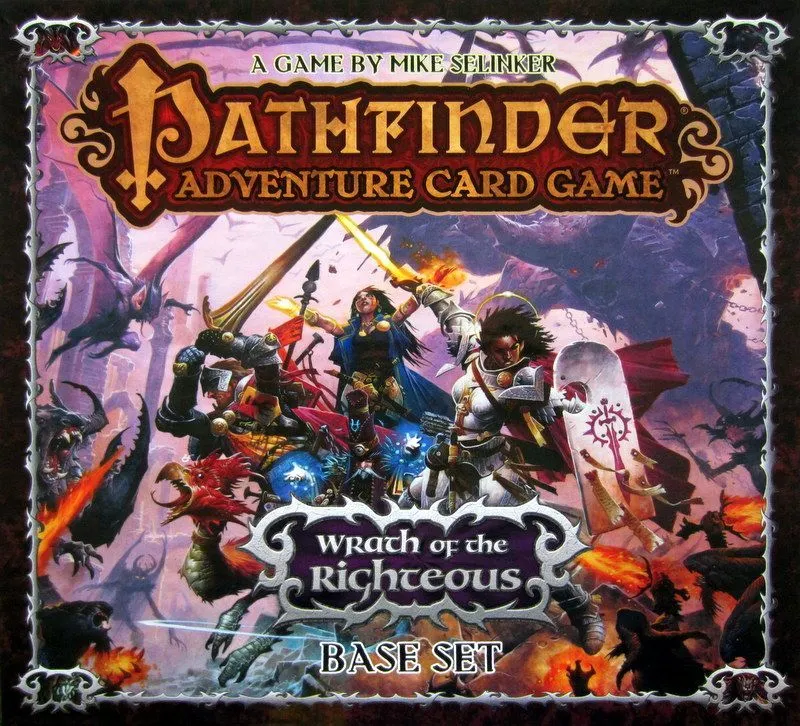
Pathfinder Adventure Card Game: Wrath of the Righteous – Base Set
- 1–4 joueurs
- 120 min
- Complexité 3,1/5
- 2015
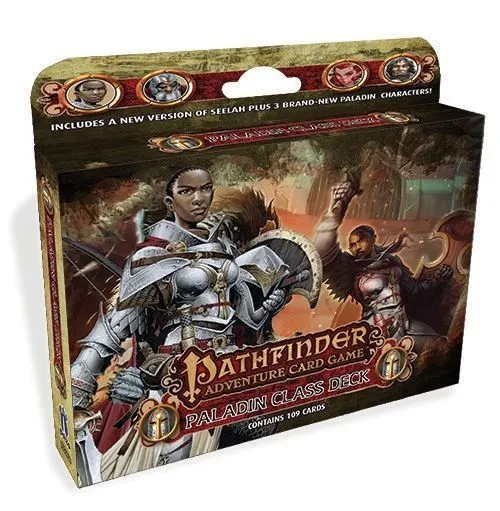
Extension de Pathfinder Adventure Card Game: Mummy's Mask – Base Set
2015
Aide aux règles de Pathfinder Adventure Card Game: Class Deck – Paladin
Des explications claires des tours, effets de cartes et situations litigieuses, avec des références aux sources officielles et un historique des questions sauvegardé.
Que voulez-vous savoir ?
Les réponses viennent du livret officiel, avec la page à vérifier.
Pathfinder Adventure Card Game: Class Deck – Paladin est une extension de Pathfinder Adventure Card Game: Mummy's Mask – Base Set sortie en 2015. Il a été conçu par Paul Peterson, Mike Selinker, Liz Spain, Chad Brown, Tanis O'Connor et Gaby Weidling et ses principales mécaniques sont Dice Rolling, Cooperative Game et Deck, Bag, and Pool Building.


En anglais
Faith and the Sword! Paladins serve as a shining beacon of purity and hope in a world beset by darkness. The Paladin Class Deck, a portable play accessory for the Pathfinder Adventure Card Game, allows players to bring these guardians of duty and honor to any Base Set, including the demon-filled Wrath of the Righteous campaign. The 109-card Paladin Class Deck contains 3 new characters, including the iconic holy warrior Seelah, and enough new and familiar weapons, spells, mounts, and other boons to bring your paladin through an entire Adventure Path. The deck is self-contained, so you can play your character at any table, and is also all you need to dive into the exciting Pathfinder Society Adventure Card Guild organized play campaign.
Pathfinder Adventure Card Game: Class Deck – Paladin appartient à ces catégories : Card Game, Fantasy et Fighting. Ses principales mécaniques sont Dice Rolling, Cooperative Game et Deck, Bag, and Pool Building. Les catégories décrivent le thème et l’univers d’un jeu, tandis que les mécaniques décrivent ce que les joueurs font réellement pendant leur tour. Chaque mécanique mène à une page du catalogue avec des jeux similaires.
Les auteurs crédités pour Pathfinder Adventure Card Game: Class Deck – Paladin sont : Paul Peterson, Mike Selinker, Liz Spain, Chad Brown, Tanis O'Connor et Gaby Weidling. Ces crédits proviennent des données publiées du jeu et désignent les personnes responsables de sa conception, et non les illustrateurs ou les éditeurs. Les pages d’auteurs sur MeepleRules regroupent les autres titres des mêmes auteurs, ce qui est utile lorsqu’un jeu vous plaît et que vous en cherchez de similaires.
Le catalogue présente Pathfinder Adventure Card Game: Class Deck – Paladin comme une extension de Pathfinder Adventure Card Game: Mummy's Mask – Base Set. Les extensions ajoutent du contenu, des règles ou des scénarios au jeu de base et ne se jouent généralement pas seules : il vous faut donc Pathfinder Adventure Card Game: Mummy's Mask – Base Set pour l’utiliser. Vérifiez que votre édition de Pathfinder Adventure Card Game: Mummy's Mask – Base Set est compatible, car certaines extensions ont été révisées d’une édition à l’autre.