

- Rang BGG
- BGG #3 905
- Note BGG
- 6,9
Windward
- 1–5 joueurs
- 30–90 min
- Complexité 2,4/5
- 2020
2019
Aide aux règles de Portolano
Des explications claires des tours, effets de cartes et situations litigieuses, avec des références aux sources officielles et un historique des questions sauvegardé.
Pour 2 joueurs
Que voulez-vous savoir ?
Les réponses viennent du livret officiel, avec la page à vérifier.
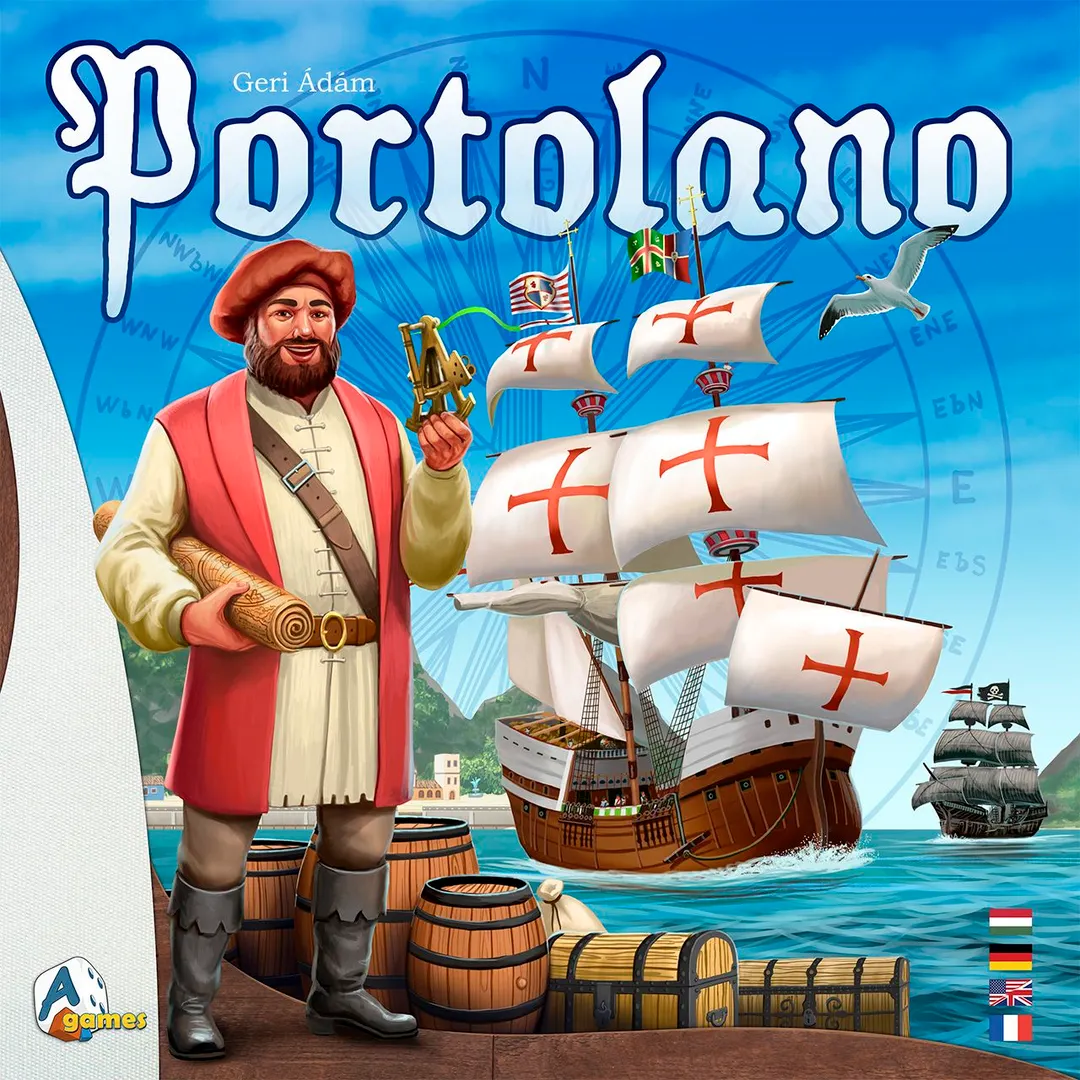
Portolano est un jeu de société sorti en 2019 pour 2 à 5 joueurs, avec des parties de 40 à 60 minutes et à partir de 10 ans. Il a été conçu par Adam Geri et ses principales mécaniques sont Set Collection, Trading et Area Movement.



En anglais
The 16th century, the age of renaissance. Sailing and maritime trade are flourishing, vast fleets belonging to shipping companies are crossing the seas around the world. There is fierce competition for the available commodities which must be delivered to harbors. The shortest sea route may not be the easiest one. To achieve your goal in becoming the best captain, you need to find the best routes, deliver your goods to the harbor at the right moment and should not think twice to go raiding a little at times. Your portolan chart, a navigation map lies already in front of you, the crew is awaiting your order, and the race is just about to begin. In Portolano, each players controls a ship at sea. With each step you move your ship to the next map tile (map consists of tiles randomly drawn at the beginning of the game). If this is a sea tile, the player can pick one resource (3 different goods or cannons) available on the island. Each sea tile allows for one additional special action. The most important one is ship building, letting players upgrade their ships, extend their cargo bay, increase their speed, or attacking power in battle. Other possible actions include e.g. trading goods (change them to other goods or rum). Once you move to a harbor, you sell the goods collected on the islands to get coins (each harbor has differing needs for products). The more goods you can sell in one go, the more coins you will get. The players plan their next moves simultaneously, without knowing the plans of others. Therefore it may happen that a player moves to sea tile, where the goods are already taken by other players or to a harbor, where the demands have already been satisfied. Once everybody has moved their ships in the round, the wind indicator will be spun, the new wind direction determines the next move of the pirates, who are also on the prowl at sea. After this, the movement phase ends. There is a battle after the movement phase if players and/or the pirate are positioned on the same/adjacent tiles. The fights use dice rolling, the winner steals goods/coins/rum from the loser. Rum is considered to be an important commodity as well, it "fuels” the crew to sail the ship according to your orders. If any player runs out of rum, the crew rebels and the ship can move only in the direction that the wind takes it until the rum stock is refilled. The costs of moving the ship in terms of rum depends on your movement compared with the wind direction (upwind, tailwind, crosswind). The game ends as soon as any of the goods run out. The player who has the most coins wins the game (coins can be collected even at the end of the game by unlocking bonuses).
Selon le catalogue, Portolano se joue de 2 à 5 personnes. Cette fourchette correspond au nombre de joueurs indiqué par l’éditeur : le jeu s’installe donc pour toute taille de groupe dans cette limite. La mise en place, certaines règles et le décompte peuvent varier selon l’effectif ; vérifiez la configuration exacte dans la règle de votre édition.
La durée indiquée pour Portolano est de 40 à 60 minutes, selon l’estimation de l’éditeur pour une partie complète. La durée réelle dépend du groupe, de l’effectif et de la connaissance des règles : les premières parties sont plus longues, les groupes expérimentés terminent plus vite. Mise en place et explication des règles ne sont pas comprises.
Le catalogue indique Portolano à partir de 10 ans. C’est la recommandation de l’éditeur ; elle tient compte de la lecture nécessaire, de la complexité des règles et des petits composants, pas seulement du thème. Les plus jeunes peuvent souvent participer avec l’aide d’un adulte : vérifiez l’âge indiqué sur votre édition et tenez compte de l’expérience de votre groupe.
Portolano obtient une note de complexité de 2,3 sur 5 auprès des joueurs de BoardGameGeek, ce qui en fait un jeu plutôt léger. Cette note reflète la quantité de règles, de planification et de décisions qu’exige une partie typique. Prévoyez une explication plus longue pour les jeux exigeants et utilisez un guide de préparation avant la soirée.
Portolano appartient à ces catégories : Travel, Exploration et Nautical. Ses principales mécaniques sont Set Collection, Trading et Area Movement. Les catégories décrivent le thème et l’univers d’un jeu, tandis que les mécaniques décrivent ce que les joueurs font réellement pendant leur tour. Chaque mécanique mène à une page du catalogue avec des jeux similaires.
Les auteurs crédités pour Portolano sont : Adam Geri. Ces crédits proviennent des données publiées du jeu et désignent les personnes responsables de sa conception, et non les illustrateurs ou les éditeurs. Les pages d’auteurs sur MeepleRules regroupent les autres titres des mêmes auteurs, ce qui est utile lorsqu’un jeu vous plaît et que vous en cherchez de similaires.
Le catalogue présente Portolano comme un jeu de base. Il se joue seul avec le matériel contenu dans la boîte et ne nécessite aucun autre titre. Les extensions, s’il en existe, y ajoutent du contenu ou des règles et sont répertoriées séparément dans le catalogue, avec un lien vers ce jeu de base.