
- Note BGG
- 8,0
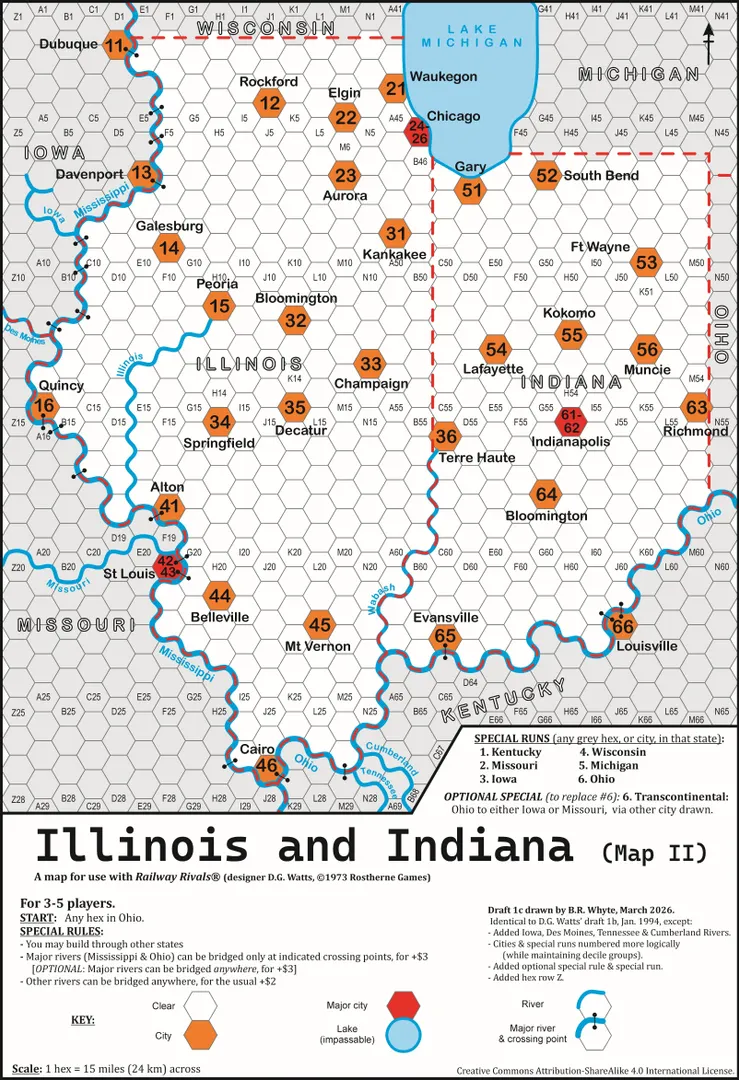
Railway Rivals Map II: Illinois and Indiana
- 2–6 joueurs
- 90 min
- 1994
1979
Aide aux règles de Railway Rivals
Des explications claires des tours, effets de cartes et situations litigieuses, avec des références aux sources officielles et un historique des questions sauvegardé.
Pour 2 joueurs
Que voulez-vous savoir ?
Les réponses viennent du livret officiel, avec la page à vérifier.
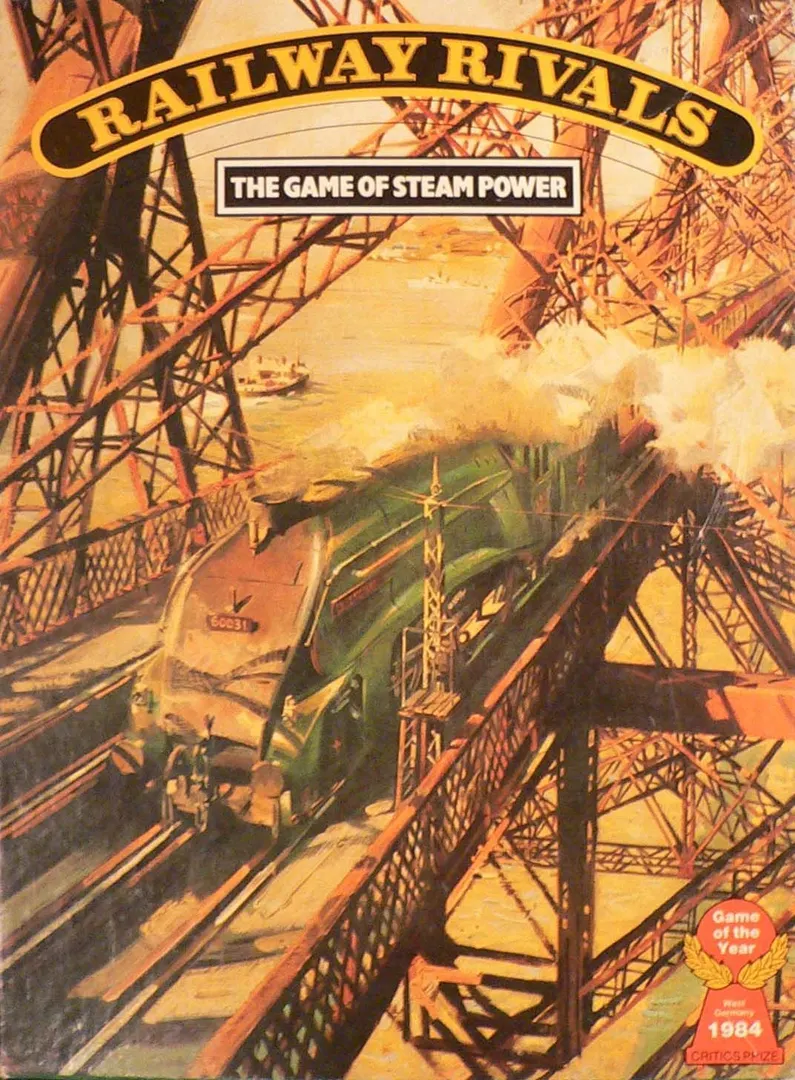
Railway Rivals est un jeu de société sorti en 1979 pour 2 à 6 joueurs, avec des parties de 90 minutes et à partir de 10 ans. Il a été conçu par David G. Watts et ses principales mécaniques sont Line Drawing.





En anglais
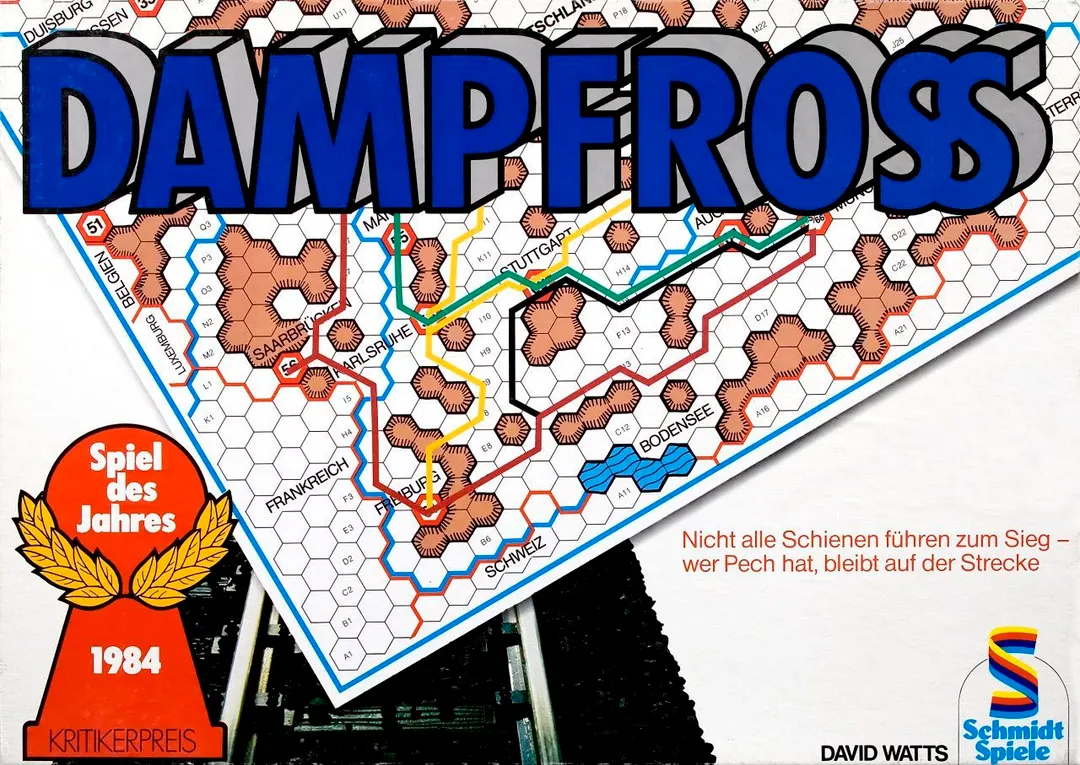
This is a classic simple railway racing game, perhaps the first modern railroading game, where you draw the railway lines on hex-board. This one uses the sort of colored marker pens you can wipe off with a damp cloth after the game. The game goes through phases; initially you draw tracks and earn money for linking cities. When a number of cities are joined, you start racing, the cities being chosen randomly. The races are simple dice-rollers and the 1st & 2nd place get prize money. After a couple of races, you draw some more tracks, then race some more and so on. The railways cost more if you go over mountains etc, but this gives you shorter routes. You can run parallel to other lines at a cost, or simply link into another player's track and rent the tracks of other players when you race. The board has a UK map on one side and a US map on the other, both giving amusing challenges, and the game has good repeat value. The designer David Watts has published a lot of stand alone Railway Rivals maps, and there is another edition of this game, Dampfross published by Laurin. Re-implemented by: Dampfross
Selon le catalogue, Railway Rivals se joue de 2 à 6 personnes. Cette fourchette correspond au nombre de joueurs indiqué par l’éditeur : le jeu s’installe donc pour toute taille de groupe dans cette limite. La mise en place, certaines règles et le décompte peuvent varier selon l’effectif ; vérifiez la configuration exacte dans la règle de votre édition.
La durée indiquée pour Railway Rivals est de 90 minutes, selon l’estimation de l’éditeur pour une partie complète. La durée réelle dépend du groupe, de l’effectif et de la connaissance des règles : les premières parties sont plus longues, les groupes expérimentés terminent plus vite. Mise en place et explication des règles ne sont pas comprises.
Le catalogue indique Railway Rivals à partir de 10 ans. C’est la recommandation de l’éditeur ; elle tient compte de la lecture nécessaire, de la complexité des règles et des petits composants, pas seulement du thème. Les plus jeunes peuvent souvent participer avec l’aide d’un adulte : vérifiez l’âge indiqué sur votre édition et tenez compte de l’expérience de votre groupe.
Railway Rivals obtient une note de complexité de 2,3 sur 5 auprès des joueurs de BoardGameGeek, ce qui en fait un jeu plutôt léger. Cette note reflète la quantité de règles, de planification et de décisions qu’exige une partie typique. Prévoyez une explication plus longue pour les jeux exigeants et utilisez un guide de préparation avant la soirée.
Railway Rivals appartient à ces catégories : Racing et Trains. Ses principales mécaniques sont Line Drawing. Les catégories décrivent le thème et l’univers d’un jeu, tandis que les mécaniques décrivent ce que les joueurs font réellement pendant leur tour. Chaque mécanique mène à une page du catalogue avec des jeux similaires.
Les auteurs crédités pour Railway Rivals sont : David G. Watts. Ces crédits proviennent des données publiées du jeu et désignent les personnes responsables de sa conception, et non les illustrateurs ou les éditeurs. Les pages d’auteurs sur MeepleRules regroupent les autres titres des mêmes auteurs, ce qui est utile lorsqu’un jeu vous plaît et que vous en cherchez de similaires.
Le catalogue présente Railway Rivals comme un jeu de base. Il se joue seul avec le matériel contenu dans la boîte et ne nécessite aucun autre titre. Les extensions, s’il en existe, y ajoutent du contenu ou des règles et sont répertoriées séparément dans le catalogue, avec un lien vers ce jeu de base.