
- Rang BGG
- BGG #16 620
- Note BGG
- 7,3
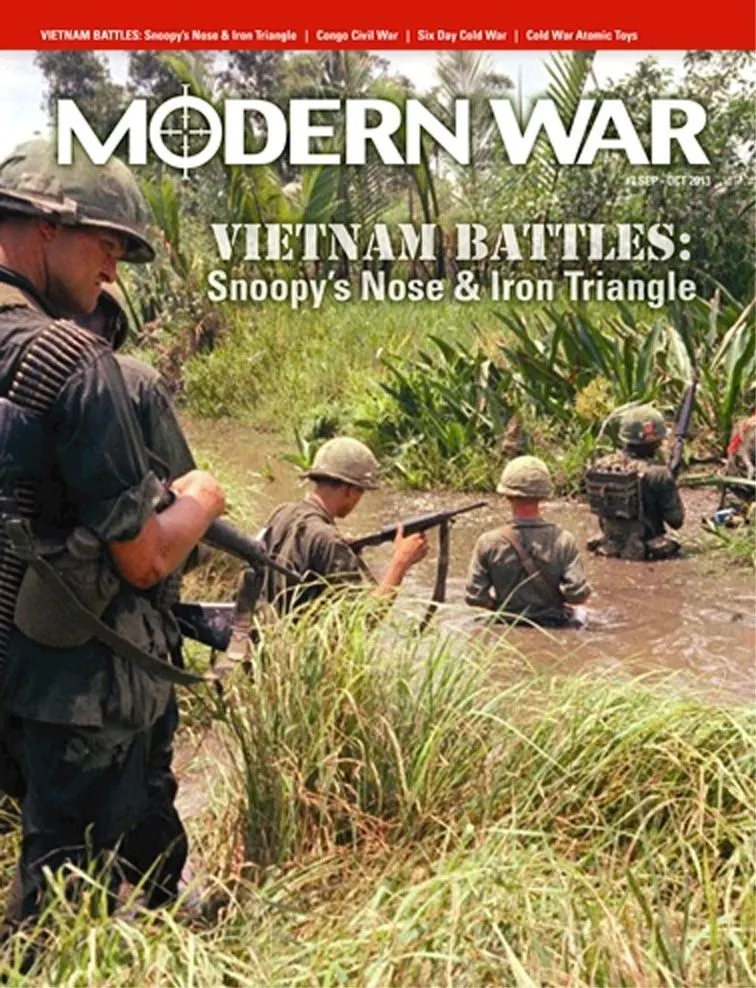
Vietnam Battles: Snoopy's Nose & Iron Triangle
- 1–3 joueurs
- 120 min
- Complexité 2,7/5
- 2013
2014
Aide aux règles de Red Tide West: The Cold War & World War III in Europe
Des explications claires des tours, effets de cartes et situations litigieuses, avec des références aux sources officielles et un historique des questions sauvegardé.
Pour 1 joueur
Que voulez-vous savoir ?
Les réponses viennent du livret officiel, avec la page à vérifier.
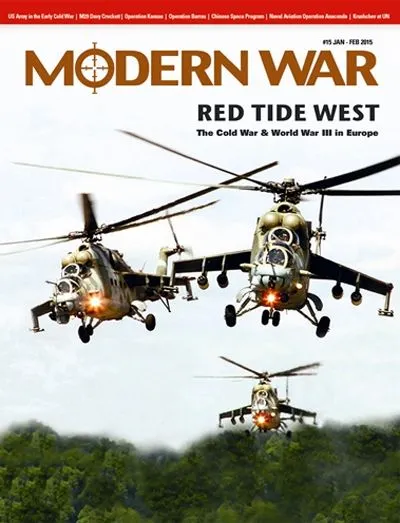
Red Tide West: The Cold War & World War III in Europe est un jeu de société sorti en 2014 pour 1 à 2 joueurs. Il a été conçu par Eric R. Harvey et ses principales mécaniques sont Dice Rolling, Hexagon Grid et Simulation.
En anglais
Modern War #15, Jan-Feb 2015 Red Tide West: The Cold War & World War III in Europe is a wargame that simulates a hypothetical Warsaw Pact invasion of West Germany in the late-1980’s. Red Tide West also presumes a wider conflict beyond the scope of the game, but postulates West Germany to be the so-called “center of gravity” for the entire war. In other words, regardless of what is happening in, say, Scandinavia, or the Balkans, or the Middle East, etc., the presumption here is that the war will be won or lost in central Europe. To wit, if the Red Army cripples NATO and overruns West Germany, it is assumed that diplomatic negotiations will then suddenly become advantageous to both sides. For the Soviets, they would be satisfied to end the war with their substantial gains, not to mention the distinction of being regarded by the world as having won the war, especially if a nuclear exchange had not yet occurred. NATO, on the other hand (and especially the French) would want to end the war before the Red Army rolled into France proper, and certainly before a full-blown nuclear war erupted (or escalated further, if a limited nuclear exchange had already occurred). On the other side of the coin, if the Red Army’s drive into West Germany is halted or thrown back, the war will have run its course then and there, regardless of what is happening elsewhere in the world. Negotiations would be underway, regardless, but the Soviets would have very little to gain (and actually much to lose) by perpetuating a war that is then being perceived as the ultimate reproach of the Soviet state and Communist ideology. Indeed, before Soviet battlefield defeats became prolific and pronounced, and especially before NATO units began to push across the borders of East Bloc countries, the Soviets would be confronted with a choice of trying to negotiate an end to the war before the Warsaw Pact alliance collapsed (or worse, defected…as if a widespread repeat of the Hungarian Uprising of ‘56), or resort to nuclear strikes to avoid a total defeat (a decidedly undesirable solution when considering NATO’s predictable response). In any case, Red Tide West presumes a short war whereby the final dispositions will be known within a matter of weeks. The Soviet timetables expected the Red Army to reach the French border within 15 days, and therefore the game excludes Soviet “Category C” and “Category D” reserves, which could not have been mobilized within the timeframe of the game… whether or not the Soviet timetables were realistic in the first place. The game includes two maps (22"x34”) and 560 counters. Design & Development: Eric R. Harvey Final Rules Editing: Eric R. Harvey Map Graphics: Eric R. Harvey Counter Graphics: Eric R. Harvey Production: Callie Cummins and Lisé Patterson
Selon le catalogue, Red Tide West: The Cold War & World War III in Europe se joue de 1 à 2 personnes. Cette fourchette correspond au nombre de joueurs indiqué par l’éditeur : le jeu s’installe donc pour toute taille de groupe dans cette limite. La mise en place, certaines règles et le décompte peuvent varier selon l’effectif ; vérifiez la configuration exacte dans la règle de votre édition.
Red Tide West: The Cold War & World War III in Europe obtient une note de complexité de 3,5 sur 5 auprès des joueurs de BoardGameGeek, ce qui en fait un jeu de complexité moyenne. Cette note reflète la quantité de règles, de planification et de décisions qu’exige une partie typique. Prévoyez une explication plus longue pour les jeux exigeants et utilisez un guide de préparation avant la soirée.
Red Tide West: The Cold War & World War III in Europe appartient à ces catégories : Wargame et Modern Warfare. Ses principales mécaniques sont Dice Rolling, Hexagon Grid et Simulation. Les catégories décrivent le thème et l’univers d’un jeu, tandis que les mécaniques décrivent ce que les joueurs font réellement pendant leur tour. Chaque mécanique mène à une page du catalogue avec des jeux similaires.
Les auteurs crédités pour Red Tide West: The Cold War & World War III in Europe sont : Eric R. Harvey. Ces crédits proviennent des données publiées du jeu et désignent les personnes responsables de sa conception, et non les illustrateurs ou les éditeurs. Les pages d’auteurs sur MeepleRules regroupent les autres titres des mêmes auteurs, ce qui est utile lorsqu’un jeu vous plaît et que vous en cherchez de similaires.
Le catalogue présente Red Tide West: The Cold War & World War III in Europe comme un jeu de base. Il se joue seul avec le matériel contenu dans la boîte et ne nécessite aucun autre titre. Les extensions, s’il en existe, y ajoutent du contenu ou des règles et sont répertoriées séparément dans le catalogue, avec un lien vers ce jeu de base.