- Rang BGG
- BGG #3 281
- Note BGG
- 7,3
Revolution: The Dutch Revolt 1568-1648
2004
Aide aux règles de Revolution: The Dutch Revolt 1568-1648
Des explications claires des tours, effets de cartes et situations litigieuses, avec des références aux sources officielles et un historique des questions sauvegardé.
- 2–5 joueurs
- 240–480 min
- 12+
- Complexité 4,2/5

Pour 2 joueurs
Assistant de règles pour Revolution: The Dutch Revolt 1568-1648
Que voulez-vous savoir ?
Les réponses viennent du livret officiel, avec la page à vérifier.
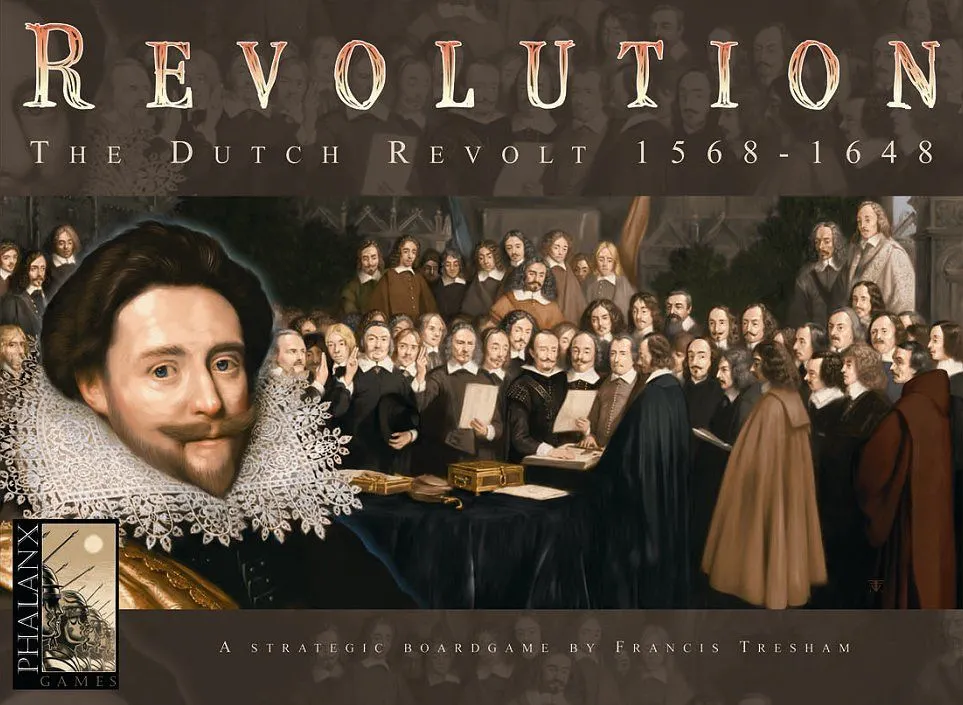
Revolution: The Dutch Revolt 1568-1648 est un jeu de société sorti en 2004 pour 2 à 5 joueurs, avec des parties de 240 à 480 minutes et à partir de 12 ans. Il a été conçu par Francis Tresham et ses principales mécaniques sont Variable Player Powers, Area Majority / Influence et Simulation.
À propos du jeu
En anglais
(from Phalanx Games:) Revolution: The Dutch Revolt simulates the Eighty Years' War between Spain and the Netherlands. This epic struggle lasted from 1568 until 1648 and eventually brought independence to Holland and the northern provinces. In the south, the revolt was less successful and Belgium did not emerge as an independent state until after the Napoleonic era. During the initial stages of the struggle, William of Orange became the symbol of freedom. His main adversary was the Spanish King Philip II, who sent in the Duke of Alba with his formidable conquistadores to stop the rebellion. Revolution depicts a power struggle with many facets. Each player represents one of the principal factions involved: the Catholics, Habsburgs, Nobility, Burghers and Reformers. Each faction has its particular goals, which are often partly common. Although factions may sometimes co-operate, they are not allies for long and easily turn on each other if the situation calls for this. Historically, there were periods of open warfare and others of uneasy peace. The reforming factions gradually became more established, particularly in the north and along the coast. The once supreme Habsburg armies were slowly driven out of these areas through a series of siege battles. The defeat of the mighty Armada by a combined Dutch/English fleet in 1588 cost the Spaniards dearly. The Catholics were eventually allowed to retain some of their influence, while the local Nobility, initially catholic but with local sympathies, succeeded or failed according to their willingness to accept the changed circumstances. This game is not a detailed military re-enactment of the Eighty Years' War. It tries to capture the flavor of these interesting times in a much broader sense. It contains an element of warfare in the form of battles and sieges but the main theme is built on economic, religious and political control. The constantly shifting balance of power, caused by temporary alliances, makes Revolution an immensely challenging game, and not for the faint-hearted. Clever and timely use of available resources, including those of foreign sympathizers and allies, is needed to achieve ultimate success. Revolution: The Dutch Revolt was more than 15 years in the making, and marks Francis Tresham's long-awaited return to the forefront of game design. He is most famous for his widely acclaimed board games Civilization and 1829. Revolution: The Dutch Revolt includes 1 large gameboard, 41 playing cards, 416 colorful game pieces (56 resource pieces in each of 5 colors, 8 army pieces in each of 5 colors, 47 neutral pieces, 3 water beggars, 1 VP marker for each color, 1 game turn marker and 40 status markers), 1 player aid card and 1 rules booklet.
Catégories
Auteurs
Éditeurs
- Phalanx Games B.V.
Questions et réponses
Selon le catalogue, Revolution: The Dutch Revolt 1568-1648 se joue de 2 à 5 personnes. Cette fourchette correspond au nombre de joueurs indiqué par l’éditeur : le jeu s’installe donc pour toute taille de groupe dans cette limite. La mise en place, certaines règles et le décompte peuvent varier selon l’effectif ; vérifiez la configuration exacte dans la règle de votre édition.
La durée indiquée pour Revolution: The Dutch Revolt 1568-1648 est de 240 à 480 minutes, selon l’estimation de l’éditeur pour une partie complète. La durée réelle dépend du groupe, de l’effectif et de la connaissance des règles : les premières parties sont plus longues, les groupes expérimentés terminent plus vite. Mise en place et explication des règles ne sont pas comprises.
Le catalogue indique Revolution: The Dutch Revolt 1568-1648 à partir de 12 ans. C’est la recommandation de l’éditeur ; elle tient compte de la lecture nécessaire, de la complexité des règles et des petits composants, pas seulement du thème. Les plus jeunes peuvent souvent participer avec l’aide d’un adulte : vérifiez l’âge indiqué sur votre édition et tenez compte de l’expérience de votre groupe.
Revolution: The Dutch Revolt 1568-1648 obtient une note de complexité de 4,2 sur 5 auprès des joueurs de BoardGameGeek, ce qui en fait un jeu exigeant. Cette note reflète la quantité de règles, de planification et de décisions qu’exige une partie typique. Prévoyez une explication plus longue pour les jeux exigeants et utilisez un guide de préparation avant la soirée.
Revolution: The Dutch Revolt 1568-1648 appartient à ces catégories : Wargame, Political et Renaissance. Ses principales mécaniques sont Variable Player Powers, Area Majority / Influence et Simulation. Les catégories décrivent le thème et l’univers d’un jeu, tandis que les mécaniques décrivent ce que les joueurs font réellement pendant leur tour. Chaque mécanique mène à une page du catalogue avec des jeux similaires.
Les auteurs crédités pour Revolution: The Dutch Revolt 1568-1648 sont : Francis Tresham. Ces crédits proviennent des données publiées du jeu et désignent les personnes responsables de sa conception, et non les illustrateurs ou les éditeurs. Les pages d’auteurs sur MeepleRules regroupent les autres titres des mêmes auteurs, ce qui est utile lorsqu’un jeu vous plaît et que vous en cherchez de similaires.
Le catalogue présente Revolution: The Dutch Revolt 1568-1648 comme un jeu de base. Il se joue seul avec le matériel contenu dans la boîte et ne nécessite aucun autre titre. Les extensions, s’il en existe, y ajoutent du contenu ou des règles et sont répertoriées séparément dans le catalogue, avec un lien vers ce jeu de base.