
- Rang BGG
- BGG #4 662
- Note BGG
- 7,2
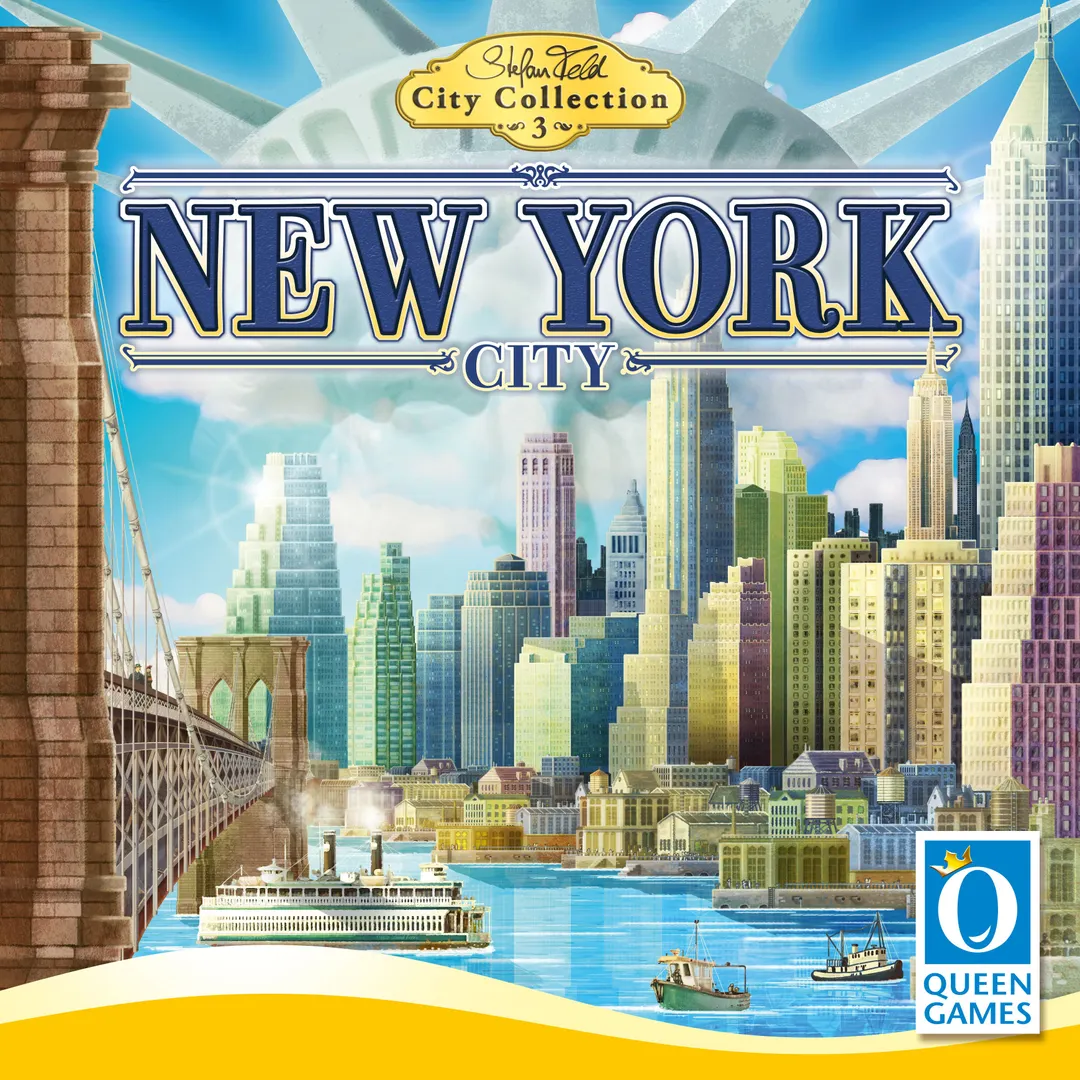
New York City
- 1–4 joueurs
- 45–60 min
- Complexité 2,6/5
- 2022
2013
Aide aux règles de Rialto
Des explications claires des tours, effets de cartes et situations litigieuses, avec des références aux sources officielles et un historique des questions sauvegardé.
Pour 2 joueurs
Que voulez-vous savoir ?
Les réponses viennent du livret officiel, avec la page à vérifier.
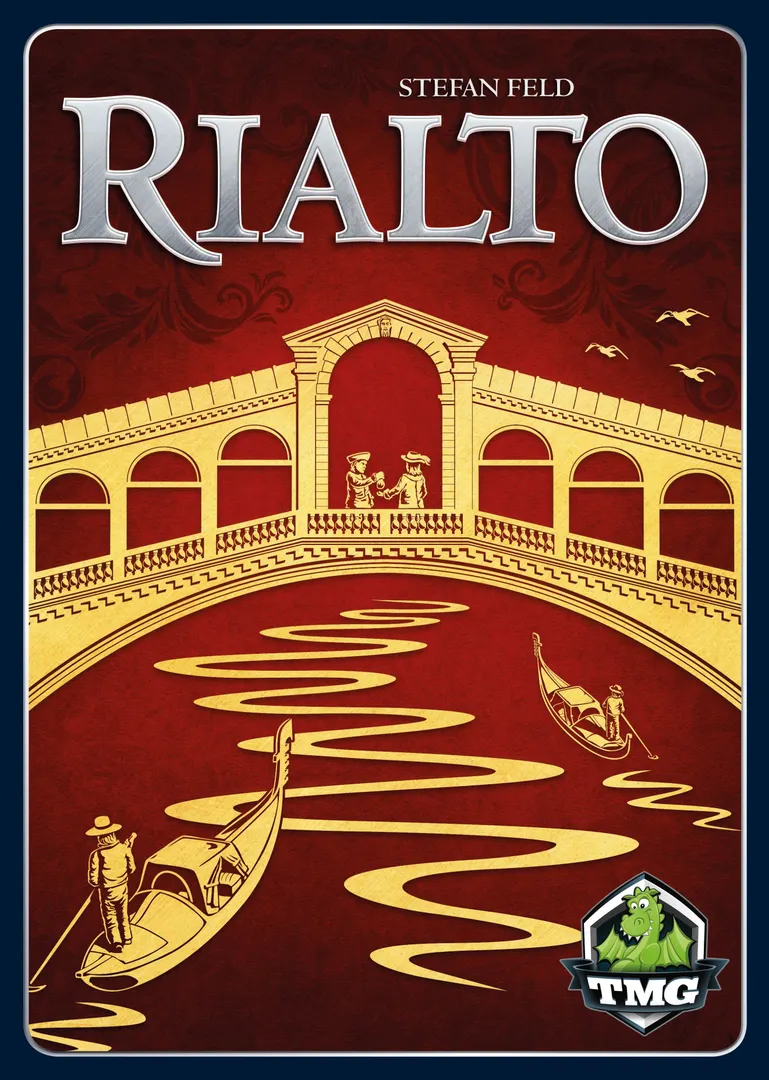
Rialto est un jeu de société sorti en 2013 pour 2 à 5 joueurs, avec des parties de 45 minutes et à partir de 10 ans. Il a été conçu par Stefan Feld et ses principales mécaniques sont Auction / Bidding, Area Majority / Influence et Open Drafting.


En anglais
In the card-driven board game Rialto, the goal is to earn the most victory points (VPs), which are awarded for a variety of things. The game board displays the six districts of Venice, and players earn VPs for placing council members into these, for building bridges and placing gondolas to connect the districts with one another, and for building advantageous buildings. The game is played over six rounds, with each round consisting of three phases: 1. Acquire cards: Each player takes a set of cards. 2. Play cards: Players use cards to perform certain actions. 3. Activate buildings: Players may take advantage of their buildings and use their powers. In phase 1, sets of eight cards are displayed (with six cards face-up and two face-down). Each player takes one set, then reduces his hand to seven cards. A card shows one of six specific characters (Architect, Merchant, etc.) or is a wild card. Phase 2 consists of six sub-phases in a fixed order, one for each character. In each sub-phase, players choose whether or not to play one or more cards of that specific character. Each card allows them to perfom that character's action, for example: Take one piece of gold for each Merchant card you play. Place one council member into the current district for each Council card you play. Take a building with a value equal to or lower than the number of Architect cards played. The higher its value, the better its function. Whoever plays the most cards in each such sub-phase receives a bonus of one free action of that type. In case of a tie, whoever is farthest along the "Doge" bar gets the bonus – and of course to advance on the Doge bar, players need to play Doge cards. Finally, in phase 3, players may take advantage of their buildings. For each piece of gold paid, a player may use one of his building's ability. Players collect VPs both during the game – from special buildings and by building bridges between districts – and at the end of it – for majorities of council members in each district. The value of each district evolves during the game: Each district is adjacent to four other ones, and at the end of the game, they will be connected either via bridges or gondolas. A bridge increases the value of the adjacent districts by 3-6 victory points, whereas a gondola increases this value by 1 point. The player with the most council members in a district earns VPs equal to the district's total value, the player with the secondmost council members earns half this value, and so on. While it's important to establish majorities in the districts, it's also crucial to control their values by cleverly placing those bridges and gondolas.
Selon le catalogue, Rialto se joue de 2 à 5 personnes. Cette fourchette correspond au nombre de joueurs indiqué par l’éditeur : le jeu s’installe donc pour toute taille de groupe dans cette limite. La mise en place, certaines règles et le décompte peuvent varier selon l’effectif ; vérifiez la configuration exacte dans la règle de votre édition.
La durée indiquée pour Rialto est de 45 minutes, selon l’estimation de l’éditeur pour une partie complète. La durée réelle dépend du groupe, de l’effectif et de la connaissance des règles : les premières parties sont plus longues, les groupes expérimentés terminent plus vite. Mise en place et explication des règles ne sont pas comprises.
Le catalogue indique Rialto à partir de 10 ans. C’est la recommandation de l’éditeur ; elle tient compte de la lecture nécessaire, de la complexité des règles et des petits composants, pas seulement du thème. Les plus jeunes peuvent souvent participer avec l’aide d’un adulte : vérifiez l’âge indiqué sur votre édition et tenez compte de l’expérience de votre groupe.
Rialto obtient une note de complexité de 2,6 sur 5 auprès des joueurs de BoardGameGeek, ce qui en fait un jeu plutôt léger. Cette note reflète la quantité de règles, de planification et de décisions qu’exige une partie typique. Prévoyez une explication plus longue pour les jeux exigeants et utilisez un guide de préparation avant la soirée.
Rialto appartient à ces catégories : Political et Renaissance. Ses principales mécaniques sont Auction / Bidding, Area Majority / Influence et Open Drafting. Les catégories décrivent le thème et l’univers d’un jeu, tandis que les mécaniques décrivent ce que les joueurs font réellement pendant leur tour. Chaque mécanique mène à une page du catalogue avec des jeux similaires.
Les auteurs crédités pour Rialto sont : Stefan Feld. Ces crédits proviennent des données publiées du jeu et désignent les personnes responsables de sa conception, et non les illustrateurs ou les éditeurs. Les pages d’auteurs sur MeepleRules regroupent les autres titres des mêmes auteurs, ce qui est utile lorsqu’un jeu vous plaît et que vous en cherchez de similaires.
Le catalogue présente Rialto comme un jeu de base. Il se joue seul avec le matériel contenu dans la boîte et ne nécessite aucun autre titre. Les extensions, s’il en existe, y ajoutent du contenu ou des règles et sont répertoriées séparément dans le catalogue, avec un lien vers ce jeu de base.