
- Rang BGG
- BGG #521
- Note BGG
- 7,7
Take Time
- 2–4 joueurs
- 30 min
- Complexité 1,8/5
- 2025
2020
Aide aux règles de Roméo & Juliette
Des explications claires des tours, effets de cartes et situations litigieuses, avec des références aux sources officielles et un historique des questions sauvegardé.
Pour 2 joueurs
Que voulez-vous savoir ?
Les réponses viennent du livret officiel, avec la page à vérifier.
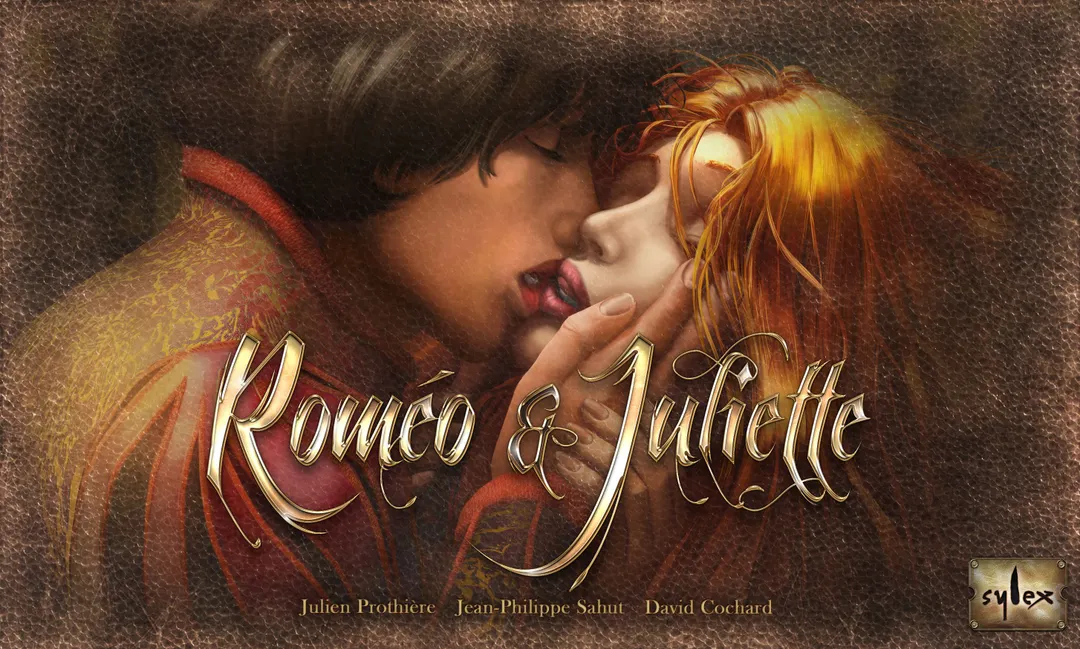
Roméo & Juliette est un jeu de société sorti en 2020 pour 2 joueurs, avec des parties de 10 à 35 minutes et à partir de 12 ans. Il a été conçu par Julien Prothière et Jean Philippe Sahut et ses principales mécaniques sont Hand Management, Area Movement et Storytelling.





En anglais
The setting of this cooperative strategy game for two is beautiful 16th century Verona. There, two bitterly hostile families stand in the way of Romeo & Juliet's love happiness. The players take on the roles of the two lovers. You won't be able to communicate freely, so you'll have to make your partner understand your plans, and find out where they want to meet you. The tragic couple is not allowed to speak freely to each other and can only arrange to meet in secret. Otherwise the hatred between the families will deepen. By cleverly playing cards and messages, the players try to ensure that love triumphs over hate in the end. The game box unfolds into an atmospherically designed theatre scene. On this stage, Romeo & Juliet and their companions move to different locations. There are 9 chapters and just as many difficulty levels. This allows the game to be perfectly adapted and varied. To win, love must reach its peak before the end of the third act. If, on the other hand, hatred reaches its lowest point, fate takes its toll on the star-crossed lovers, and you will have lost. —description from the French and the German publisher (translated)
Selon le catalogue, Roméo & Juliette se joue à 2 personnes. C’est le nombre de joueurs indiqué par l’éditeur : le jeu est donc conçu pour exactement ce nombre de participants. Les variantes pour d’autres tailles de groupe, s’il en existe, sont décrites dans la règle de votre édition ; consultez-la avant d’installer une autre configuration.
La durée indiquée pour Roméo & Juliette est de 10 à 35 minutes, selon l’estimation de l’éditeur pour une partie complète. La durée réelle dépend du groupe, de l’effectif et de la connaissance des règles : les premières parties sont plus longues, les groupes expérimentés terminent plus vite. Mise en place et explication des règles ne sont pas comprises.
Le catalogue indique Roméo & Juliette à partir de 12 ans. C’est la recommandation de l’éditeur ; elle tient compte de la lecture nécessaire, de la complexité des règles et des petits composants, pas seulement du thème. Les plus jeunes peuvent souvent participer avec l’aide d’un adulte : vérifiez l’âge indiqué sur votre édition et tenez compte de l’expérience de votre groupe.
Roméo & Juliette obtient une note de complexité de 2,7 sur 5 auprès des joueurs de BoardGameGeek, ce qui en fait un jeu plutôt léger. Cette note reflète la quantité de règles, de planification et de décisions qu’exige une partie typique. Prévoyez une explication plus longue pour les jeux exigeants et utilisez un guide de préparation avant la soirée.
Roméo & Juliette appartient à ces catégories : Card Game, Deduction et Renaissance. Ses principales mécaniques sont Hand Management, Area Movement et Storytelling. Les catégories décrivent le thème et l’univers d’un jeu, tandis que les mécaniques décrivent ce que les joueurs font réellement pendant leur tour. Chaque mécanique mène à une page du catalogue avec des jeux similaires.
Les auteurs crédités pour Roméo & Juliette sont : Julien Prothière et Jean Philippe Sahut. Ces crédits proviennent des données publiées du jeu et désignent les personnes responsables de sa conception, et non les illustrateurs ou les éditeurs. Les pages d’auteurs sur MeepleRules regroupent les autres titres des mêmes auteurs, ce qui est utile lorsqu’un jeu vous plaît et que vous en cherchez de similaires.
Le catalogue présente Roméo & Juliette comme un jeu de base. Il se joue seul avec le matériel contenu dans la boîte et ne nécessite aucun autre titre. Les extensions, s’il en existe, y ajoutent du contenu ou des règles et sont répertoriées séparément dans le catalogue, avec un lien vers ce jeu de base.