- Rang BGG
- BGG #15 792
- Note BGG
- 7,7
Sea of Plunder
2020
Aide aux règles de Sea of Plunder
Des explications claires des tours, effets de cartes et situations litigieuses, avec des références aux sources officielles et un historique des questions sauvegardé.
- 2–4 joueurs
- 30–60 min
- 10+
- Complexité 2,3/5

Pour 2 joueurs
Assistant de règles pour Sea of Plunder
Que voulez-vous savoir ?
Les réponses viennent du livret officiel, avec la page à vérifier.
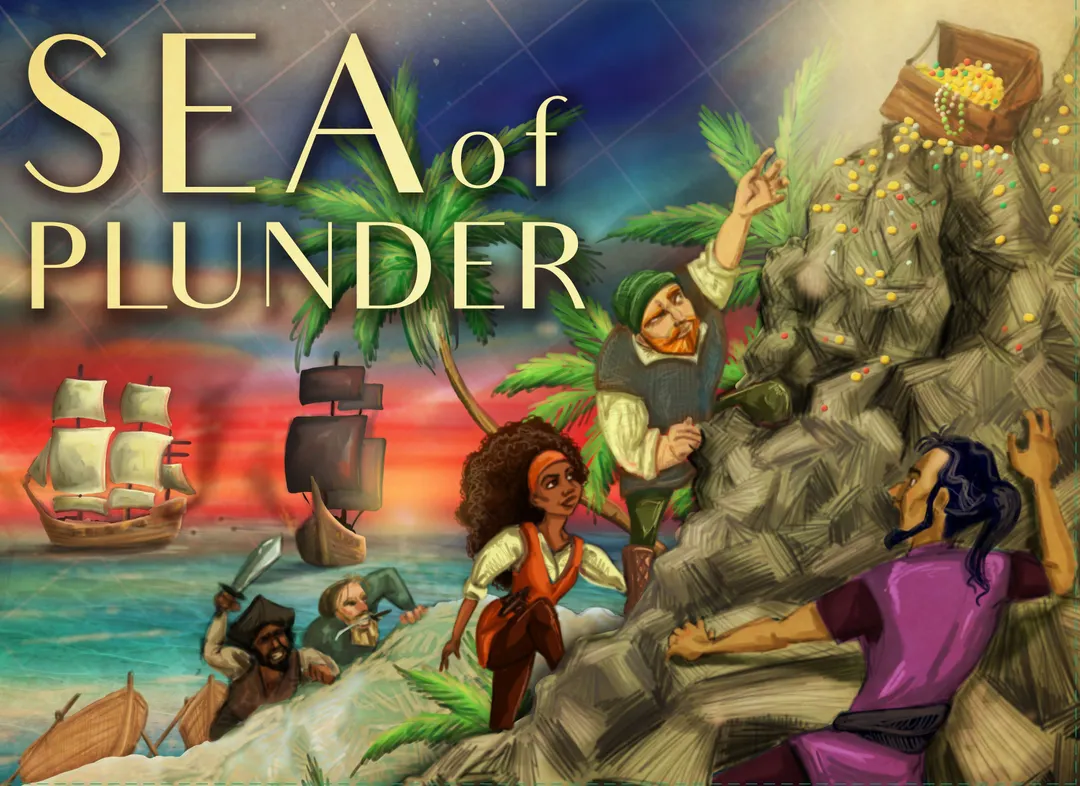
Sea of Plunder est un jeu de société sorti en 2020 pour 2 à 4 joueurs, avec des parties de 30 à 60 minutes et à partir de 10 ans. Il a été conçu par Rusty Lumpkin et ses principales mécaniques sont Variable Player Powers, Hand Management et Take That.
À propos du jeu
En anglais
Kickstarter Link: https://bit.ly/Seaofplunderks Sail the Seas in search of fame and riches as a merchant ship captain trying to out maneuver his fellow merchants and the ruthless pirates! Sea of Plunder is a light weight strategy game about treasure hunting in which you are a merchant ship sailing across the endless sea, racing to get to mysterious treasure islands while at the same time gathering goods from port cities,dodging pirates, getting pushed around by hurricanes, and stealing cargo from the other merchants/treasure hunters! Scoring and Goal: Four things are taken into account for scoring at the end of the game. Treasures- The players can gather treasures from the mysterious treasure islands throughout the game. Goods-A second way is by collecting the unique goods that are produced at each of the port cities located on the 4 home islands. The goods are a set collection objective where you get more points for having multiple different types of goods. (this means that you have to travel to the multiple islands or trade with another merchant for them) Magical Compasses-A player is also awarded points at the end of the game for each "magical compass" that they possess. All the players are given these through out the game but they can also gain these in trades from other players. Debt-Each player is deducted points based on the amount of debt that they have gained throughout the game. A player will obtain debt any time that they come into contact with pirates and are unable to bribe them with a good. In this instance the pirates attach the ship and the player gains debt which represents the price that they had to pay for repairs The player with the total highest score wins. In the case of a tie, the player with the most magical compasses left wins. Game Play: Players take turns in clockwise fashion. They will draw two cards and add them to their hand. They then choose to play a card (a treasure map, port city, or action card) these will commonly affect the active player (Exceptions would include some action cards). The player then chooses to discard a card. The card discarded allows the player to choose a pirate on the map and move it accordingly Player Powers: Each player has a unique player power that allows for new strategies and replayability! Action Cards: Allow the player to preform more complex combos or implement some take that upon the other players. Event Cards: These are cards that are dispersed throughout the draw deck. When they appear they do not count as one of your draws or plays but they are played immediately and affect all players. Treasure Islands: The game starts with one treasure island in the middle of the board. When a player sails across a treasure island they have now discovered it and found the treasure. That treasure island will disappear off the map and a new treasure island location will be randomly generated. Event cards such as "Tales of More Treasure" cause new treasure islands to be generated onto the board so that by the end of the game there are multiple options of islands that you can choose to sail towards. The Pirates: There are four pirate ships that can be moved across the board according to each players discard. You can use the pirates to discover the treasure islands (the pirate would get the treasure) if an opponent is getting to close to it for comfort. You can also sail the pirate into another player forcing them to lose a good or accumulate debt. You may also place a pirate on the port cities to help blockade your opponent merchants from gathering the goods from that city. Game End: The game end can be triggered in two ways. When a player has collected 3 treasures or when the pirates have collected 6 treasures. When the game end is triggered, the players finish the round and then calculate final scoring.
Mécanismes
Auteurs
Éditeurs
- Three Nail Games, LLC
Questions et réponses
Selon le catalogue, Sea of Plunder se joue de 2 à 4 personnes. Cette fourchette correspond au nombre de joueurs indiqué par l’éditeur : le jeu s’installe donc pour toute taille de groupe dans cette limite. La mise en place, certaines règles et le décompte peuvent varier selon l’effectif ; vérifiez la configuration exacte dans la règle de votre édition.
La durée indiquée pour Sea of Plunder est de 30 à 60 minutes, selon l’estimation de l’éditeur pour une partie complète. La durée réelle dépend du groupe, de l’effectif et de la connaissance des règles : les premières parties sont plus longues, les groupes expérimentés terminent plus vite. Mise en place et explication des règles ne sont pas comprises.
Le catalogue indique Sea of Plunder à partir de 10 ans. C’est la recommandation de l’éditeur ; elle tient compte de la lecture nécessaire, de la complexité des règles et des petits composants, pas seulement du thème. Les plus jeunes peuvent souvent participer avec l’aide d’un adulte : vérifiez l’âge indiqué sur votre édition et tenez compte de l’expérience de votre groupe.
Sea of Plunder obtient une note de complexité de 2,3 sur 5 auprès des joueurs de BoardGameGeek, ce qui en fait un jeu plutôt léger. Cette note reflète la quantité de règles, de planification et de décisions qu’exige une partie typique. Prévoyez une explication plus longue pour les jeux exigeants et utilisez un guide de préparation avant la soirée.
Sea of Plunder appartient à ces catégories : Adventure, Nautical et Racing. Ses principales mécaniques sont Variable Player Powers, Hand Management et Take That. Les catégories décrivent le thème et l’univers d’un jeu, tandis que les mécaniques décrivent ce que les joueurs font réellement pendant leur tour. Chaque mécanique mène à une page du catalogue avec des jeux similaires.
Les auteurs crédités pour Sea of Plunder sont : Rusty Lumpkin. Ces crédits proviennent des données publiées du jeu et désignent les personnes responsables de sa conception, et non les illustrateurs ou les éditeurs. Les pages d’auteurs sur MeepleRules regroupent les autres titres des mêmes auteurs, ce qui est utile lorsqu’un jeu vous plaît et que vous en cherchez de similaires.
Le catalogue présente Sea of Plunder comme un jeu de base. Il se joue seul avec le matériel contenu dans la boîte et ne nécessite aucun autre titre. Les extensions, s’il en existe, y ajoutent du contenu ou des règles et sont répertoriées séparément dans le catalogue, avec un lien vers ce jeu de base.