
- Rang BGG
- BGG #3 825
- Note BGG
- 9,0
Star Trek: Captain's Chair – To Boldly Go
- 1–2 joueurs
- 60–120 min
- Complexité 4,2/5
- 2026
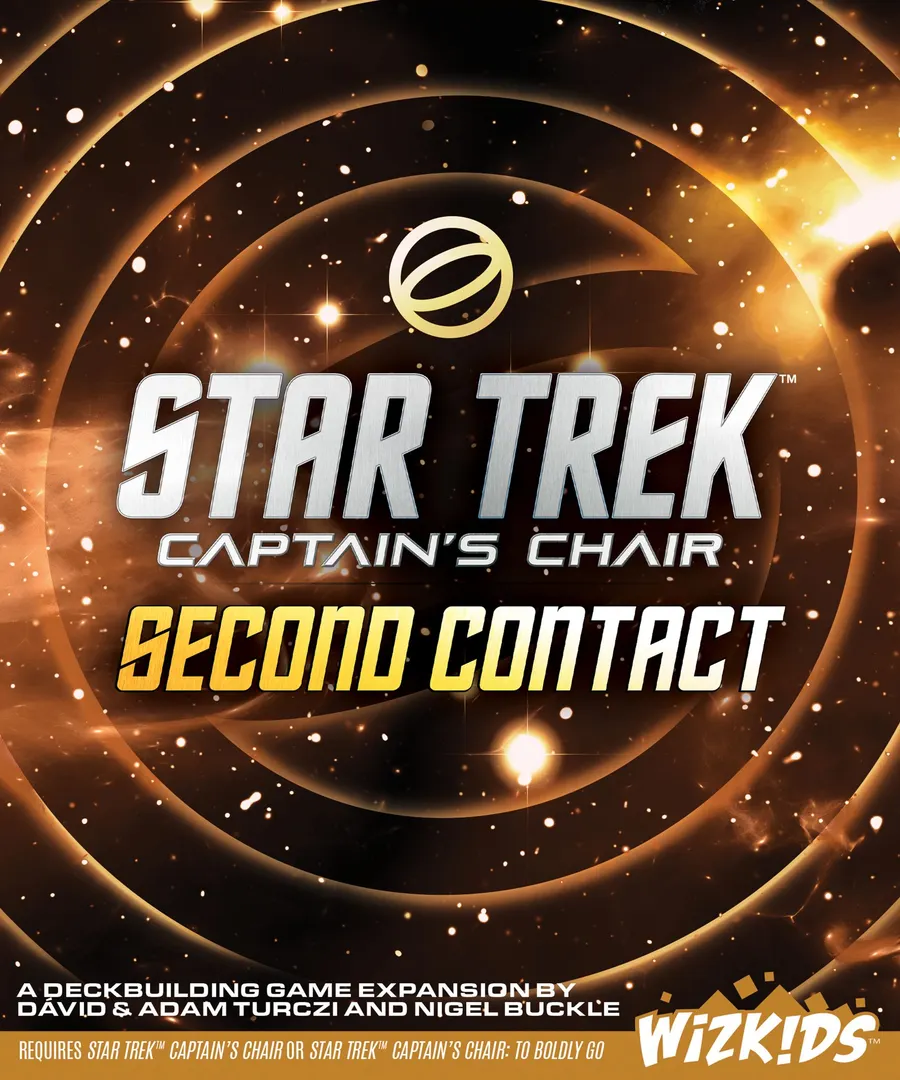
Aide aux règles de Star Trek: Captain's Chair – Second Contact
Des explications claires des tours, effets de cartes et situations litigieuses, avec des références aux sources officielles et un historique des questions sauvegardé.
Que voulez-vous savoir ?
Les réponses viennent du livret officiel, avec la page à vérifier.
Star Trek: Captain's Chair – Second Contact est une extension de Star Trek: Captain's Chair sortie en 2026 pour 1 à 2 joueurs, avec des parties de 60 à 120 minutes et à partir de 14 ans. Il a été conçu par Dávid Turczi, Nigel Buckle et Adam Turczi et ses principales mécaniques sont Hand Management, Area Movement et Solo / Solitaire Game.

En anglais
In Star Trek: Captain's Chair, you go head-to-head against an opponent, each stepping into the shoes of an iconic leader from across the history of the Star Trek galaxy. Command ships, crew, and away teams, while you manage resources and alliances! Star Trek: Captain's Chair – Second Contact contains three new captains that can face off against those in the original game, against those in To Boldly Go, and against one another, but you'll need common cards from one of the base games. Two of the captains are Carol Freeman, Captain of the U.S.S. Cerritos, and Christopher Pike, Captain of the U.S.S. Enterprise, and you can also add Krulmuth-B as a starting location, opening a portal that crosses space and time!
Selon le catalogue, Star Trek: Captain's Chair – Second Contact se joue de 1 à 2 personnes. Cette fourchette correspond au nombre de joueurs indiqué par l’éditeur : le jeu s’installe donc pour toute taille de groupe dans cette limite. La mise en place, certaines règles et le décompte peuvent varier selon l’effectif ; vérifiez la configuration exacte dans la règle de votre édition.
La durée indiquée pour Star Trek: Captain's Chair – Second Contact est de 60 à 120 minutes, selon l’estimation de l’éditeur pour une partie complète. La durée réelle dépend du groupe, de l’effectif et de la connaissance des règles : les premières parties sont plus longues, les groupes expérimentés terminent plus vite. Mise en place et explication des règles ne sont pas comprises.
Le catalogue indique Star Trek: Captain's Chair – Second Contact à partir de 14 ans. C’est la recommandation de l’éditeur ; elle tient compte de la lecture nécessaire, de la complexité des règles et des petits composants, pas seulement du thème. Les plus jeunes peuvent souvent participer avec l’aide d’un adulte : vérifiez l’âge indiqué sur votre édition et tenez compte de l’expérience de votre groupe.
Star Trek: Captain's Chair – Second Contact obtient une note de complexité de 4,0 sur 5 auprès des joueurs de BoardGameGeek, ce qui en fait un jeu exigeant. Cette note reflète la quantité de règles, de planification et de décisions qu’exige une partie typique. Prévoyez une explication plus longue pour les jeux exigeants et utilisez un guide de préparation avant la soirée.
Star Trek: Captain's Chair – Second Contact appartient à ces catégories : Card Game, Movies / TV / Radio theme et Science Fiction. Ses principales mécaniques sont Hand Management, Area Movement et Solo / Solitaire Game. Les catégories décrivent le thème et l’univers d’un jeu, tandis que les mécaniques décrivent ce que les joueurs font réellement pendant leur tour. Chaque mécanique mène à une page du catalogue avec des jeux similaires.
Les auteurs crédités pour Star Trek: Captain's Chair – Second Contact sont : Dávid Turczi, Nigel Buckle et Adam Turczi. Ces crédits proviennent des données publiées du jeu et désignent les personnes responsables de sa conception, et non les illustrateurs ou les éditeurs. Les pages d’auteurs sur MeepleRules regroupent les autres titres des mêmes auteurs, ce qui est utile lorsqu’un jeu vous plaît et que vous en cherchez de similaires.
Le catalogue présente Star Trek: Captain's Chair – Second Contact comme une extension de Star Trek: Captain's Chair. Les extensions ajoutent du contenu, des règles ou des scénarios au jeu de base et ne se jouent généralement pas seules : il vous faut donc Star Trek: Captain's Chair pour l’utiliser. Vérifiez que votre édition de Star Trek: Captain's Chair est compatible, car certaines extensions ont été révisées d’une édition à l’autre.