
- Rang BGG
- BGG #5 031
- Note BGG
- 6,4
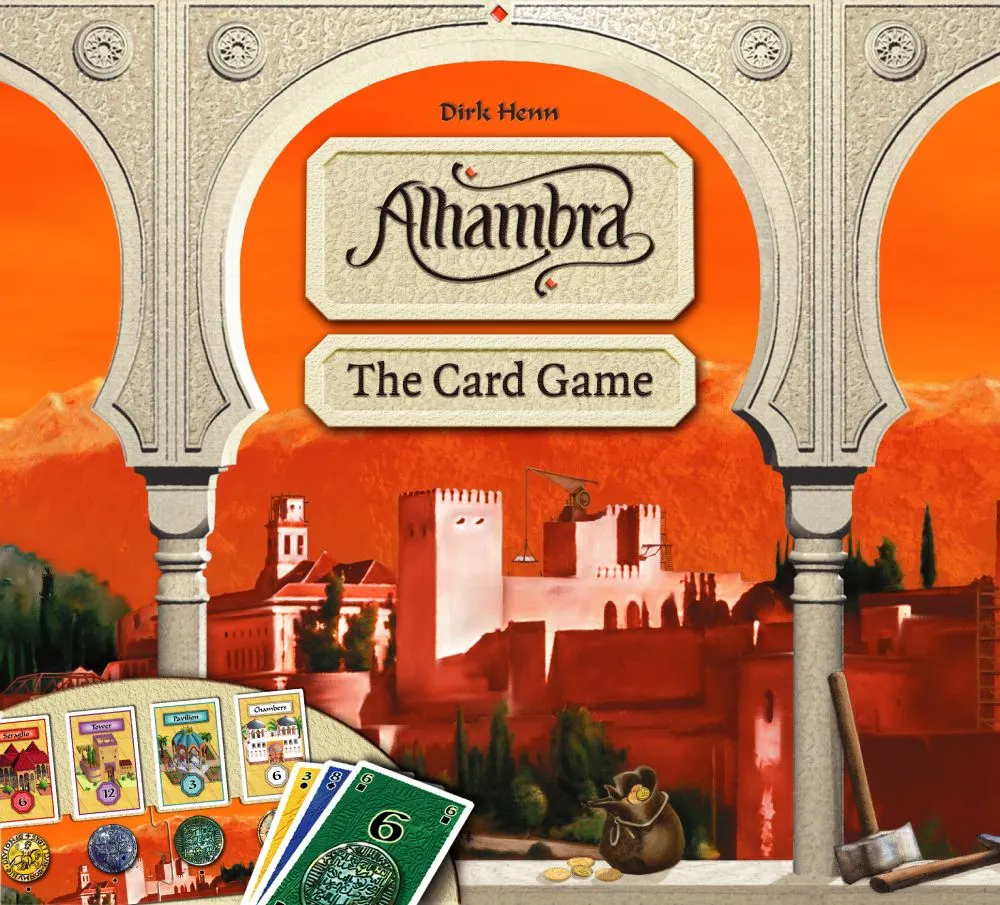
Alhambra: The Card Game
- 2–6 joueurs
- 45 min
- Complexité 1,7/5
- 1992
Aide aux règles de Taunt You a Second Time
Des explications claires des tours, effets de cartes et situations litigieuses, avec des références aux sources officielles et un historique des questions sauvegardé.
Que voulez-vous savoir ?
Les réponses viennent du livret officiel, avec la page à vérifier.
Taunt You a Second Time est une extension de Monty Python and the Holy Grail CCG sortie en 2000 pour 2 joueurs, avec des parties de 30 minutes et à partir de 12 ans. Ses principales mécaniques sont Open Drafting.





En anglais
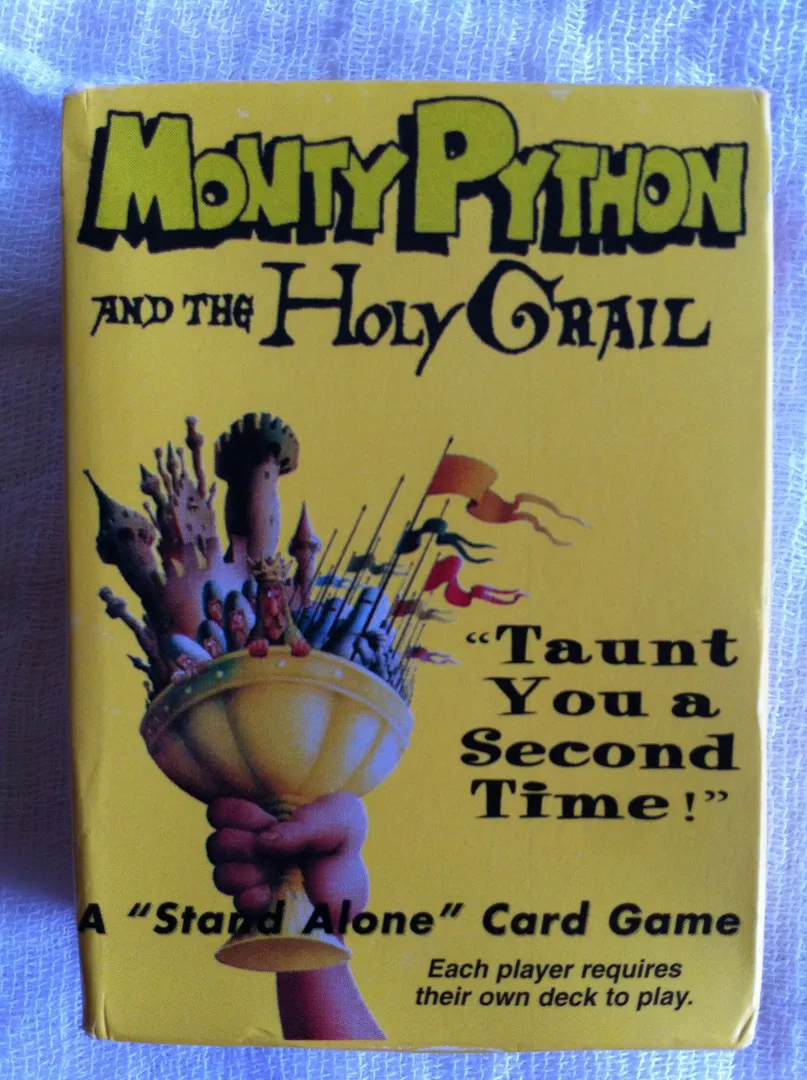
This is an expansion for the Monty Python and the Holy Grail CCG. It is in non-collectible format with 150 new cards. It is also a stand alone game and contains "marquee cards like Tim the Enchanter, the Black Knight, and the Trojan Rabbit. The tuck box proudly proclaims that "no llamas were harmed during the testing of this product". From the back of the Taunt You A Second Time yellow deck box: "The Monty Python and the Holy Grail CCG just got even sillier. This much anticipated expansion set to Kenzer and Company's popular card game is produced in a non-collectible format with over 150 new cards. One deck is all each player needs. Taunt you a Second Time is a stand alone game and also completely compatible with the original game. The set contains marquee cards like Tim the Enchanter, the Black Knight and the Trojan Rabbit. Playing this game is like rewriting each scene from every gamer's favorite movie. And if you think you got a nasty taunting last time, you ain't seen nothin' yet!"
Selon le catalogue, Taunt You a Second Time se joue à 2 personnes. C’est le nombre de joueurs indiqué par l’éditeur : le jeu est donc conçu pour exactement ce nombre de participants. Les variantes pour d’autres tailles de groupe, s’il en existe, sont décrites dans la règle de votre édition ; consultez-la avant d’installer une autre configuration.
La durée indiquée pour Taunt You a Second Time est de 30 minutes, selon l’estimation de l’éditeur pour une partie complète. La durée réelle dépend du groupe, de l’effectif et de la connaissance des règles : les premières parties sont plus longues, les groupes expérimentés terminent plus vite. Mise en place et explication des règles ne sont pas comprises.
Le catalogue indique Taunt You a Second Time à partir de 12 ans. C’est la recommandation de l’éditeur ; elle tient compte de la lecture nécessaire, de la complexité des règles et des petits composants, pas seulement du thème. Les plus jeunes peuvent souvent participer avec l’aide d’un adulte : vérifiez l’âge indiqué sur votre édition et tenez compte de l’expérience de votre groupe.
Taunt You a Second Time appartient à ces catégories : Card Game, Humor et Movies / TV / Radio theme. Ses principales mécaniques sont Open Drafting. Les catégories décrivent le thème et l’univers d’un jeu, tandis que les mécaniques décrivent ce que les joueurs font réellement pendant leur tour. Chaque mécanique mène à une page du catalogue avec des jeux similaires.
Le catalogue présente Taunt You a Second Time comme une extension de Monty Python and the Holy Grail CCG. Les extensions ajoutent du contenu, des règles ou des scénarios au jeu de base et ne se jouent généralement pas seules : il vous faut donc Monty Python and the Holy Grail CCG pour l’utiliser. Vérifiez que votre édition de Monty Python and the Holy Grail CCG est compatible, car certaines extensions ont été révisées d’une édition à l’autre.