- Note BGG
- 6,5
The Battle of Marathon, 490 B.C.
1992
Aide aux règles de The Battle of Marathon, 490 B.C.
Des explications claires des tours, effets de cartes et situations litigieuses, avec des références aux sources officielles et un historique des questions sauvegardé.
- 2 joueurs
- Complexité 3,5/5

Assistant de règles pour The Battle of Marathon, 490 B.C.
Que voulez-vous savoir ?
Les réponses viennent du livret officiel, avec la page à vérifier.
The Battle of Marathon, 490 B.C. est une extension de jeu de société sortie en 1992 pour 2 joueurs. Il a été conçu par Richard H. Berg et Mark Herman et ses principales mécaniques sont Dice Rolling, Hexagon Grid et Line of Sight.
À propos du jeu
En anglais
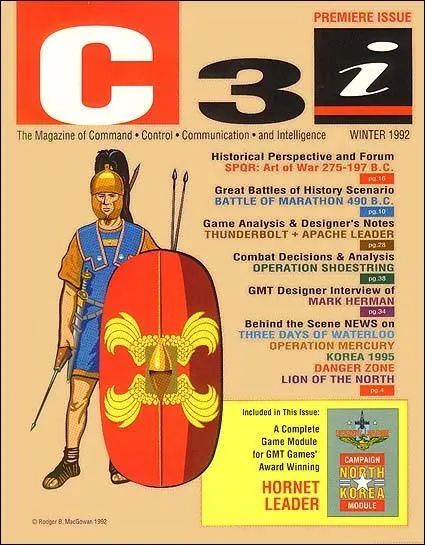
An expansion for The Great Battles of Alexander, this module is found in RBM/GMT's C3i Magazine Nr 1. It is the first C3i magazine scenario for Great Battles of History. As with other games in the series, it uses a combat system that emphasizes weapon/armor superiority and maneuverability over quantity. According to designer Mark Herman, "Hoplite warfare is a rather stolid affair. In most battles it's a question of whether Phalanx "a" can outpush and outsnarl Phalanx "b". This, for the most part, is why we chose not to begin our Great Battles of History series with something like HOPLITE: Classical Greek Warfare. With only a few exceptions, the scenario pickings alternate between dreary and grim. Marathon, one of the pivotal battles in classical history, is one of those exceptions." Marathon features the first bloody meeting between the great Persian Empire and the emerging power of Athens. The Persian army utilized light infantry and light cavalry from across their cosmopolitan empire. The Athenians used the famed Greek hoplites.
Catégories
Mécanismes
Auteurs
Éditeurs
- GMT Games
- RBM Studio
Questions et réponses
Selon le catalogue, The Battle of Marathon, 490 B.C. se joue à 2 personnes. C’est le nombre de joueurs indiqué par l’éditeur : le jeu est donc conçu pour exactement ce nombre de participants. Les variantes pour d’autres tailles de groupe, s’il en existe, sont décrites dans la règle de votre édition ; consultez-la avant d’installer une autre configuration.
The Battle of Marathon, 490 B.C. obtient une note de complexité de 3,5 sur 5 auprès des joueurs de BoardGameGeek, ce qui en fait un jeu de complexité moyenne. Cette note reflète la quantité de règles, de planification et de décisions qu’exige une partie typique. Prévoyez une explication plus longue pour les jeux exigeants et utilisez un guide de préparation avant la soirée.
The Battle of Marathon, 490 B.C. appartient à ces catégories : Wargame, Ancient et Expansion for Base-game. Ses principales mécaniques sont Dice Rolling, Hexagon Grid et Line of Sight. Les catégories décrivent le thème et l’univers d’un jeu, tandis que les mécaniques décrivent ce que les joueurs font réellement pendant leur tour. Chaque mécanique mène à une page du catalogue avec des jeux similaires.
Les auteurs crédités pour The Battle of Marathon, 490 B.C. sont : Richard H. Berg et Mark Herman. Ces crédits proviennent des données publiées du jeu et désignent les personnes responsables de sa conception, et non les illustrateurs ou les éditeurs. Les pages d’auteurs sur MeepleRules regroupent les autres titres des mêmes auteurs, ce qui est utile lorsqu’un jeu vous plaît et que vous en cherchez de similaires.
Le catalogue présente The Battle of Marathon, 490 B.C. comme une extension. Les extensions ajoutent du contenu, des règles ou des scénarios à un jeu de base existant et ne se jouent généralement pas seules. Vérifiez sur la boîte ou dans la description de l’éditeur quel jeu de base est requis, et assurez-vous que votre édition de ce jeu est compatible avec cette extension.