
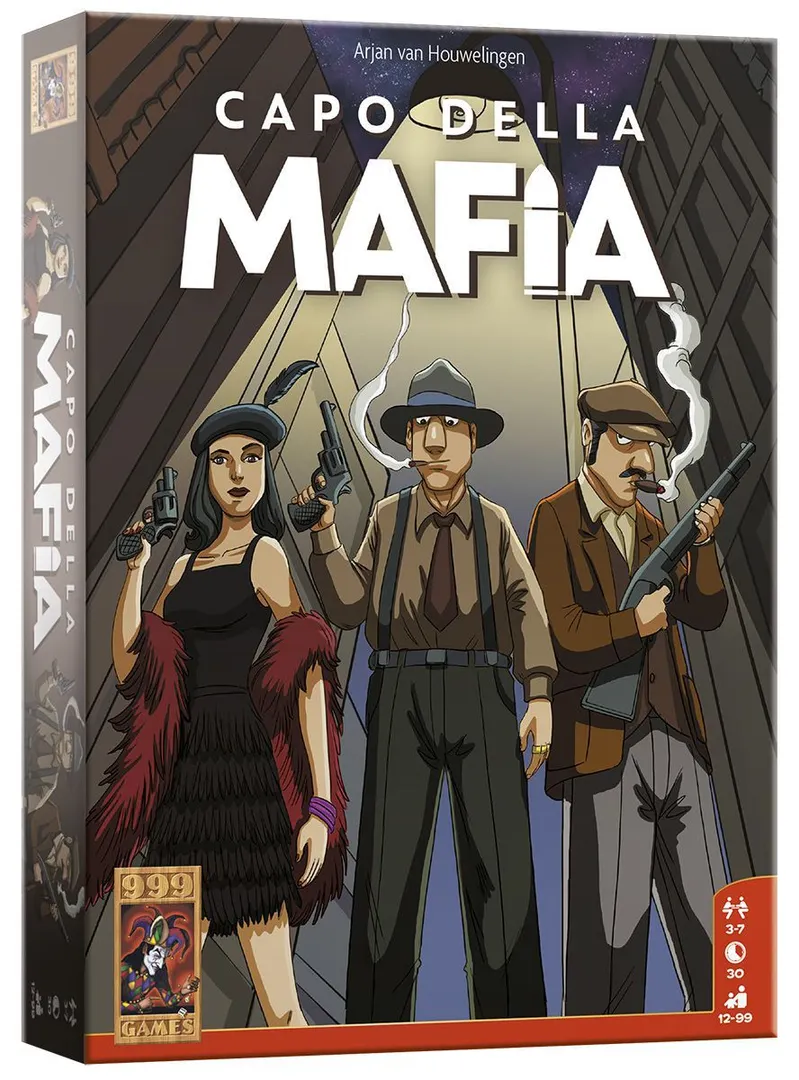
- Rang BGG
- BGG #23 502
- Note BGG
- 6,0
Capo della Mafia
- 3–7 joueurs
- 30 min
- Complexité 1,3/5
- 2017
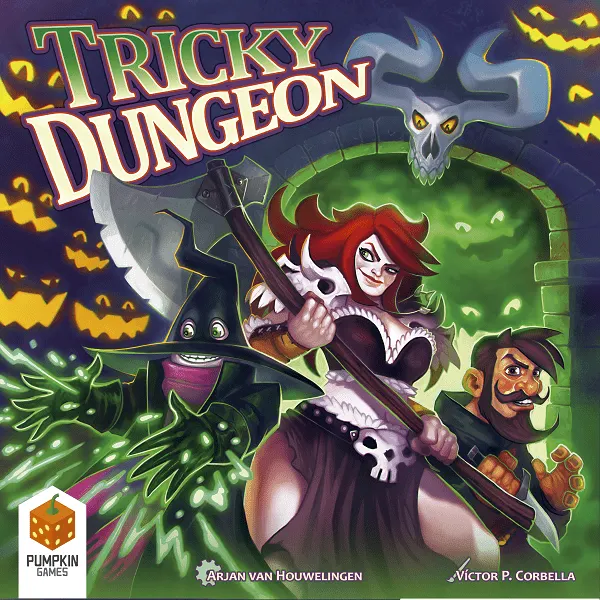
2017
Aide aux règles de Tricky Dungeon
Des explications claires des tours, effets de cartes et situations litigieuses, avec des références aux sources officielles et un historique des questions sauvegardé.
Que voulez-vous savoir ?
Les réponses viennent du livret officiel, avec la page à vérifier.
Tricky Dungeon est un jeu de société sorti en 2017 pour 2 à 4 joueurs, avec des parties de 20 à 40 minutes et à partir de 12 ans. Il a été conçu par Arjan van Houwelingen et ses principales mécaniques sont Hand Management et Trick-taking.





En anglais
The trick-taking game Tricky Dungeon is played with 15 different hero cards and a 32 card deck that consists of 8 cards in 4 suits. The hero cards are offered in 3 different languages: English, German and Dutch. The playing cards are language independant and are valued 0 to 7. The cards with value 3 and 4 in each suit are magical spells. Each suit also has one card marked as a potion, the value being different in each suit. These special cards offer special gameplay effects, depending on which hero is chosen in a round. The other playing cards show typical dungeon inhabitants. These become relevant with a few heroes that are in the game. Players compete over multiple rounds to accumulate the most gold and the player who ends up with the most gold wins the game. There are 3 sets of 5 unique heroes and each game a set of 5 heroes is chosen to play with. Every round one of the players acts as the active player and has to choose one of 5 available heroes. Each hero changes the game and describes how gold is earned. All the other players have to cooperate and try to stop the active player from reaching this goal. The active player chooses the hero to play with after the playing cards are dealt. In a 4 player game each player receives 7 cards. The remaining 4 cards are set aside. After the active player has chosen the hero for the round, that player may exchange up to 4 cards from hand with the remaining cards. In a 2 and 3 player game each player is dealt 9 cards and 5 cards are set aside and available for exchanging. Each hero determines the goal for the active player how gold can be earned. This can be a scaling amount of gold. For example if a player chooses the Barbarian gold is earned for every collected trick and potion card above a certain threshold. Some heroes offer a fixed amount of gold. For example, if a player chooses the Assassin, 4 gold is earned if the active player wins the final trick of the round. When the active player did not manage to earn any gold, all other players are rewarded for their good cooperation by earning 1 gold each. Some heroes change the game in other ways, for example playing cards without revealing them or making use of the set aside cards during a round. The playing and winning of the tricks uses mostly standard trick-taking rules. The first played card of a trick determines the suit that is asked. Other players must follow suit, if they can. In general the player who played highest card of the suit that is requested, wins the trick. Some heroes add trump cards that round, this can be a suit, one of the special cards (magical spells, potions) or even a specific number. If one or more trump cards is played in a trick, the highest trump wins the trick. Each suit is ranked (1 to 4), if multiple trump cards of the same value are played (e.g. multiple 4's with a hero in play that makes them trump), the higher ranked suit wins the trick. The three sets of five heroes each offer a range of options for players. Starting players are recommended to play with set A first. Sets B and C offering more tricky heroes to play with. Besides these three unique set of hero options, the game also suggests a few variants to increase variability. Instead of playing 2 rounds per player the 'Adventurer's Guild' variant forces players to play once with each of the five heroes that game as an active player. Another variant, 'Random Dungeon', shuffles all the 15 heroes together and the active player is offered 1 hero at random to choose to play with. Up to two times this hero can be refused an a new hero is revealed.
Selon le catalogue, Tricky Dungeon se joue de 2 à 4 personnes. Cette fourchette correspond au nombre de joueurs indiqué par l’éditeur : le jeu s’installe donc pour toute taille de groupe dans cette limite. La mise en place, certaines règles et le décompte peuvent varier selon l’effectif ; vérifiez la configuration exacte dans la règle de votre édition.
La durée indiquée pour Tricky Dungeon est de 20 à 40 minutes, selon l’estimation de l’éditeur pour une partie complète. La durée réelle dépend du groupe, de l’effectif et de la connaissance des règles : les premières parties sont plus longues, les groupes expérimentés terminent plus vite. Mise en place et explication des règles ne sont pas comprises.
Le catalogue indique Tricky Dungeon à partir de 12 ans. C’est la recommandation de l’éditeur ; elle tient compte de la lecture nécessaire, de la complexité des règles et des petits composants, pas seulement du thème. Les plus jeunes peuvent souvent participer avec l’aide d’un adulte : vérifiez l’âge indiqué sur votre édition et tenez compte de l’expérience de votre groupe.
Tricky Dungeon obtient une note de complexité de 2,0 sur 5 auprès des joueurs de BoardGameGeek, ce qui en fait un jeu plutôt léger. Cette note reflète la quantité de règles, de planification et de décisions qu’exige une partie typique. Prévoyez une explication plus longue pour les jeux exigeants et utilisez un guide de préparation avant la soirée.
Tricky Dungeon appartient à ces catégories : Fantasy et Bluffing. Ses principales mécaniques sont Hand Management et Trick-taking. Les catégories décrivent le thème et l’univers d’un jeu, tandis que les mécaniques décrivent ce que les joueurs font réellement pendant leur tour. Chaque mécanique mène à une page du catalogue avec des jeux similaires.
Les auteurs crédités pour Tricky Dungeon sont : Arjan van Houwelingen. Ces crédits proviennent des données publiées du jeu et désignent les personnes responsables de sa conception, et non les illustrateurs ou les éditeurs. Les pages d’auteurs sur MeepleRules regroupent les autres titres des mêmes auteurs, ce qui est utile lorsqu’un jeu vous plaît et que vous en cherchez de similaires.
Le catalogue présente Tricky Dungeon comme un jeu de base. Il se joue seul avec le matériel contenu dans la boîte et ne nécessite aucun autre titre. Les extensions, s’il en existe, y ajoutent du contenu ou des règles et sont répertoriées séparément dans le catalogue, avec un lien vers ce jeu de base.