
- Posizione BGG
- BGG #8883
- Valutazione BGG
- 7,8
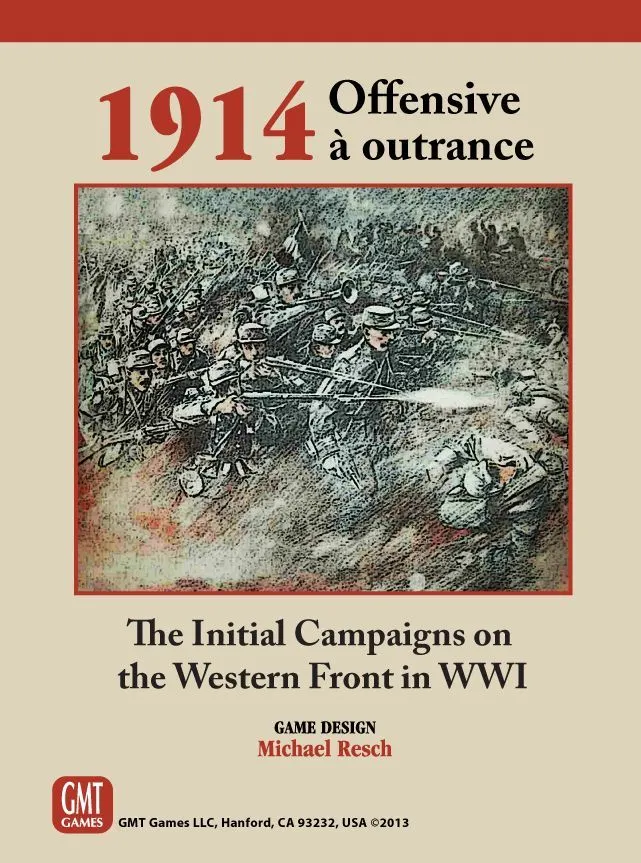
1914: Offensive à outrance
- 1–4 giocatori
- Complessità 4,0/5
- 2013
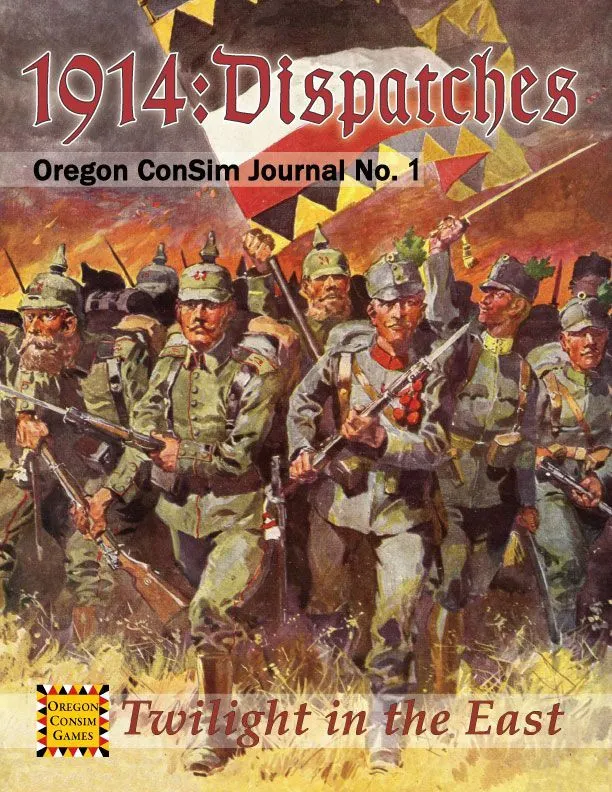
Aiuto con le regole di 1914: Dispatches – Twilight in the East
Spiegazioni chiare di turni, effetti delle carte e situazioni dubbie, con riferimenti alle fonti ufficiali e cronologia delle domande salvata.
Cosa vuoi sapere?
Le risposte vengono dal regolamento ufficiale, con la pagina da verificare.
1914: Dispatches – Twilight in the East è un’espansione di 1914: Twilight in the East pubblicata nel 2012 per 2–6 giocatori. È stato ideato da Michael Resch e le sue meccaniche principali sono Dice Rolling, Hexagon Grid e Simulation.






In inglese
1914: Dispatches is the first issue of Oregon ConSim Journal (a Charles S Roberts Award winning magazine), is a support magazine that focuses on the Eastern Front during 1914 by expanding on the CSR Award winning WWI simulation game 1914: Twilight in the East (TitE). During the design of 1914 TitE a great deal of research material was accumulated that was not incorporated due to space (and time) limitations. The Journal allows some of this material to be brought to light, more thoroughly covering the fascinating 1914 time period. The centerpiece of the publication is a collection of three well-researched historical articles that are paired with new scenarios allowing the subject to be accurately simulated. The time period October–November 1914 contained two distinct campaigns that culminated in very large battles fought in Russian Poland: The Battle of Ivangorod and Battles of Lodz and Krakau. These battles are the topics chosen for two of the scenarios found in the journal. The first, “The Battle of Ivangorod,” is a small introductory scenario that covers the time period 22–26 October when the Austro-Hungarian First Army unsuccessfully fought to clear the Russians from their Vistula River bridgeheads at Ivangorod and Kozienice. Following the Battle of Ivangorod, in early November the German high command acted to regain the operational initiative and protect Germany from the ravages of invasion. Using their excellent railroad network to transfer large bodies of troops, they launched an offensive to penetrate deep into the main Russian forces’ flank and rear. The epic operation is the subject of the Journal’s second scenario, “The Battles of Lodz and Krakau.” This expert scenario, intended for veteran players, is huge, requiring all five maps and almost the entire counter mix. A well known military axiom states: mistakes made in the deployment of troops at the start of operations cannot be righted in the course of the whole campaign. At the outset of WWI this was true for all fronts but nowhere was it more pertinent than on the Eastern Front. The Journal’s third article, “Austria-Hungary’s Botched Deployment in 1914” concentrates on that nation’s botched initial strategic deployment. The game strategy article Playing Both Sides in Galicia details successful opening moves on the Galician front. Based on years of gameplay experience by the designer, the article presents a corps-by-corps breakdown of Austro-Hungarian and Russian armies and offers tested solutions for the challenges they face. Rounding out the contents are two enhanced, professionally-produced Player Aid Cards designed to speed combat resolution in 1914, Twilight in the East. Journal Contents (64 pages): The Austro-Hungarian Army and National Identity 1867–1914 Austria-Hungary’s Botched Deployment in 1914 associated scenario: The Austro-Hungarian Deployment Plan as of Winter 1913/14 (18 counters to be mounted - see expansion counters) Playing Both Sides in Galicia — Galicia Campaign Strategies Prelude to Ivangorod associated scenario: The Battle of Ivangorod (introductory scenario GT 28-29) The Lodz Campaign: Defeating the Russian Steamroller associated scenario: The Battles of Lodz & Krakau (complete scenario GT 36-47) The Polish Legion in 1914 Revised Victory Conditions for the Grand Campaign scenario Also included: Two replacement Player Aid Cards for 1914, Twilight in the East See preview pages. (Source: publisher and BGG user)
Secondo il catalogo, 1914: Dispatches – Twilight in the East supporta da 2 a 6 giocatori. L’intervallo corrisponde al numero di giocatori indicato dall’editore, quindi il gioco si può preparare per qualsiasi gruppo entro quei limiti. Preparazione, alcune regole e punteggio possono comunque variare in base al numero di giocatori: controlla la configurazione esatta nel regolamento della tua edizione.
1914: Dispatches – Twilight in the East ha un punteggio di complessità di 3,0 su 5 secondo i giocatori di BoardGameGeek, il che lo rende un gioco di media complessità. Il punteggio riflette quanta conoscenza delle regole, pianificazione e decisioni richiede una partita tipica. I giochi impegnativi richiedono una prima spiegazione più lunga, quindi conviene usare una guida di preparazione.
1914: Dispatches – Twilight in the East appartiene a queste categorie: Wargame, Expansion for Base-game e World War I. Le sue meccaniche principali sono Dice Rolling, Hexagon Grid e Simulation. Le categorie descrivono il tema e l’ambientazione di un gioco, mentre le meccaniche descrivono ciò che i giocatori fanno davvero nel proprio turno. Ogni meccanica porta a una pagina del catalogo con giochi simili.
Gli autori accreditati di 1914: Dispatches – Twilight in the East sono: Michael Resch. Questi crediti provengono dai dati pubblicati del gioco e indicano le persone responsabili della sua progettazione, non gli illustratori o gli editori. Le pagine degli autori su MeepleRules raccolgono altri titoli degli stessi autori, utili quando un gioco ti piace e ne cerchi di simili.
Il catalogo classifica 1914: Dispatches – Twilight in the East come espansione di 1914: Twilight in the East. Le espansioni aggiungono contenuti, regole o scenari al gioco base e di solito non si possono giocare da sole, quindi per usarla ti serve 1914: Twilight in the East. Controlla che la tua edizione di 1914: Twilight in the East sia compatibile, perché alcune espansioni sono state riviste tra un’edizione e l’altra.