

- Posizione BGG
- BGG #2293
- Valutazione BGG
- 7,3
The Russian Campaign
- 2 giocatori
- 360 min
- Complessità 2,9/5
- 1974
2021
Aiuto con le regole di Ambon: Burning Sun & Little Seagulls
Spiegazioni chiare di turni, effetti delle carte e situazioni dubbie, con riferimenti alle fonti ufficiali e cronologia delle domande salvata.
Per 2 giocatori
Cosa vuoi sapere?
Le risposte vengono dal regolamento ufficiale, con la pagina da verificare.
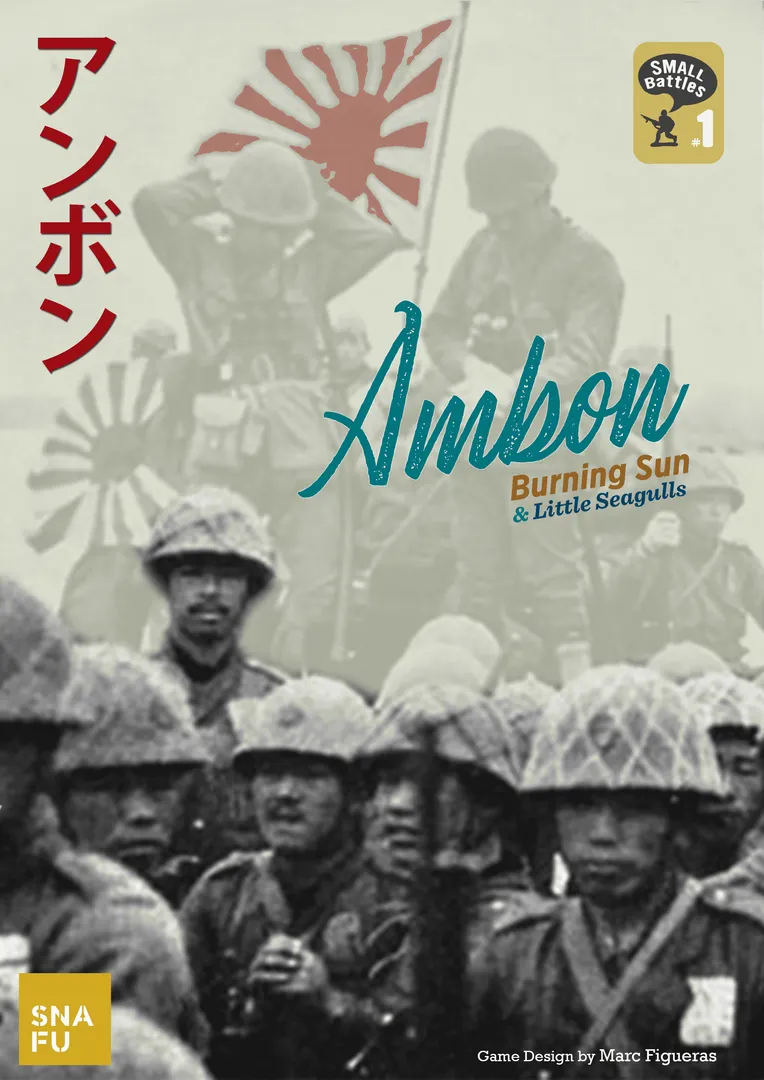
Ambon: Burning Sun & Little Seagulls è un gioco da tavolo pubblicato nel 2021 per 2 giocatori, con partite da 60 a 120 minuti e dai 12 anni in su. È stato ideato da Marc Figueras e le sue meccaniche principali sono Dice Rolling, Variable Set-up e Grid Movement.







In inglese
"Ambon: Burning Sun & Little Seagulls" is a two player wargame simulating the battle of Ambon, that took place between 30th January and 3rd February 1942 in the island of Ambon, in the Moluccas. A Japanese force composed of the 228th Regiment of the 38th Division of the IJA and the 1st Kure Special Naval Landing Force occupied the island against a force composed of the Dutch Molukken Brigade and the Australian "Gull Force". One player controls Japanese forces and the other one Allied (Dutch and Australian) forces. Victory is achieved by means of control of certain hexes and elimination of enemy units. The aim of the Japanese player is to conquer as soon as possible the three main key locations in Ambon (the city of Ambon, Paso, and the Laha airfield) as well as some secondary key locations. The sooner the Japanese conquers these locations, the more victory points he will receive. So, for the Japanese it's a race against the clock, while the Allied player must slow down the Japanese advance without suffering too many losses. -description from designer
Secondo il catalogo, Ambon: Burning Sun & Little Seagulls supporta 2 giocatori. È il numero di giocatori indicato dall’editore, quindi il gioco è pensato esattamente per quel numero di partecipanti. Le varianti per gruppi di altre dimensioni, se esistono, sono descritte nel regolamento della tua edizione: consultalo prima di preparare una configurazione diversa.
La durata indicata per Ambon: Burning Sun & Little Seagulls è di 60–120 minuti, la stima dell’editore per una partita completa. La durata effettiva dipende dal gruppo, dal numero di giocatori e dalla conoscenza delle regole: le prime partite durano di più, i gruppi esperti finiscono prima. Preparazione e spiegazione delle regole non sono comprese nella stima.
Il catalogo indica Ambon: Burning Sun & Little Seagulls dai 12 anni in su. È la raccomandazione dell’editore e tiene conto della lettura richiesta, della complessità delle regole e dei componenti piccoli, non solo del tema. I più giovani spesso possono giocare con l’aiuto di un adulto: controlla l’età consigliata sulla tua edizione e l’esperienza del tuo gruppo con i giochi da tavolo.
Ambon: Burning Sun & Little Seagulls ha un punteggio di complessità di 2,1 su 5 secondo i giocatori di BoardGameGeek, il che lo rende un gioco piuttosto leggero. Il punteggio riflette quanta conoscenza delle regole, pianificazione e decisioni richiede una partita tipica. I giochi impegnativi richiedono una prima spiegazione più lunga, quindi conviene usare una guida di preparazione.
Ambon: Burning Sun & Little Seagulls appartiene a queste categorie: Wargame e World War II. Le sue meccaniche principali sono Dice Rolling, Variable Set-up e Grid Movement. Le categorie descrivono il tema e l’ambientazione di un gioco, mentre le meccaniche descrivono ciò che i giocatori fanno davvero nel proprio turno. Ogni meccanica porta a una pagina del catalogo con giochi simili.
Gli autori accreditati di Ambon: Burning Sun & Little Seagulls sono: Marc Figueras. Questi crediti provengono dai dati pubblicati del gioco e indicano le persone responsabili della sua progettazione, non gli illustratori o gli editori. Le pagine degli autori su MeepleRules raccolgono altri titoli degli stessi autori, utili quando un gioco ti piace e ne cerchi di simili.
Il catalogo classifica Ambon: Burning Sun & Little Seagulls come gioco base. Si gioca da solo con i componenti presenti nella scatola e non richiede altri titoli. Le espansioni, se esistono, aggiungono nuovo contenuto o nuove regole e sono elencate separatamente nel catalogo con un collegamento a questo gioco base.