
- Posizione BGG
- BGG #3339
- Valutazione BGG
- 7,8
Bolt Action
- 2–6 giocatori
- 120 min
- Complessità 2,7/5
- 2012
2012
Aiuto con le regole di Blood Upon The Risers: D-Day
Spiegazioni chiare di turni, effetti delle carte e situazioni dubbie, con riferimenti alle fonti ufficiali e cronologia delle domande salvata.
Cosa vuoi sapere?
Le risposte vengono dal regolamento ufficiale, con la pagina da verificare.
Blood Upon The Risers: D-Day è un’espansione per gioco da tavolo pubblicata nel 2012 con partite da 120 minuti e dai 10 anni in su. È stato ideato da Darby Eckles e le sue meccaniche principali sono Dice Rolling.

In inglese
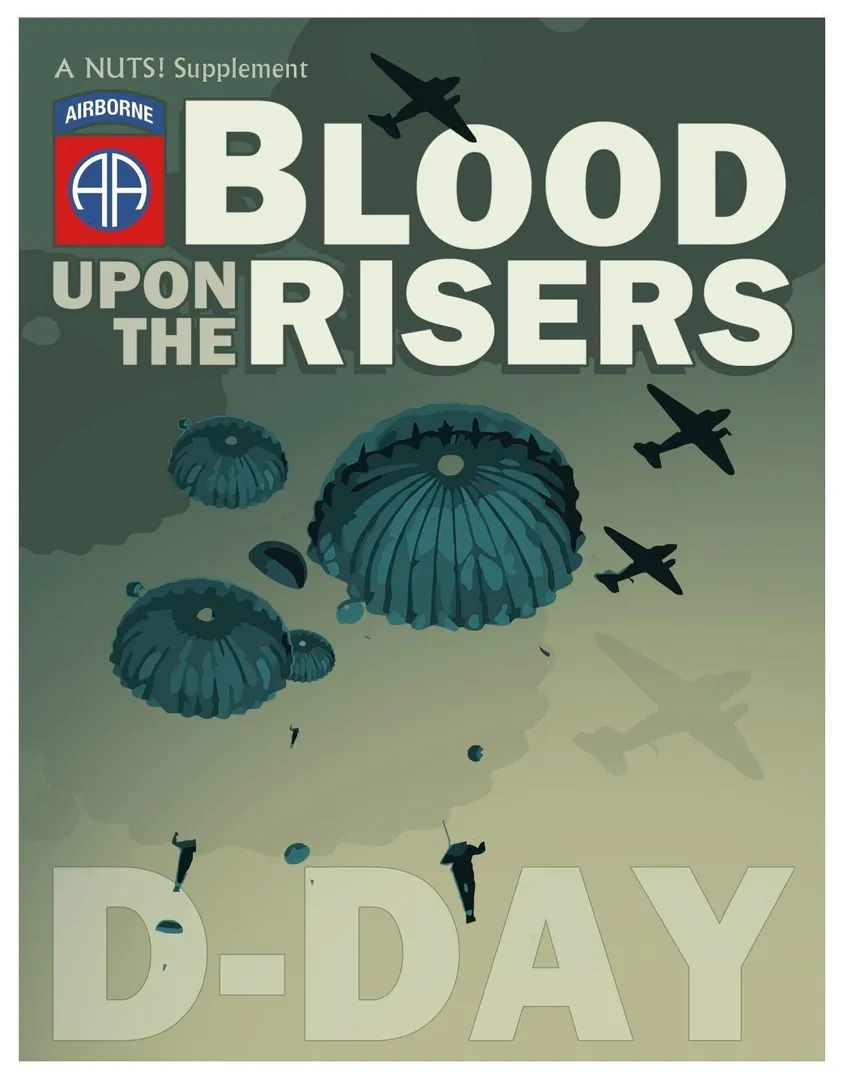
Blood Upon The Risers: D-Day is a scenario book for NUTS! 2nd Edition. It takes place on June 6, 1944 and covers the actions of small bands of American paratroopers of the 82nd Airborne Division during the early parts of Operation Neptune, a portion of the Overlord invasion plan. Inside Blood Upon The Risers: D-Day you will find: • Special Airborne rules that will make your paratroopers different than normal soldiers. • New rules for the different types of terrain you will fight in. • Tabletop artillery rules. • New weapon and vehicle stats. • Ten linked scenarios covering the actions on the 6th of June. The scenarios provided in the book are fictional, though based on actual events, and are intended to be played solo (or cooperative) from the American side. The scenarios can easily be modified to be played head-to-head with another player taking on the forces allocated to the German side. The scenarios are also designed to be played in sequence, with the result of the previous mission affecting the next. However, they may also be played as standalone scenarios with little-to-no changes.
La durata indicata per Blood Upon The Risers: D-Day è di 120 minuti, la stima dell’editore per una partita completa. La durata effettiva dipende dal gruppo, dal numero di giocatori e dalla conoscenza delle regole: le prime partite durano di più, i gruppi esperti finiscono prima. Preparazione e spiegazione delle regole non sono comprese nella stima.
Il catalogo indica Blood Upon The Risers: D-Day dai 10 anni in su. È la raccomandazione dell’editore e tiene conto della lettura richiesta, della complessità delle regole e dei componenti piccoli, non solo del tema. I più giovani spesso possono giocare con l’aiuto di un adulto: controlla l’età consigliata sulla tua edizione e l’esperienza del tuo gruppo con i giochi da tavolo.
Blood Upon The Risers: D-Day appartiene a queste categorie: Wargame, Miniatures e World War II. Le sue meccaniche principali sono Dice Rolling. Le categorie descrivono il tema e l’ambientazione di un gioco, mentre le meccaniche descrivono ciò che i giocatori fanno davvero nel proprio turno. Ogni meccanica porta a una pagina del catalogo con giochi simili.
Gli autori accreditati di Blood Upon The Risers: D-Day sono: Darby Eckles. Questi crediti provengono dai dati pubblicati del gioco e indicano le persone responsabili della sua progettazione, non gli illustratori o gli editori. Le pagine degli autori su MeepleRules raccolgono altri titoli degli stessi autori, utili quando un gioco ti piace e ne cerchi di simili.
Il catalogo classifica Blood Upon The Risers: D-Day come espansione. Le espansioni aggiungono contenuti, regole o scenari a un gioco base esistente e di solito non si possono giocare da sole. Controlla sulla scatola o nella descrizione dell’editore quale gioco base serve e assicurati che la tua edizione di quel gioco sia compatibile con questa espansione.