
- Valutazione BGG
- 7,1
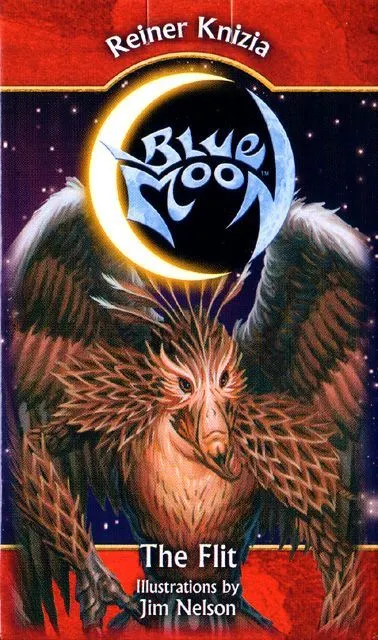
Blue Moon: The Flit
- 2 giocatori
- 30 min
- Complessità 2,3/5
- 2004
2004
Aiuto con le regole di Blue Moon
Spiegazioni chiare di turni, effetti delle carte e situazioni dubbie, con riferimenti alle fonti ufficiali e cronologia delle domande salvata.
Per 2 giocatori
Cosa vuoi sapere?
Le risposte vengono dal regolamento ufficiale, con la pagina da verificare.
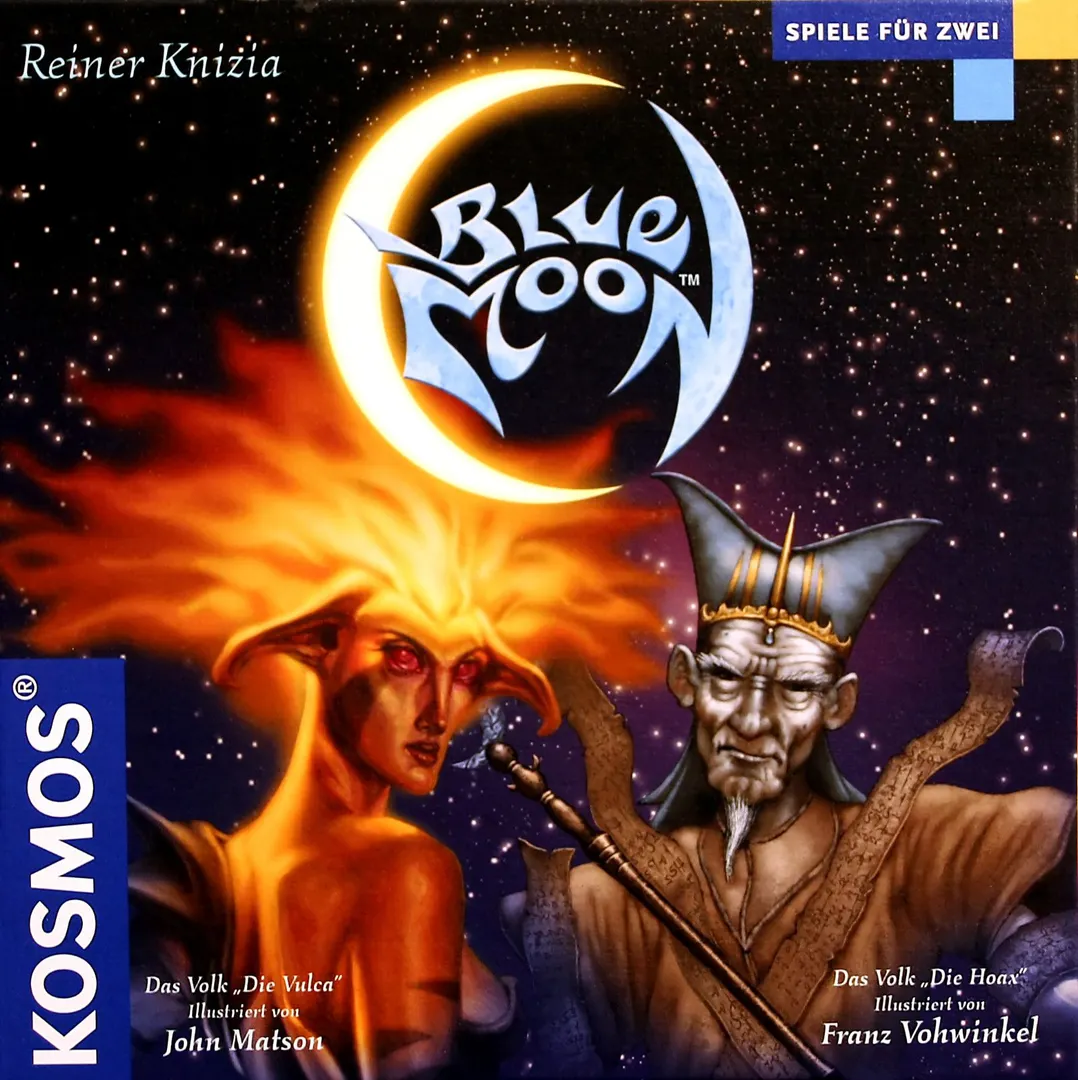
Blue Moon è un gioco da tavolo pubblicato nel 2004 per 2 giocatori, con partite da 30 minuti e dai 12 anni in su. È stato ideato da Reiner Knizia e le sue meccaniche principali sono Variable Player Powers, Hand Management e Auction / Bidding.
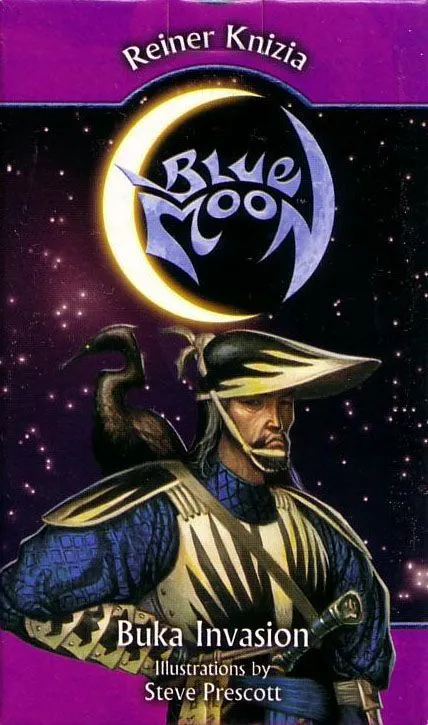
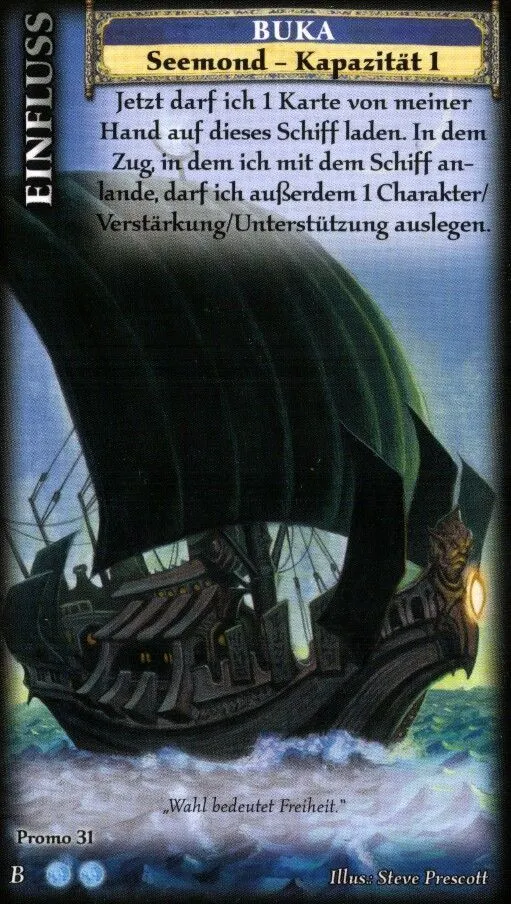
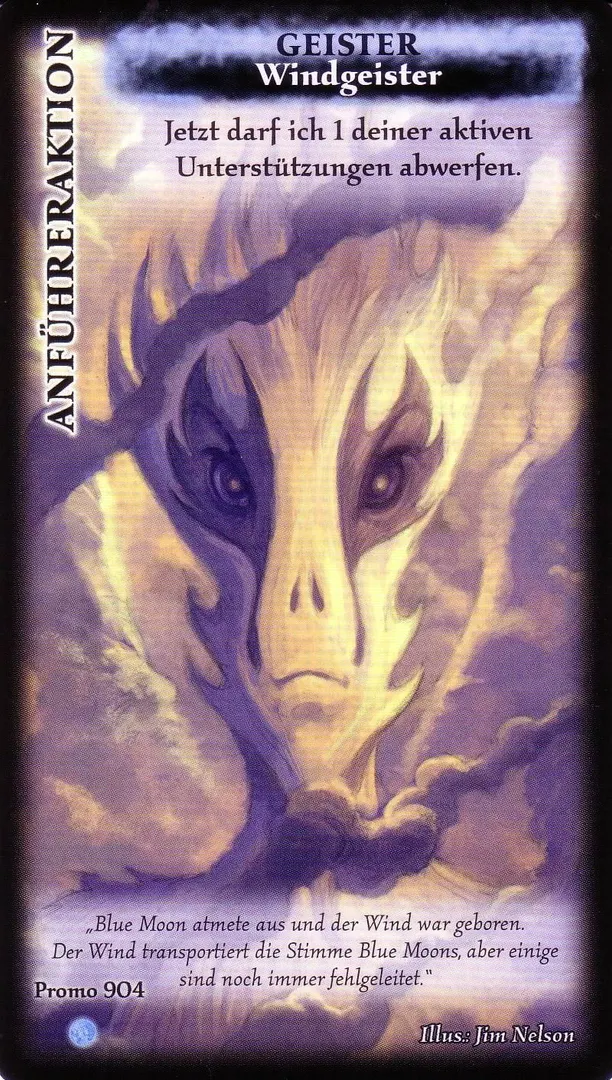
In inglese
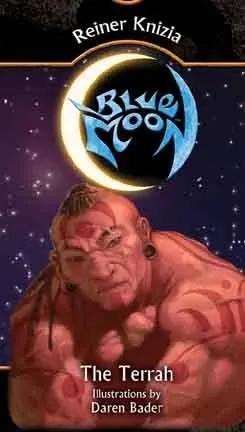
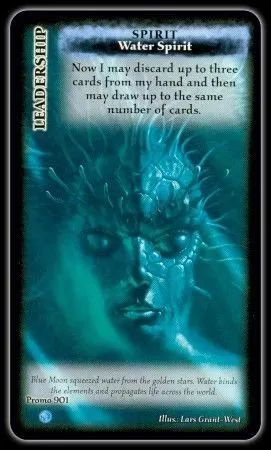
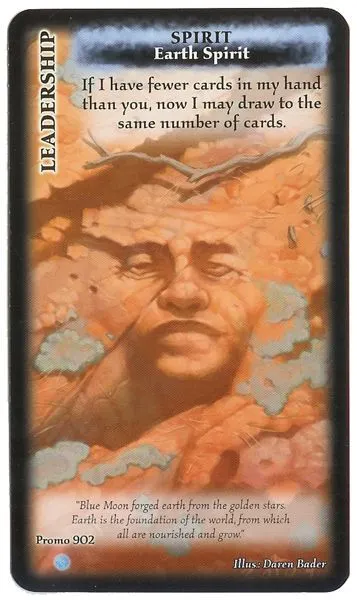
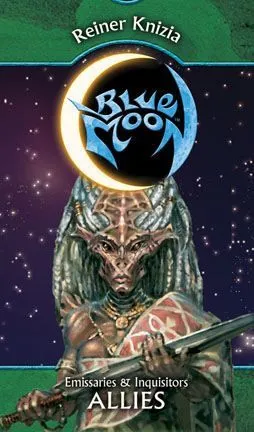
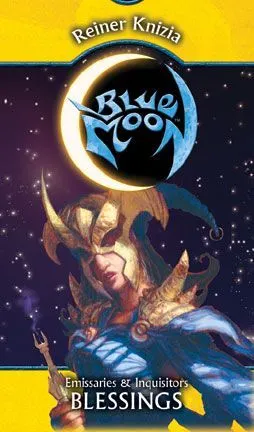
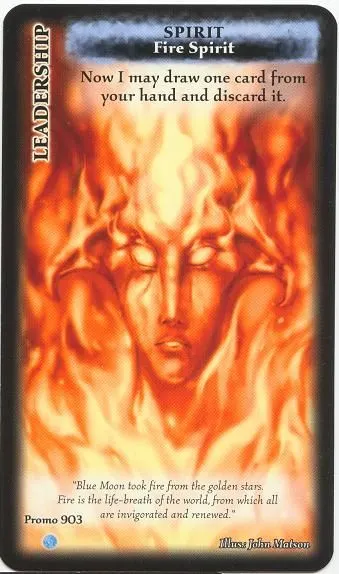
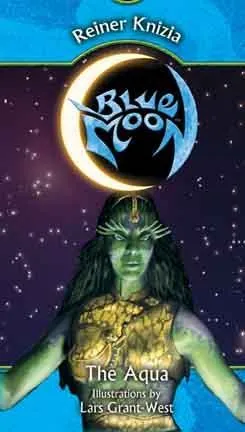
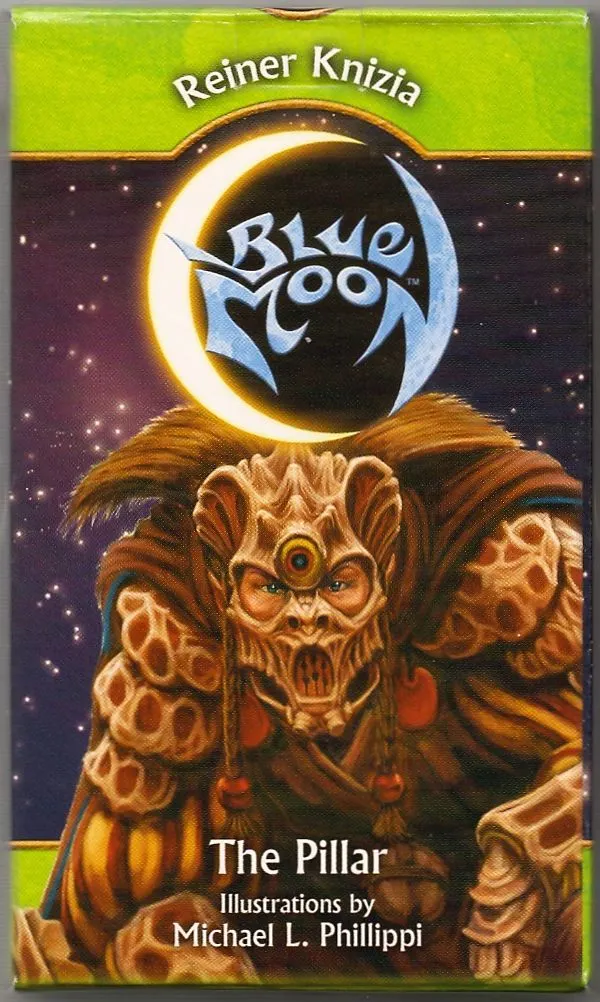
Blue Moon is a card game for two players, which has often been compared to Magic: The Gathering, although it has considerably different game mechanics. Particularly, it is not a CCG: There are no random cards in any expansion. It can thus be regarded as the first LCG, although it doesn't use that term yet. It is set in the fictional world of Blue Moon, where different peoples fight for dominance of the world and the favor of the Dragons. Each people has its own unique traits and gameplay mechanics, and is represented by a 30 card deck. The standard game box contains the 'Vulca' and the 'Hoax' decks, a small gameboard and three small plastic dragon miniatures, used as scoring counters in the game. Other decks can be bought separately as expansions with 31 or 30 cards each. Rules overview from the official rules: The game consists of independent consecutive fights. The starting player begins the first fight. Each fight is contested in one of two elements, either fire or earth, as announced by the starting player of the fight. During each fight, players take alternate turns to play their cards building up power in their combat and support areas. Basically, each turn the players play a character card and possibly some additional cards to at least match the total power of their opponent, who must then in turn match his opponent’s power, and so on. – If a player is unable to do this, he must retreat from the fight. A fight ends when one of the players retreats. The other player is the winner of the fight and attracts a number of dragons. Both players remove all their cards from their combat and support areas and place them onto their face up discard pile. The retreating player then starts the next fight. Usually, the game ends when one player runs out of cards and retreats from the last fight. Then the player with dragons on his side is the victor and scores some victory points (crystals). A player wins the game instantly if he has all three dragons on his side and then attracts further dragons. Description from the publisher. The world of Blue Moon is in chaos. Its god has abandoned it, and its people are in open war against each other, while the ruling power of three elemental dragons reigns above all! In this original 2-player game designed by Reiner Knizia, each player takes control over one of the Blue Moon peoples - the creative machinations of the Mimix, the fiery Vulca, the lofty Flit, and the clever Hoax - in their quest for dominance. The Blue Moon Legends basic set provides all the material needed to play, including details on the various peoples, a game board, full-color rules, and three plastic dragon figures. Expansion packs contain additional people cards. Blue Moon is part of the Kosmos two-player series.
Secondo il catalogo, Blue Moon supporta 2 giocatori. È il numero di giocatori indicato dall’editore, quindi il gioco è pensato esattamente per quel numero di partecipanti. Le varianti per gruppi di altre dimensioni, se esistono, sono descritte nel regolamento della tua edizione: consultalo prima di preparare una configurazione diversa.
La durata indicata per Blue Moon è di 30 minuti, la stima dell’editore per una partita completa. La durata effettiva dipende dal gruppo, dal numero di giocatori e dalla conoscenza delle regole: le prime partite durano di più, i gruppi esperti finiscono prima. Preparazione e spiegazione delle regole non sono comprese nella stima.
Il catalogo indica Blue Moon dai 12 anni in su. È la raccomandazione dell’editore e tiene conto della lettura richiesta, della complessità delle regole e dei componenti piccoli, non solo del tema. I più giovani spesso possono giocare con l’aiuto di un adulto: controlla l’età consigliata sulla tua edizione e l’esperienza del tuo gruppo con i giochi da tavolo.
Blue Moon ha un punteggio di complessità di 2,2 su 5 secondo i giocatori di BoardGameGeek, il che lo rende un gioco piuttosto leggero. Il punteggio riflette quanta conoscenza delle regole, pianificazione e decisioni richiede una partita tipica. I giochi impegnativi richiedono una prima spiegazione più lunga, quindi conviene usare una guida di preparazione.
Blue Moon appartiene a queste categorie: Card Game, Fantasy e Fighting. Le sue meccaniche principali sono Variable Player Powers, Hand Management e Auction / Bidding. Le categorie descrivono il tema e l’ambientazione di un gioco, mentre le meccaniche descrivono ciò che i giocatori fanno davvero nel proprio turno. Ogni meccanica porta a una pagina del catalogo con giochi simili.
Gli autori accreditati di Blue Moon sono: Reiner Knizia. Questi crediti provengono dai dati pubblicati del gioco e indicano le persone responsabili della sua progettazione, non gli illustratori o gli editori. Le pagine degli autori su MeepleRules raccolgono altri titoli degli stessi autori, utili quando un gioco ti piace e ne cerchi di simili.
Il catalogo classifica Blue Moon come gioco base. Si gioca da solo con i componenti presenti nella scatola e non richiede altri titoli. Le espansioni, se esistono, aggiungono nuovo contenuto o nuove regole e sono elencate separatamente nel catalogo con un collegamento a questo gioco base.