

- Posizione BGG
- BGG #1299
- Valutazione BGG
- 7,2
Bonsai
- 1–4 giocatori
- 40 min
- Complessità 1,8/5
- 2023
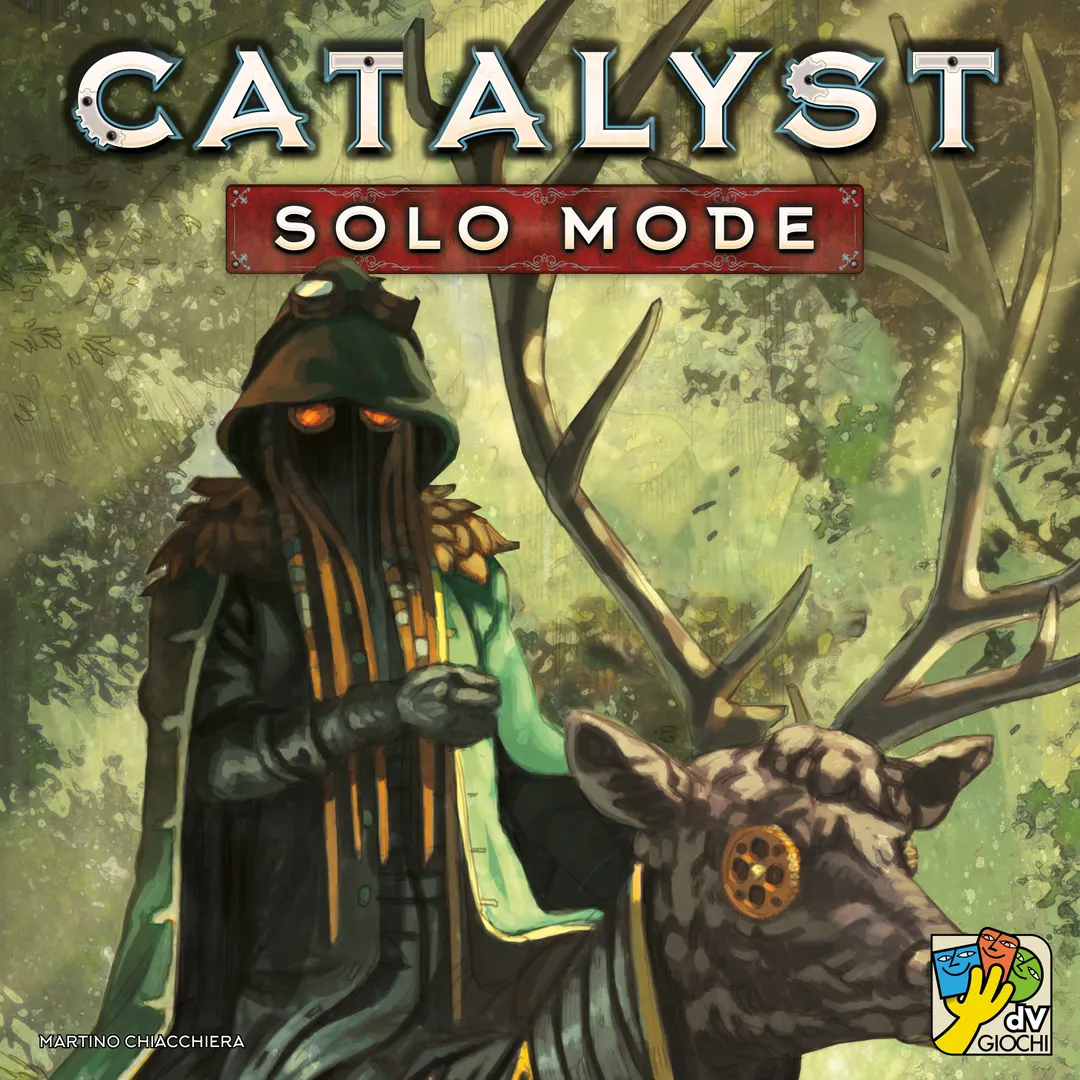
Aiuto con le regole di Catalyst: Solo mode
Spiegazioni chiare di turni, effetti delle carte e situazioni dubbie, con riferimenti alle fonti ufficiali e cronologia delle domande salvata.
Cosa vuoi sapere?
Le risposte vengono dal regolamento ufficiale, con la pagina da verificare.
Catalyst: Solo mode è un’espansione di Catalyst pubblicata nel 2019 per 1 giocatore, con partite da 20 a 30 minuti e dai 8 anni in su. È stato ideato da Martino Chiacchiera e le sue meccaniche principali sono Set Collection e Open Drafting.

In inglese
The official solo mode of Catalyst - originally released as a promotional set of rules in IoGioco game magazine. GOAL OF THE GAME Confront your skills against a fearsome Artificial Intelligence (AI). PREPARATION Choose the difficulty level: easy (+10 PV), standard (+20 PV), advanced (+30 PV). Follow the instructions for preparing a 2-player game. You are the first player. Return all building cards to the box with the exception of a building costing 1, one that costs 2, one that costs 3 and one that costs 4. They must all be of a different color and randomly selected (e.g.: play with the blue “1” building, the “2” red building, the “3” yellow building and the “4” green building). PLAYING THE GAME Play multiple turns in a row until the game ends. During each of your turns you must perform one of the three actions of the game, with the following additions to the normal rules: Collect Contributions: you get coins as usual, and the AI gets a military power token. Recruit a Catalyst: You recruit a Catalyst as usual, then take the first card to the left of the one you recruited and place it, without looking at it, in the deck of AI's scoring pile. If you recruit the first Catalyst to the right of the deck (the one on the space marked with “+1”), then place the top card of the draw pile, without looking at it, in the scoring pile of the AI. Activate a Catalyst: activate a Catalyst as usual, then place the card on top of the drawing deck, without looking at it, in the AI’s scoring pile. Note: When you get coins or actions to recruit a Catalyst through a Catalyst or a building’s effects, and when you spend Chain activation tokens to activate Catalysts, the additions to the normal rules (see above) do not apply: This means that while you perform the effect of an activated Catalyst or building, the AI does not get any military power tokens nor you must put cards in its scoring pile. THE END OF YOUR TURN As in the standard rules, after you have chosen and performed one action (and possibly the AI has gained a card in its scoring pile or a military power token), your turn is over. If one or more spaces of the board are empty, slide the other cards to the right until there are no gaps, then draw new cards from the deck to fill the board back up to 5 cards. THE END OF THE GAME When the last card of the reserve deck is discarded or put on the board, the game ends immediately. Count your VPs as usual, including the goal card’s points. The AI instead obtains the VPs written on the cards in its scoring pile, the VPs provided by each pair of its military power tokens (and for the majority), and additional VPs depending on the difficulty level chosen (see Preparation). If you scored at least 1 VP more than the AI, you won – otherwise, try harder! —description from the publisher
Secondo il catalogo, Catalyst: Solo mode supporta 1 giocatore. È il numero di giocatori indicato dall’editore, quindi il gioco è pensato esattamente per quel numero di partecipanti. Le varianti per gruppi di altre dimensioni, se esistono, sono descritte nel regolamento della tua edizione: consultalo prima di preparare una configurazione diversa.
La durata indicata per Catalyst: Solo mode è di 20–30 minuti, la stima dell’editore per una partita completa. La durata effettiva dipende dal gruppo, dal numero di giocatori e dalla conoscenza delle regole: le prime partite durano di più, i gruppi esperti finiscono prima. Preparazione e spiegazione delle regole non sono comprese nella stima.
Il catalogo indica Catalyst: Solo mode dai 8 anni in su. È la raccomandazione dell’editore e tiene conto della lettura richiesta, della complessità delle regole e dei componenti piccoli, non solo del tema. I più giovani spesso possono giocare con l’aiuto di un adulto: controlla l’età consigliata sulla tua edizione e l’esperienza del tuo gruppo con i giochi da tavolo.
Catalyst: Solo mode appartiene a queste categorie: Card Game e Expansion for Base-game. Le sue meccaniche principali sono Set Collection e Open Drafting. Le categorie descrivono il tema e l’ambientazione di un gioco, mentre le meccaniche descrivono ciò che i giocatori fanno davvero nel proprio turno. Ogni meccanica porta a una pagina del catalogo con giochi simili.
Gli autori accreditati di Catalyst: Solo mode sono: Martino Chiacchiera. Questi crediti provengono dai dati pubblicati del gioco e indicano le persone responsabili della sua progettazione, non gli illustratori o gli editori. Le pagine degli autori su MeepleRules raccolgono altri titoli degli stessi autori, utili quando un gioco ti piace e ne cerchi di simili.
Il catalogo classifica Catalyst: Solo mode come espansione di Catalyst. Le espansioni aggiungono contenuti, regole o scenari al gioco base e di solito non si possono giocare da sole, quindi per usarla ti serve Catalyst. Controlla che la tua edizione di Catalyst sia compatibile, perché alcune espansioni sono state riviste tra un’edizione e l’altra.