
- Posizione BGG
- BGG #499
- Valutazione BGG
- 7,9
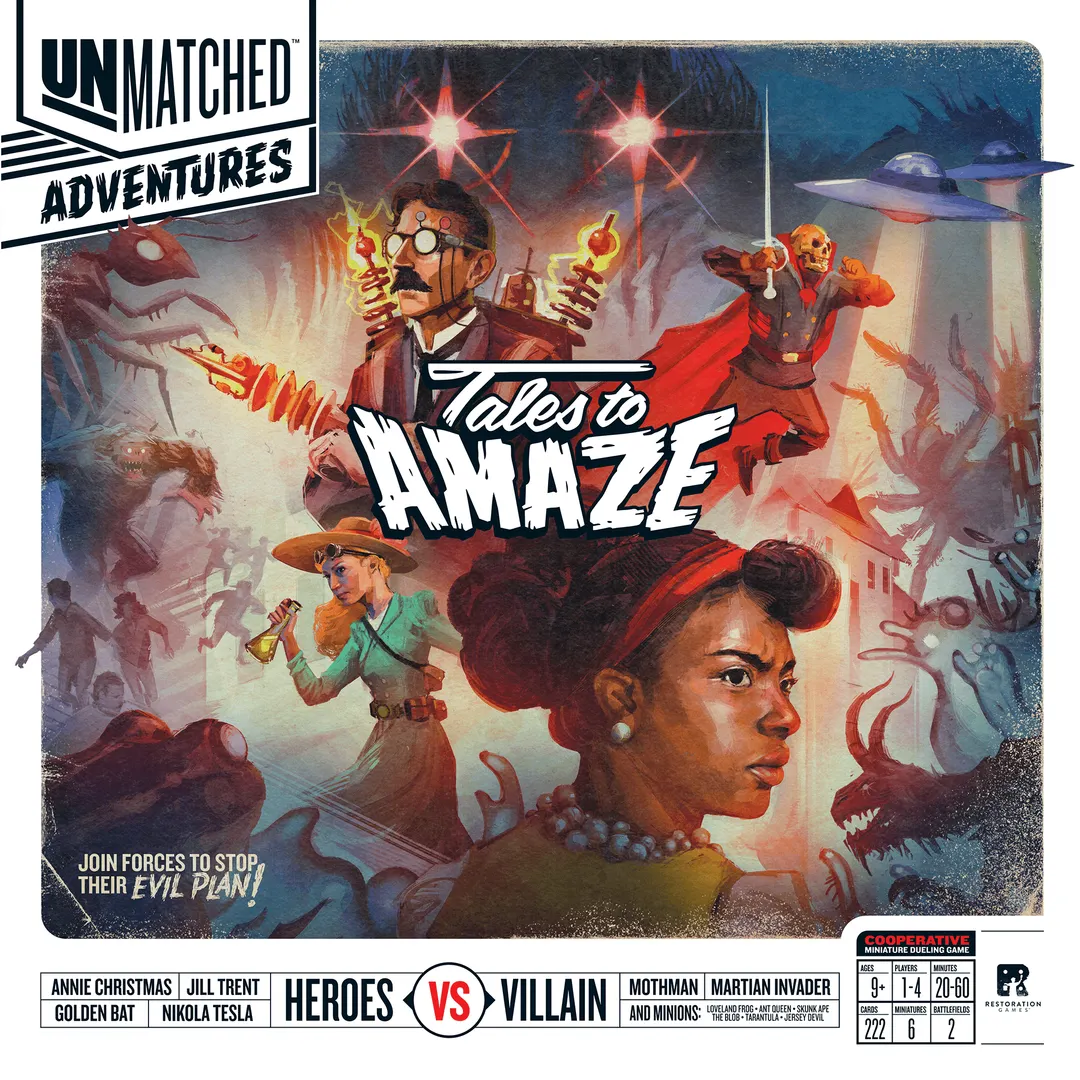
Unmatched Adventures: Tales to Amaze
- 1–4 giocatori
- 20–60 min
- Complessità 2,3/5
- 2023
2012
Aiuto con le regole di Day of the Dead
Spiegazioni chiare di turni, effetti delle carte e situazioni dubbie, con riferimenti alle fonti ufficiali e cronologia delle domande salvata.
Per 2 giocatori
Cosa vuoi sapere?
Le risposte vengono dal regolamento ufficiale, con la pagina da verificare.
Day of the Dead è un gioco da tavolo pubblicato nel 2012 per 2 giocatori, con partite da 30 minuti e dai 13 anni in su. È stato ideato da Evan Raisner e le sue meccaniche principali sono Variable Player Powers, Hand Management e Campaign / Battle Card Driven.
In inglese
Day of the Dead is a highly strategic card game that turns you and a friend into necromancers! Summon the best team of undead fighters and in six turns you’ll be named Super Grand Master, a highly coveted and extremely descriptive title. At the start of the game, each necromancer is given a hand containing nine cards. They represent an eccentric collection of skeletons, zombies, vampires, ghouls, and other spooks. Each turn, you select one of these weird characters and send it to the field. Once your opponent has done the same, the fun begins! All the fighters pair off and fight to the death. Normally, this sort of thing would be dangerous, but undead are durable and really get into the spirit of the thing. Winners score points while losers are flipped face down. Undead are resilient, so losing fighters will reassemble themselves in time for next turn’s battle. But if you don’t think your losing fighter will do better next turn, you can pull him out of line and turn him into a spirit. Spirits are the ultimate fans, boosting the power of all of your fighters. Some spirits even let you replace weaker fighters! Strategy in Day of the Dead centers around positioning; when played in the right place, any fighter can be a champion. On the other hand, even your favorite fighter can be a total failure if you are too stubborn to pull him out of a losing matchup. Stay flexible and you will bury your competition. Turn Order Summoning — When you bring new cards to the field. A New Slot Opens — Each turn a new slot opens up on the field for both players. On the first turn, each player takes a card from their hand and places it as a fallen fighter in this new slot. On each turn after that, they will take their current spirit card and place it there. Play a New Card — Fighters start their undeath as spirits, face down and slightly below the field. Spirits are also rotated 90 degrees to show that they are special. When considering what card to play, remember that you can only have 2 cards of each back in play. On turn 6, the final turn, you are allowed to break this rule and choose whatever card back you want. The Field Becomes Active — Flip all cards on the field face up (except for your spirit, it’s not on the field though it’s watching with considerable interest). If any player chose an Unearth card to be their spirit, they resolve this effect now. Then you’re ready to fight! Fighting — When your fighters get to work. Fights resolve one by one, starting with the newest slot and going to the oldest. Fights are 1 on 1 affairs and follow rigid rules. Be aware of what spirits each player has, as they will affect the outcome of each fight. Use Effects — Starting with the player who has the Priority counter, both fighters use their effects. Fighters must use their effects if able.If a player has a Double card as their spirit, they use their fighter’s effect, then immediately use it again. Add Up the Power — Add on the printed power of each fighter to any bonuses they may have accumulated via effects or spirits (Remember, if a player has a Power Up card as their spirit, they will get +2 power this fight). Compare Power — The higher-powered fighter is declared winner (in the event of a tie, both fighters are considered winners) and stays active. The lower-powered fighter is declared the loser and flips face down, becoming fallen. The Loser May Become a Spirit — If your fighter lost its fight this turn and you want to try something new, you can pull it from line and turn it into a spirit. Move on to the Next Fight Rewards — When you gain victory points. Score Victory Points — Each player scores victory points equal to the printed power values on their active fighters. Fallen cards score no points. Use the score board to keep track of it all. Pass Priority — The player who currently has the priority counter passes it to the other player. Next turn, that player will be able to use their effects first. This turn is now over! Winning At the end of 6 turns, a winner is declared. Whoever has the most victory points is that amazing person/
Secondo il catalogo, Day of the Dead supporta 2 giocatori. È il numero di giocatori indicato dall’editore, quindi il gioco è pensato esattamente per quel numero di partecipanti. Le varianti per gruppi di altre dimensioni, se esistono, sono descritte nel regolamento della tua edizione: consultalo prima di preparare una configurazione diversa.
La durata indicata per Day of the Dead è di 30 minuti, la stima dell’editore per una partita completa. La durata effettiva dipende dal gruppo, dal numero di giocatori e dalla conoscenza delle regole: le prime partite durano di più, i gruppi esperti finiscono prima. Preparazione e spiegazione delle regole non sono comprese nella stima.
Il catalogo indica Day of the Dead dai 13 anni in su. È la raccomandazione dell’editore e tiene conto della lettura richiesta, della complessità delle regole e dei componenti piccoli, non solo del tema. I più giovani spesso possono giocare con l’aiuto di un adulto: controlla l’età consigliata sulla tua edizione e l’esperienza del tuo gruppo con i giochi da tavolo.
Day of the Dead ha un punteggio di complessità di 2,0 su 5 secondo i giocatori di BoardGameGeek, il che lo rende un gioco piuttosto leggero. Il punteggio riflette quanta conoscenza delle regole, pianificazione e decisioni richiede una partita tipica. I giochi impegnativi richiedono una prima spiegazione più lunga, quindi conviene usare una guida di preparazione.
Day of the Dead appartiene a queste categorie: Card Game e Fighting. Le sue meccaniche principali sono Variable Player Powers, Hand Management e Campaign / Battle Card Driven. Le categorie descrivono il tema e l’ambientazione di un gioco, mentre le meccaniche descrivono ciò che i giocatori fanno davvero nel proprio turno. Ogni meccanica porta a una pagina del catalogo con giochi simili.
Gli autori accreditati di Day of the Dead sono: Evan Raisner. Questi crediti provengono dai dati pubblicati del gioco e indicano le persone responsabili della sua progettazione, non gli illustratori o gli editori. Le pagine degli autori su MeepleRules raccolgono altri titoli degli stessi autori, utili quando un gioco ti piace e ne cerchi di simili.
Il catalogo classifica Day of the Dead come gioco base. Si gioca da solo con i componenti presenti nella scatola e non richiede altri titoli. Le espansioni, se esistono, aggiungono nuovo contenuto o nuove regole e sono elencate separatamente nel catalogo con un collegamento a questo gioco base.