
- Valutazione BGG
- 7,1
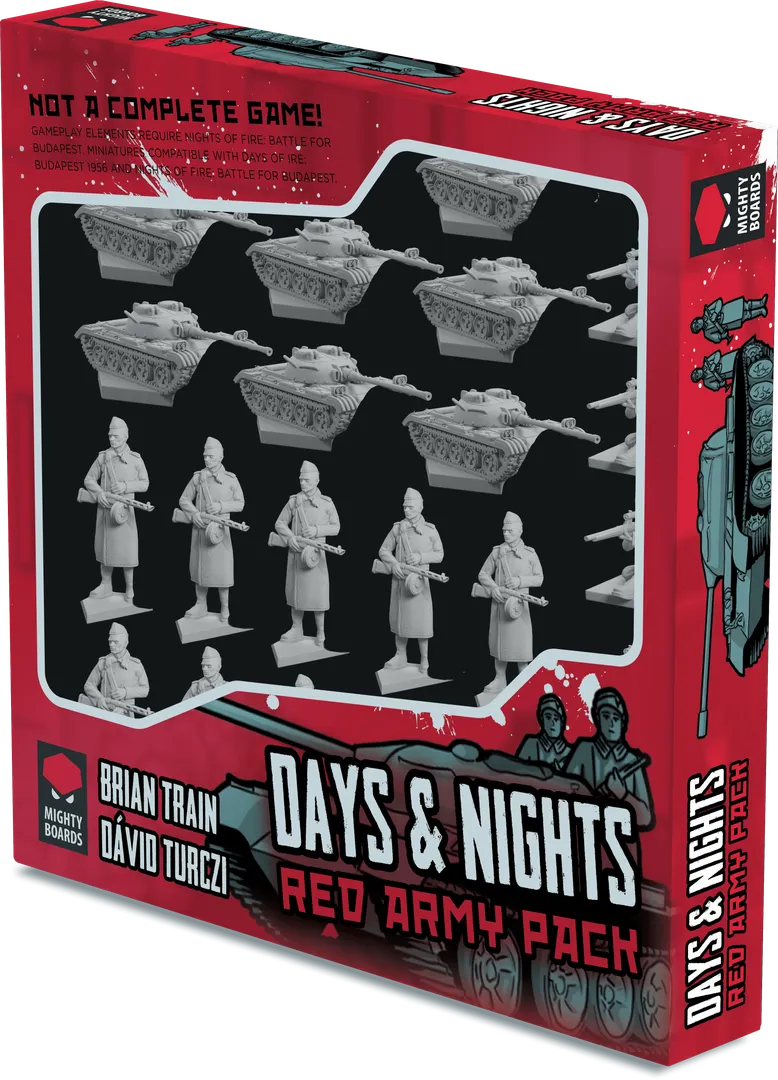
Days & Nights: Red Army Pack
- 1–3 giocatori
- 60–120 min
- Complessità 2,0/5
- 2018
2016
Aiuto con le regole di Days of Ire: Budapest 1956
Spiegazioni chiare di turni, effetti delle carte e situazioni dubbie, con riferimenti alle fonti ufficiali e cronologia delle domande salvata.
Per 1 giocatore
Cosa vuoi sapere?
Le risposte vengono dal regolamento ufficiale, con la pagina da verificare.
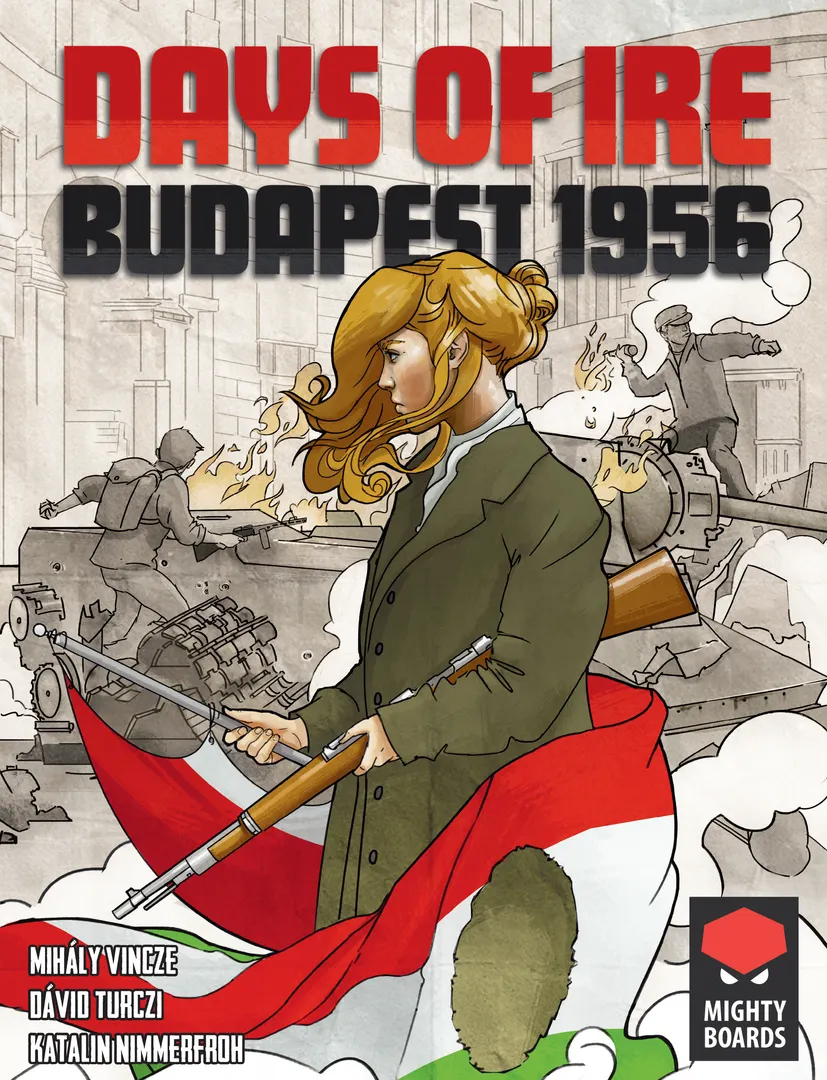
Days of Ire: Budapest 1956 è un gioco da tavolo pubblicato nel 2016 per 1–4 giocatori, con partite da 60 a 90 minuti e dai 10 anni in su. È stato ideato da Dávid Turczi, Mihály Vincze e Katalin Nimmerfroh e le sue meccaniche principali sono Hand Management, Dice Rolling e Cooperative Game.
In inglese
It's 1956, and waves of protest in Poland are once again showing cracks of the Eastern European communist bloc. Emboldened by these signs, students and intellectuals in Budapest, the Hungarian capital, organize a protest of previously unseen magnitudes. As the communist leadership sweeps in to kill the movement in its tracks a violent response is provoked, thus sparking the Revolution of the 23rd of October. One player takes charge of the Soviet forces trying to shape the headlines to his liking and uses the militia and snipers of the State Protection Authority to stop the revolutionaries at all cost. The other player(s) (from 1-3 opponents) co-operatively play as the ringleaders of the revolutionary forces collecting resources (represented as icons on their cards) and recruiting other fighters to ensure the revolution's events end up in favor of their side, while fighting off tanks and soldiers in this exciting, historically inspired card driven game. Days of Ire: Budapest 1956 is played over seven days — the last week of October 1956. The Soviet commander plays headline cards at the beginning of every turn, gathering Command Points and triggering effects that sometimes help, sometimes hinder the revolutionary effort. This card-play, reminiscent of well-known card-driven wargames (CDG) such as Twilight Struggle or Labyrinth: War on Terror, is what drives the tempo and the strategic thrust of the game. The other player(s) form the revolutionary side. They collect cards and fighters for two reasons: to resolve events for boosts to their side, and to fight off militia, snipers, and Soviet tanks in a drastic fight for survival. They have to manage their positions while spreading across Budapest, carefully dividing their actions as a team and always keeping an eye on their morale lest they run out of cards. This team-playing aspect — reminiscent of highly successful cooperative games such as Pandemic — guarantees ease of access to players who would otherwise be more intimidated by a traditional CDG. If any of the revolutionary ringleaders suffer too many wounds, or if they fail to resolve enough events by the end of the game, history changes and the revolution falls. But if they keep the streets of Budapest free from oppression, the revolution lives on, to fight another day. Historical Note: In real life, the revolution succeeded, and Hungary was free for less than a week. On the 4th of November, the Soviet forces quickly recaptured the country, but that is a subject for a different game...
Secondo il catalogo, Days of Ire: Budapest 1956 supporta da 1 a 4 giocatori. L’intervallo corrisponde al numero di giocatori indicato dall’editore, quindi il gioco si può preparare per qualsiasi gruppo entro quei limiti. Preparazione, alcune regole e punteggio possono comunque variare in base al numero di giocatori: controlla la configurazione esatta nel regolamento della tua edizione.
La durata indicata per Days of Ire: Budapest 1956 è di 60–90 minuti, la stima dell’editore per una partita completa. La durata effettiva dipende dal gruppo, dal numero di giocatori e dalla conoscenza delle regole: le prime partite durano di più, i gruppi esperti finiscono prima. Preparazione e spiegazione delle regole non sono comprese nella stima.
Il catalogo indica Days of Ire: Budapest 1956 dai 10 anni in su. È la raccomandazione dell’editore e tiene conto della lettura richiesta, della complessità delle regole e dei componenti piccoli, non solo del tema. I più giovani spesso possono giocare con l’aiuto di un adulto: controlla l’età consigliata sulla tua edizione e l’esperienza del tuo gruppo con i giochi da tavolo.
Days of Ire: Budapest 1956 ha un punteggio di complessità di 2,8 su 5 secondo i giocatori di BoardGameGeek, il che lo rende un gioco piuttosto leggero. Il punteggio riflette quanta conoscenza delle regole, pianificazione e decisioni richiede una partita tipica. I giochi impegnativi richiedono una prima spiegazione più lunga, quindi conviene usare una guida di preparazione.
Days of Ire: Budapest 1956 appartiene a queste categorie: Wargame, Political e Modern Warfare. Le sue meccaniche principali sono Hand Management, Dice Rolling e Cooperative Game. Le categorie descrivono il tema e l’ambientazione di un gioco, mentre le meccaniche descrivono ciò che i giocatori fanno davvero nel proprio turno. Ogni meccanica porta a una pagina del catalogo con giochi simili.
Gli autori accreditati di Days of Ire: Budapest 1956 sono: Dávid Turczi, Mihály Vincze e Katalin Nimmerfroh. Questi crediti provengono dai dati pubblicati del gioco e indicano le persone responsabili della sua progettazione, non gli illustratori o gli editori. Le pagine degli autori su MeepleRules raccolgono altri titoli degli stessi autori, utili quando un gioco ti piace e ne cerchi di simili.
Il catalogo classifica Days of Ire: Budapest 1956 come gioco base. Si gioca da solo con i componenti presenti nella scatola e non richiede altri titoli. Le espansioni, se esistono, aggiungono nuovo contenuto o nuove regole e sono elencate separatamente nel catalogo con un collegamento a questo gioco base.