
- Valutazione BGG
- 6,2
Dead Man's Cabal: Undeading Pack
- 2–4 giocatori
- 60–90 min
- 2019
2019
Aiuto con le regole di Dead Man's Cabal
Spiegazioni chiare di turni, effetti delle carte e situazioni dubbie, con riferimenti alle fonti ufficiali e cronologia delle domande salvata.
Per 2 giocatori
Cosa vuoi sapere?
Le risposte vengono dal regolamento ufficiale, con la pagina da verificare.
Dead Man's Cabal è un gioco da tavolo pubblicato nel 2019 per 2–4 giocatori, con partite da 60 minuti e dai 12 anni in su. È stato ideato da Daniel Newman e le sue meccaniche principali sono Open Drafting, Contracts e Action Queue.
In inglese
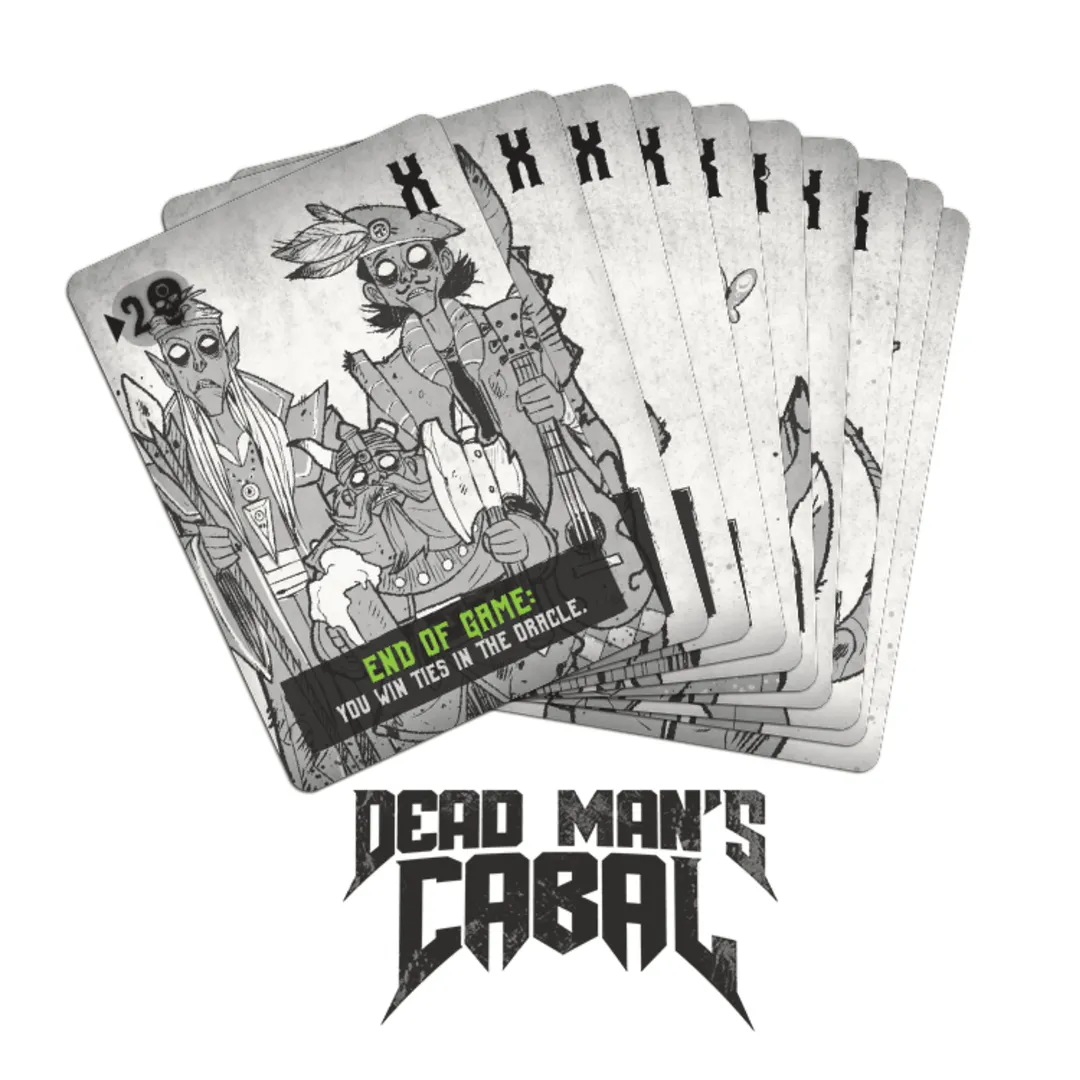
You've conquered death and mastered all nine dimensions of space-time. Reality bends to your every whim and desire. You are the absolute best there ever has been, a necromancer at the top of their game. The only downside is that no one likes you on account of the creeping around with dead bodies and the lack of sunlight. But who needs friends when you can make them? Dead Man's Cabal is a mid-weight strategy game from Daniel Newman, with game development from Jonathan Gilmour (Dead of Winter, Dinosaur Island). In the game, 2-4 players compete to bring the dead back to life so that they can throw a party with actual, you know, guests. The gameplay is a clever interplay of a unique action selection mechanism that allows players to choose both a private action followed by a group action, requiring tense decision-making on the timing of the different phases of the game. Collect bodies, crystal skulls, and runes, then bring the dead back to life. This might sound simple enough, but triggering the actions in just the right order requires careful planning to make sure you aren't helping your competitors more than yourself. —description from the publisher
Secondo il catalogo, Dead Man's Cabal supporta da 2 a 4 giocatori. L’intervallo corrisponde al numero di giocatori indicato dall’editore, quindi il gioco si può preparare per qualsiasi gruppo entro quei limiti. Preparazione, alcune regole e punteggio possono comunque variare in base al numero di giocatori: controlla la configurazione esatta nel regolamento della tua edizione.
La durata indicata per Dead Man's Cabal è di 60 minuti, la stima dell’editore per una partita completa. La durata effettiva dipende dal gruppo, dal numero di giocatori e dalla conoscenza delle regole: le prime partite durano di più, i gruppi esperti finiscono prima. Preparazione e spiegazione delle regole non sono comprese nella stima.
Il catalogo indica Dead Man's Cabal dai 12 anni in su. È la raccomandazione dell’editore e tiene conto della lettura richiesta, della complessità delle regole e dei componenti piccoli, non solo del tema. I più giovani spesso possono giocare con l’aiuto di un adulto: controlla l’età consigliata sulla tua edizione e l’esperienza del tuo gruppo con i giochi da tavolo.
Dead Man's Cabal ha un punteggio di complessità di 2,7 su 5 secondo i giocatori di BoardGameGeek, il che lo rende un gioco piuttosto leggero. Il punteggio riflette quanta conoscenza delle regole, pianificazione e decisioni richiede una partita tipica. I giochi impegnativi richiedono una prima spiegazione più lunga, quindi conviene usare una guida di preparazione.
Dead Man's Cabal appartiene a queste categorie: Fantasy, Horror e Zombies. Le sue meccaniche principali sono Open Drafting, Contracts e Action Queue. Le categorie descrivono il tema e l’ambientazione di un gioco, mentre le meccaniche descrivono ciò che i giocatori fanno davvero nel proprio turno. Ogni meccanica porta a una pagina del catalogo con giochi simili.
Gli autori accreditati di Dead Man's Cabal sono: Daniel Newman. Questi crediti provengono dai dati pubblicati del gioco e indicano le persone responsabili della sua progettazione, non gli illustratori o gli editori. Le pagine degli autori su MeepleRules raccolgono altri titoli degli stessi autori, utili quando un gioco ti piace e ne cerchi di simili.
Il catalogo classifica Dead Man's Cabal come gioco base. Si gioca da solo con i componenti presenti nella scatola e non richiede altri titoli. Le espansioni, se esistono, aggiungono nuovo contenuto o nuove regole e sono elencate separatamente nel catalogo con un collegamento a questo gioco base.