
- Valutazione BGG
- 9,2
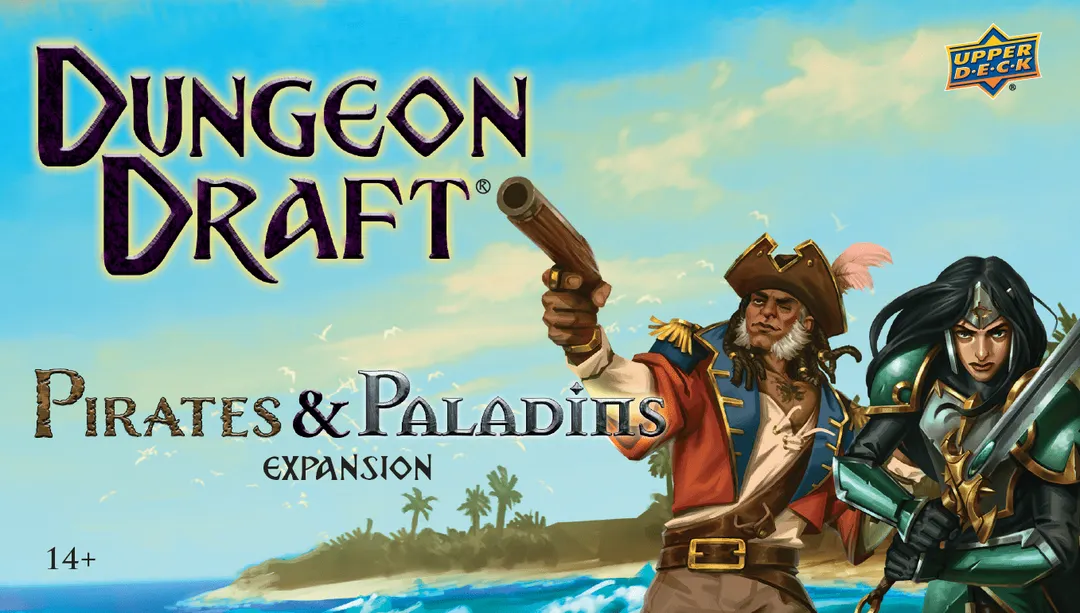
Dungeon Draft: Pirates & Paladins Expansion
- 2–5 giocatori
- 30–60 min
- Complessità 2,0/5
- 2025
2017
Aiuto con le regole di Dungeon Draft
Spiegazioni chiare di turni, effetti delle carte e situazioni dubbie, con riferimenti alle fonti ufficiali e cronologia delle domande salvata.
Per 2 giocatori
Cosa vuoi sapere?
Le risposte vengono dal regolamento ufficiale, con la pagina da verificare.
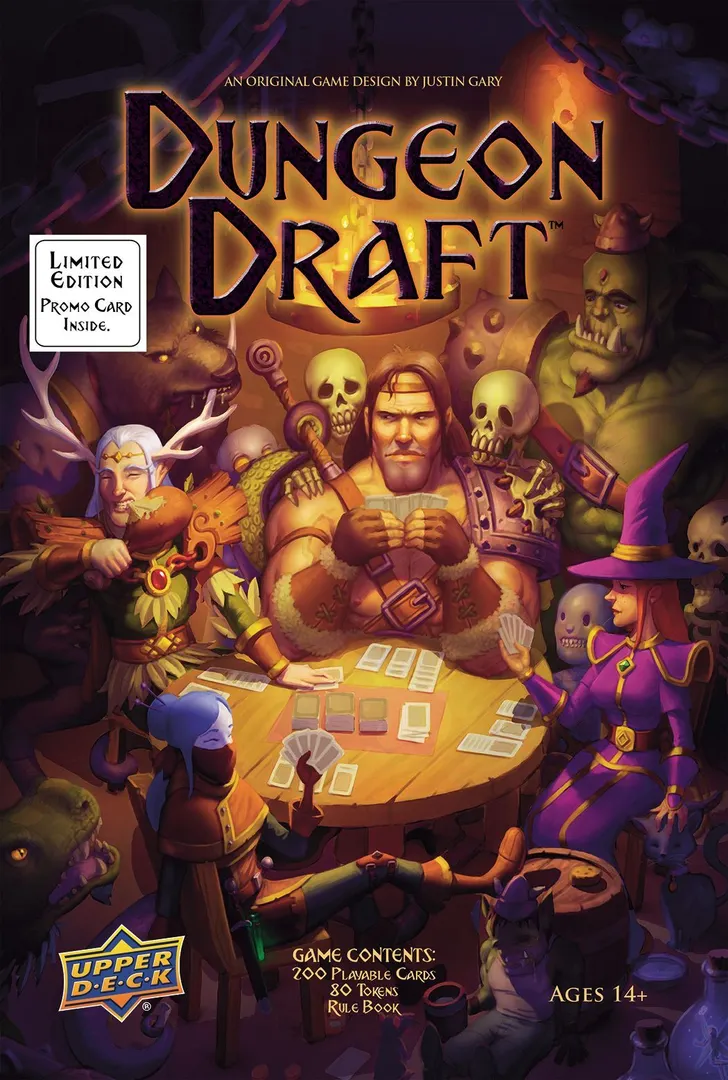
Dungeon Draft è un gioco da tavolo pubblicato nel 2017 per 2–5 giocatori, con partite da 30 a 45 minuti e dai 8 anni in su. È stato ideato da Justin Gary e le sue meccaniche principali sono Hand Management, Turn Order: Progressive e Closed Drafting.
In inglese
Over the course of four rounds in Dungeon Draft, 2-5 players draft heroes and weapons — using gold to pay for them — then use them to defeat monsters, acquire additional gold, and complete quests in an effort to earn the most experience points (XP). Set-up: At the beginning of the game each player is dealt 5 Quest cards. Then, each player selects 3 of their Quests to keep and returns the remainder facedown to the bottom of the Quest Deck. Each round players draft a 7 card hand. Cards are passed either clockwise or counter clockwise depending on the round. Players then take turns playing as many cards as they can from their hand, provided they have the resources to do so. Randomly determine which player will play first during the Play Phase. The starting player will alternate in a clockwise fashion during each of the four rounds. Playing Cards: To play Heroes and Weapons, players must spend Gold equal to the Gold Cost in the upper left corner of the card. Spent Gold is returned to the common pool of available Gold. Heroes and Weapons remain in front of you when played. Some Heroes and Weapons have special text abilities that take effect when played. All Heroes and Weapons will only have effects that last for the remainder of the round, with the exception of providing Attack, Gold, and XP (i.e. ignore everything but the numbers and symbols on the left side of the card during future rounds). Class Icons: Each Hero and Weapon has a class. Classes are indicated by card color and icon. Class is very important! Many powers on Heroes and Weapons can only be used if you control enough cards of the appropriate class. Monsters To defeat Monsters, players must have Attack equal to or greater than the Monster Attack Cost in the upper left corner of the card. Attack is not “spent” like Gold, so a player can defeat any number of Monsters whose Attack Cost is lower than or equal to the combined Attack of all cards you control. Some Monsters have a text box with special effects on the card. After you defeat one of these Monsters, follow the instructions and then put the Monster into the Draft Deck Discard Pile. Some Monsters have XP or Gold values on the card. After you defeat one of these Monsters, take the corresponding XP and/or Gold from the corresponding pool and then put the Monster into the Draft Deck Discard Pile. Quests To play Quests, players must have Heroes and Weapons of the appropriate class. Quests have no cost other than this requirement. Unlike Heroes and Weapons, Quest Cards may have abilities that can be used over multiple rounds. End of Turn Once a player has finished playing any cards they wish to play (and has the resources to play), they must: • Discard all unplayed Draft Cards to the Draft Deck Discard Pile (do not discard Quest Cards OR played Heroes and Weapons). • Gain 5 Gold plus additional Gold equal to the total Gold Production on all cards in front of you. • Play passes to the next player. End of Round Once all players have completed the Play Phase, the next round will begin. In each round, the starting player will rotate clockwise (i.e. the player who played second in the previous round will start the next round). TIP: At the end of each round, it is helpful to stack all of your played Heroes and Weapons so that only their icons are visible. This clears room for the next round’s cards and helps to avoid confusion since only the icon powers remain in effect for future rounds. After four rounds have been completed, players tally up XP to determine the winner. The player with the most XP at the end of the game is the winner! Huzzah!
Secondo il catalogo, Dungeon Draft supporta da 2 a 5 giocatori. L’intervallo corrisponde al numero di giocatori indicato dall’editore, quindi il gioco si può preparare per qualsiasi gruppo entro quei limiti. Preparazione, alcune regole e punteggio possono comunque variare in base al numero di giocatori: controlla la configurazione esatta nel regolamento della tua edizione.
La durata indicata per Dungeon Draft è di 30–45 minuti, la stima dell’editore per una partita completa. La durata effettiva dipende dal gruppo, dal numero di giocatori e dalla conoscenza delle regole: le prime partite durano di più, i gruppi esperti finiscono prima. Preparazione e spiegazione delle regole non sono comprese nella stima.
Il catalogo indica Dungeon Draft dai 8 anni in su. È la raccomandazione dell’editore e tiene conto della lettura richiesta, della complessità delle regole e dei componenti piccoli, non solo del tema. I più giovani spesso possono giocare con l’aiuto di un adulto: controlla l’età consigliata sulla tua edizione e l’esperienza del tuo gruppo con i giochi da tavolo.
Dungeon Draft ha un punteggio di complessità di 1,9 su 5 secondo i giocatori di BoardGameGeek, il che lo rende un gioco leggero. Il punteggio riflette quanta conoscenza delle regole, pianificazione e decisioni richiede una partita tipica. I giochi impegnativi richiedono una prima spiegazione più lunga, quindi conviene usare una guida di preparazione.
Dungeon Draft appartiene a queste categorie: Card Game e Fantasy. Le sue meccaniche principali sono Hand Management, Turn Order: Progressive e Closed Drafting. Le categorie descrivono il tema e l’ambientazione di un gioco, mentre le meccaniche descrivono ciò che i giocatori fanno davvero nel proprio turno. Ogni meccanica porta a una pagina del catalogo con giochi simili.
Gli autori accreditati di Dungeon Draft sono: Justin Gary. Questi crediti provengono dai dati pubblicati del gioco e indicano le persone responsabili della sua progettazione, non gli illustratori o gli editori. Le pagine degli autori su MeepleRules raccolgono altri titoli degli stessi autori, utili quando un gioco ti piace e ne cerchi di simili.
Il catalogo classifica Dungeon Draft come gioco base. Si gioca da solo con i componenti presenti nella scatola e non richiede altri titoli. Le espansioni, se esistono, aggiungono nuovo contenuto o nuove regole e sono elencate separatamente nel catalogo con un collegamento a questo gioco base.