- Valutazione BGG
- 6,9
Florenza: Captains of Fortune
- 2–5 giocatori
- 200 min
- Complessità 1,5/5
- 2014
2010
Aiuto con le regole di Florenza
Spiegazioni chiare di turni, effetti delle carte e situazioni dubbie, con riferimenti alle fonti ufficiali e cronologia delle domande salvata.
Per 2 giocatori
Cosa vuoi sapere?
Le risposte vengono dal regolamento ufficiale, con la pagina da verificare.
Florenza è un gioco da tavolo pubblicato nel 2010 per 2–5 giocatori, con partite da 90 a 120 minuti e dai 14 anni in su. È stato ideato da Stefano Groppi e le sue meccaniche principali sono Worker Placement.
In inglese
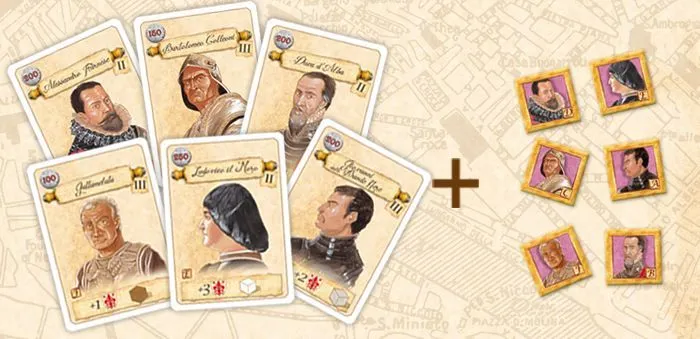
In Florenza, the players are the heads of the most powerful families in Florenza during the Renaissance period. The goal of the game is to become the most famous patron of the arts by hiring the most famous artists of the period and financing their works. Each player can commission artworks in his own district, the Cathedral, or in the civic buildings of the city. Each artwork requires money and resources to complete. To earn the money and resources the artists need, the players send their workers to labor in various workshops, possibly even in their opponents’ districts. Additional workers can be earned by offering charity to the church. During the game, players will earn prestige points, primarily by completing artworks. Prestige points can be spent during the game, but at the end of the game they will be the player’s primary source of victory points. All of the characters in the game are real historical figures that lived and worked in Italy during the Renaissance. Most of them worked in Florence. All of the buildings in the game were real Renaissance workshops. The artworks the players can complete include the masterpieces of some of the most famous artists in the world. Note from the designers directly from the rulebook: "We apologize if we included some characters in the game who never worked in Florence during the Renaissance, but we wanted to include all of the most important artists (in our opinion) from that golden age of Italian art and culture. Michelangelo, for example, left an important mark on the history of the city—and the Renaissance period—even if he was only in Florence for a short time. We also added some portraits of military leaders (created by Ivan Zoni) to the rulebook. They are not involved in the game, but they were influential members of public life during this era. The names of the buildings, parts of the Cathedral, and the workshops are in the literal form they had in Italy during the 1400-1600 period. Some of them are unchanged in the modern Italian language, some have changed a little, and others have completely disappeared or remain only in some dialects. We chose to maintain those words, without translating them into a language that the real artists didn’t know. We hope you agree with our choice, and we hope you have a good time playing Florenza!"
Secondo il catalogo, Florenza supporta da 2 a 5 giocatori. L’intervallo corrisponde al numero di giocatori indicato dall’editore, quindi il gioco si può preparare per qualsiasi gruppo entro quei limiti. Preparazione, alcune regole e punteggio possono comunque variare in base al numero di giocatori: controlla la configurazione esatta nel regolamento della tua edizione.
La durata indicata per Florenza è di 90–120 minuti, la stima dell’editore per una partita completa. La durata effettiva dipende dal gruppo, dal numero di giocatori e dalla conoscenza delle regole: le prime partite durano di più, i gruppi esperti finiscono prima. Preparazione e spiegazione delle regole non sono comprese nella stima.
Il catalogo indica Florenza dai 14 anni in su. È la raccomandazione dell’editore e tiene conto della lettura richiesta, della complessità delle regole e dei componenti piccoli, non solo del tema. I più giovani spesso possono giocare con l’aiuto di un adulto: controlla l’età consigliata sulla tua edizione e l’esperienza del tuo gruppo con i giochi da tavolo.
Florenza ha un punteggio di complessità di 3,7 su 5 secondo i giocatori di BoardGameGeek, il che lo rende un gioco di media complessità. Il punteggio riflette quanta conoscenza delle regole, pianificazione e decisioni richiede una partita tipica. I giochi impegnativi richiedono una prima spiegazione più lunga, quindi conviene usare una guida di preparazione.
Florenza appartiene a queste categorie: Economic, City Building e Renaissance. Le sue meccaniche principali sono Worker Placement. Le categorie descrivono il tema e l’ambientazione di un gioco, mentre le meccaniche descrivono ciò che i giocatori fanno davvero nel proprio turno. Ogni meccanica porta a una pagina del catalogo con giochi simili.
Gli autori accreditati di Florenza sono: Stefano Groppi. Questi crediti provengono dai dati pubblicati del gioco e indicano le persone responsabili della sua progettazione, non gli illustratori o gli editori. Le pagine degli autori su MeepleRules raccolgono altri titoli degli stessi autori, utili quando un gioco ti piace e ne cerchi di simili.
Il catalogo classifica Florenza come gioco base. Si gioca da solo con i componenti presenti nella scatola e non richiede altri titoli. Le espansioni, se esistono, aggiungono nuovo contenuto o nuove regole e sono elencate separatamente nel catalogo con un collegamento a questo gioco base.