
- Posizione BGG
- BGG #11.695
- Valutazione BGG
- 8,0
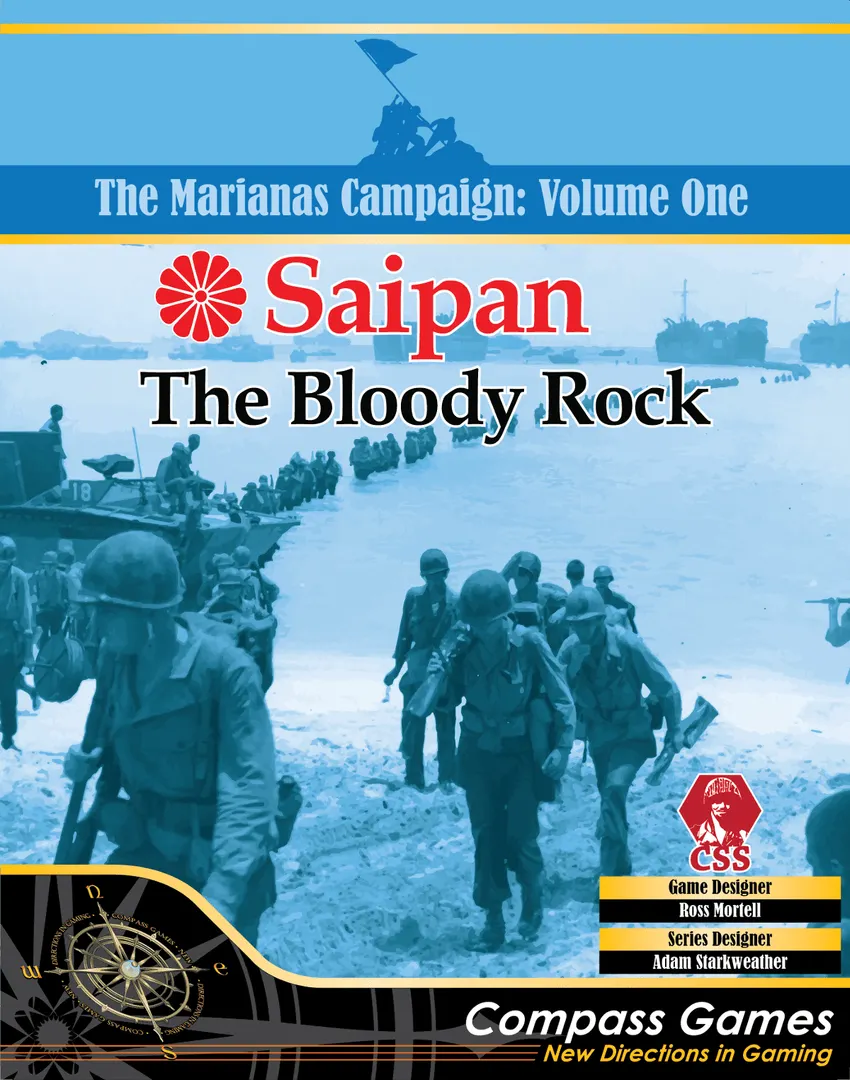
Saipan: The Bloody Rock
- 1–4 giocatori
- 120–2100 min
- Complessità 4,0/5
- 2017
2017
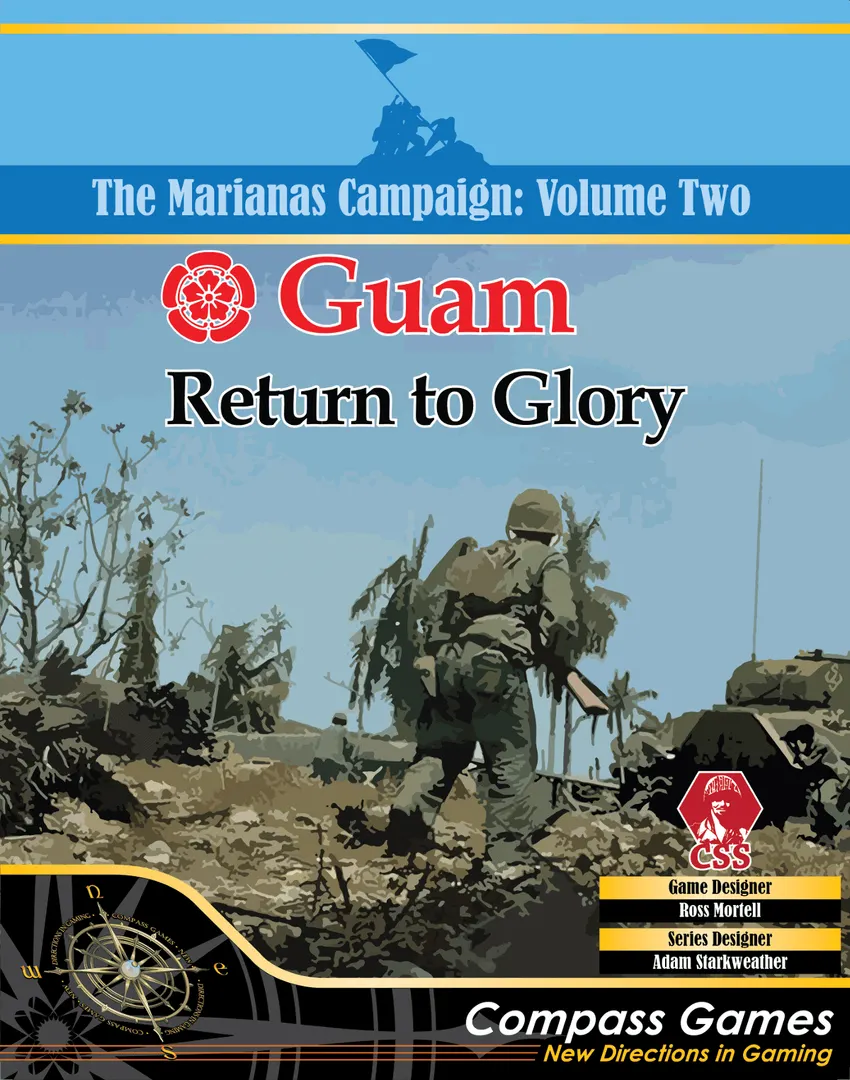
Aiuto con le regole di Guam: Return to Glory
Spiegazioni chiare di turni, effetti delle carte e situazioni dubbie, con riferimenti alle fonti ufficiali e cronologia delle domande salvata.
Per 1 giocatore
Cosa vuoi sapere?
Le risposte vengono dal regolamento ufficiale, con la pagina da verificare.
Guam: Return to Glory è un gioco da tavolo pubblicato nel 2017 per 1–4 giocatori e con partite da 120 a 2100 minuti. È stato ideato da Adam Starkweather e Ross Mortell e le sue meccaniche principali sono Dice Rolling, Hexagon Grid e Chit-Pull System.

In inglese
On the 8th December 1941 American soil was invaded for the first time in the war, the small American and Guananian garrison was overrun and 2 days later the Govenor surrendered the Island to the Japanese. On 21st July 1944 the Americans would return to retake the island and drive the Japanese invaders off; a day that is still celebrated as 'Liberation Day'. There were many reasons why the Americans decided to invade Guam not least of which was the fact that the station of the trans-Pacific cable and the naval radio station at Agana made it a focal point of the communication network in the Pacific. It also had the best anchorage in the Marianas, 2 airstrips and, of course, it was an American Protectorate. The only beaches suitable for an invasion are located on the south-western side of the island. The Japanese knew this as well and had prepared accordingly. Another thing unique to the planning was that the 2 landing beaches chosen would be 7 miles apart. It was unprecedented for two landing forces to land with such a wide separation. Guam – Return to Glory will be the second game to utilize the Company Scale System (CSS) by Adam Starkweather and will come on 4 maps. The game will come with 6 scenarios and 1 campaign game: W-Day – Fortune favors the bold – This is the first day of the Invasion on the northern beaches. 3rd Marine Division must land against Japanese defenders dug-in on a ridge overlooking the beaches. Single map and 8 turns long. W-Day – Send in the Fire Brigade – This is the first day of the Invasion on the southern beaches. The 1st Provisional Marine Brigade must land and fight their way north towards Orote Peninsular to join up the to beachheads. Single map and 8 turns long. W-DAY - This is the first day of the Invasion on the both beaches. The 1st Provisional Marine Brigade must land and fight their way north, whilst the 3rd Marines fight their way south and the two forces try to join up the two beachheads near Orote Peninsular. Two maps and 8 turns long. Orote Peninsular – The first 8 days of the fighting saw the Americans expand their beachheads and join up so as to cut off the Orote peninsular with it's important airfield. Once it was cut off, the Americans, then, had to force their way into the heaviest defended area on Guam not knowing that the Japanese were preparing a Sake fueled Banzai charge. Two maps and 72 turns long. Into the Jungle - This scenario covers 3rd Marine Division's drive north of the beachheads to take the town of Agana and the airfield at Tiyan. One map and 27 turns long. Santa Rosa - This scenario covers 77th Infantry Division's attack to isolate the area around Mount Santa Rosa . One map and 27 turns long. The Battle for Guam – The full historical campaign from 21st July- 10th August (188 Turns). This game covers the full fight for Guam in 1944, from the first invasion at Asan, in the north, and Agat, in the south through the vicious fighting in the thick vegetation at the south end of the island and the final Japanese stand in the north. Complexity: 6 Solitaire Suitability:8 Time Scale: 1 turn = 2 hours Map Scale: 1 hex = 500 meters Unit Scale: Companies and below Players: Best with 2 players but can be played with up to 4 players as well as solitaire Playing Time: 2-35 hours Series Designer: Adam Starkweather Game Designer: Ross Mortell Developer: Adam Starkweather Artist: Antonio Pinar Peña Components: 4 maps 6 countersheets 1 series Rulesbook 1 game specific rulesbook 7 player aids, charts, tables cards 2 ten-sided dice 1 Box and Lid set
Secondo il catalogo, Guam: Return to Glory supporta da 1 a 4 giocatori. L’intervallo corrisponde al numero di giocatori indicato dall’editore, quindi il gioco si può preparare per qualsiasi gruppo entro quei limiti. Preparazione, alcune regole e punteggio possono comunque variare in base al numero di giocatori: controlla la configurazione esatta nel regolamento della tua edizione.
La durata indicata per Guam: Return to Glory è di 120–2100 minuti, la stima dell’editore per una partita completa. La durata effettiva dipende dal gruppo, dal numero di giocatori e dalla conoscenza delle regole: le prime partite durano di più, i gruppi esperti finiscono prima. Preparazione e spiegazione delle regole non sono comprese nella stima.
Guam: Return to Glory ha un punteggio di complessità di 3,7 su 5 secondo i giocatori di BoardGameGeek, il che lo rende un gioco di media complessità. Il punteggio riflette quanta conoscenza delle regole, pianificazione e decisioni richiede una partita tipica. I giochi impegnativi richiedono una prima spiegazione più lunga, quindi conviene usare una guida di preparazione.
Guam: Return to Glory appartiene a queste categorie: Wargame e World War II. Le sue meccaniche principali sono Dice Rolling, Hexagon Grid e Chit-Pull System. Le categorie descrivono il tema e l’ambientazione di un gioco, mentre le meccaniche descrivono ciò che i giocatori fanno davvero nel proprio turno. Ogni meccanica porta a una pagina del catalogo con giochi simili.
Gli autori accreditati di Guam: Return to Glory sono: Adam Starkweather e Ross Mortell. Questi crediti provengono dai dati pubblicati del gioco e indicano le persone responsabili della sua progettazione, non gli illustratori o gli editori. Le pagine degli autori su MeepleRules raccolgono altri titoli degli stessi autori, utili quando un gioco ti piace e ne cerchi di simili.
Il catalogo classifica Guam: Return to Glory come gioco base. Si gioca da solo con i componenti presenti nella scatola e non richiede altri titoli. Le espansioni, se esistono, aggiungono nuovo contenuto o nuove regole e sono elencate separatamente nel catalogo con un collegamento a questo gioco base.