

- Posizione BGG
- BGG #1403
- Valutazione BGG
- 7,8
Falling Sky: The Gallic Revolt Against Caesar
- 1–4 giocatori
- 180–360 min
- Complessità 4,0/5
- 2016
2008
Aiuto con le regole di History of the Roman Empire
Spiegazioni chiare di turni, effetti delle carte e situazioni dubbie, con riferimenti alle fonti ufficiali e cronologia delle domande salvata.
Per 2 giocatori
Cosa vuoi sapere?
Le risposte vengono dal regolamento ufficiale, con la pagina da verificare.
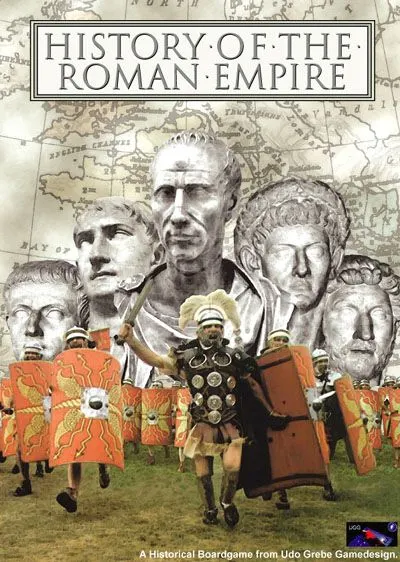
History of the Roman Empire è un gioco da tavolo pubblicato nel 2008 per 2–4 giocatori, con partite da 180 minuti e dai 12 anni in su. È stato ideato da Marco Broglia e le sue meccaniche principali sono Area Movement, Dice Rolling e Area Majority / Influence.




In inglese
(From the Publishers Website: P500 production) "The History of the Roman Empire" covers the time-period from the Rise to the Fall of the Roman Empire in seven game turns starting in 60 BC (the first Triumvirate composed of Caesar, Crassus and Pompeus) until the last [Western] Emperor (Romulus Augustus) in 476 AD. The map contains the entire Mediterranean area as well as a part of Asia Minor. Each of the up to four Players takes the role of one Roman Faction and one group of "Barbarian" Peoples (non-Romans), and by playing certain event cards you can gain control over minor Kingdoms. The game is best suited for 4 Players but can be played by 3 or 2 Players as well. Since every Player controls a Roman Faction and a "Barbarian" People it is not possible to completely remove a Player from the Game (The Roman Faction that Player controls can be eliminated but the Barbarians can not). The Game "History of the Roman Empire" is not strictly historic but offers "a great lot of Flavor" with its 42 Roman Emperors (and Pretenders) and the 34 different "Barbarian" Peoples and minor Kingdoms. Since every Player controls Romans as well as Barbarians you will get all kinds of situations like Romans vs. Barbarians, Romans fighting among themselves, or Barbarians fighting other Barbarians. The Emperor for each Roman Faction changes every Game Turn as well as the Barbarian Peoples that the Players control. With its easy to learn rules - players who are familiar with "Hispania", "Britannia" or "History of the World" will find some similarities and some new features - and the constantly changing Barbarians, "The History of the Roman Empire" can be great fun. The Players will have to decide how to use their Roman Legions as well as how to use the armies of their Barbarians and of course where to plan new Cities and Forts (for the Roman Factions). Since it is worth many more Victory Points to control all areas of one color, soon everyone will try to establish his own small empire (and of course to disturb the others), until the more powerful Barbarians like the Goths or the Huns arrive and threaten to take control of the map. Each turn the Roman Factions spend some of their Victory Points on new Legions and/or Forts or Fortresses. The Barbarians do not use their Victory Points for recruiting Units but rather "mobilize" up to a certain number of Armies (how many units depends on the Barbarian People). Every game will present you with new situations since the Players will work on and change their strategies and the 45 random cards will influence every game in a unique way. At the end of the seventh turn, the players total their victory points and determine the winner. Will the Roman Empire rise to Glory or will it be crushed by the overwhelming Barbarians? It's up to YOU…
Secondo il catalogo, History of the Roman Empire supporta da 2 a 4 giocatori. L’intervallo corrisponde al numero di giocatori indicato dall’editore, quindi il gioco si può preparare per qualsiasi gruppo entro quei limiti. Preparazione, alcune regole e punteggio possono comunque variare in base al numero di giocatori: controlla la configurazione esatta nel regolamento della tua edizione.
La durata indicata per History of the Roman Empire è di 180 minuti, la stima dell’editore per una partita completa. La durata effettiva dipende dal gruppo, dal numero di giocatori e dalla conoscenza delle regole: le prime partite durano di più, i gruppi esperti finiscono prima. Preparazione e spiegazione delle regole non sono comprese nella stima.
Il catalogo indica History of the Roman Empire dai 12 anni in su. È la raccomandazione dell’editore e tiene conto della lettura richiesta, della complessità delle regole e dei componenti piccoli, non solo del tema. I più giovani spesso possono giocare con l’aiuto di un adulto: controlla l’età consigliata sulla tua edizione e l’esperienza del tuo gruppo con i giochi da tavolo.
History of the Roman Empire ha un punteggio di complessità di 2,6 su 5 secondo i giocatori di BoardGameGeek, il che lo rende un gioco piuttosto leggero. Il punteggio riflette quanta conoscenza delle regole, pianificazione e decisioni richiede una partita tipica. I giochi impegnativi richiedono una prima spiegazione più lunga, quindi conviene usare una guida di preparazione.
History of the Roman Empire appartiene a queste categorie: Wargame, Ancient e Civil War. Le sue meccaniche principali sono Area Movement, Dice Rolling e Area Majority / Influence. Le categorie descrivono il tema e l’ambientazione di un gioco, mentre le meccaniche descrivono ciò che i giocatori fanno davvero nel proprio turno. Ogni meccanica porta a una pagina del catalogo con giochi simili.
Gli autori accreditati di History of the Roman Empire sono: Marco Broglia. Questi crediti provengono dai dati pubblicati del gioco e indicano le persone responsabili della sua progettazione, non gli illustratori o gli editori. Le pagine degli autori su MeepleRules raccolgono altri titoli degli stessi autori, utili quando un gioco ti piace e ne cerchi di simili.
Il catalogo classifica History of the Roman Empire come gioco base. Si gioca da solo con i componenti presenti nella scatola e non richiede altri titoli. Le espansioni, se esistono, aggiungono nuovo contenuto o nuove regole e sono elencate separatamente nel catalogo con un collegamento a questo gioco base.