
- Posizione BGG
- BGG #9591
- Valutazione BGG
- 7,4
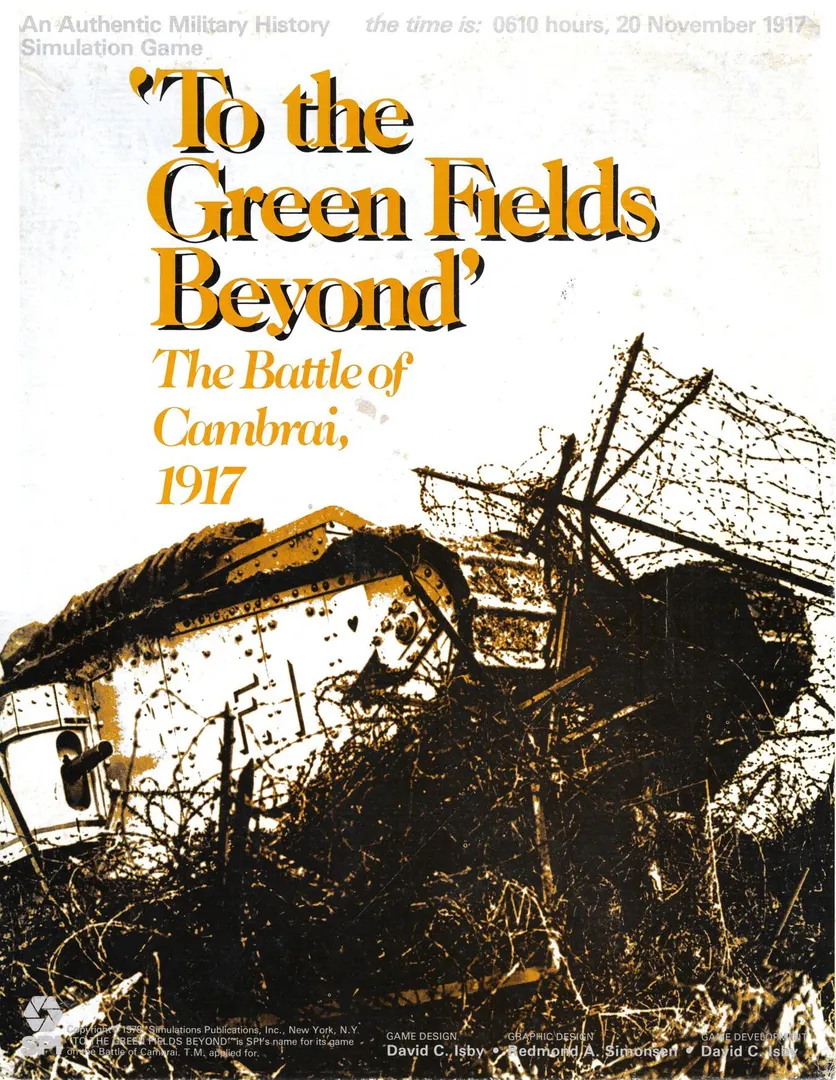
To the Green Fields Beyond: The Battle of Cambrai, 1917
- 2 giocatori
- 240–1020 min
- Complessità 3,6/5
- 1978

1974
Aiuto con le regole di Lee vs. Meade: The Battle of Gettysburg
Spiegazioni chiare di turni, effetti delle carte e situazioni dubbie, con riferimenti alle fonti ufficiali e cronologia delle domande salvata.
Per 2 giocatori
Cosa vuoi sapere?
Le risposte vengono dal regolamento ufficiale, con la pagina da verificare.
Lee vs. Meade: The Battle of Gettysburg è un gioco da tavolo pubblicato nel 1974 per 2 giocatori, con partite da 360 minuti e dai 12 anni in su. È stato ideato da Phil Orbanes Sr. e David C. Isby e le sue meccaniche principali sono Square Grid e Simulation.




In inglese
The Battle of Gettysburg was fought in July 1, 1863 until July 3rd of the same year. It took place in and around the town of Gettysburg, Pennsylvania. It was the battle with the largest number of casualties in the American Civil War and is often described as the war's turning point. Union Major General George Gordon Meade's Army of the Potomac defeated attacks by Confederate General Robert E. Lee's Army of Northern Virginia. This battle put an end to Lee's plans for an invasion of the North. Lee vs Meade is a game that covers the Battle of Gettysburg. It was the first game in a series of games put out by Rand known as the 'Command Series Volume I'. The later version put out by Gamut of Games featured a mounted map-board while the original Rand Games version had a map on heavy paper. Lee vs. Meade has a 17"X17" map 72 counters(36 for each player) combat charts and turn records charts along with a rulebook. The scale used is 1/2 mile per square and each unit is considered to be an entire division. The two-color map is mainly green but there are also some hills and ridges. There is a clearly shown road network of the area as well as terrain that are suitable for defensive outposts. The map of the Gettysburg area is broken up into a 12x12 square grid. This grid system was used in several of the games developed by Rand Game Associates and was called the Time/Space Grid. Movement costs necessary to go from one square to the next are visible on the grid at the edges and corners between the squares making it easier to move without the use of a movement chart. Unlike some games that use a square grid, diagonal movement is permitted. Another feature common to most of the games offered by Rand Games was fairly elaborate combat sub-routine in which the attacker and defender would each pick a combat method from a 6x6 matrix called the Tactical Analysis Chart and draw the appropriate "Tac Card." These "Tac Cards" are numbered from 1 to 6. The cell on the Tactical Analysis Chart that corresponds to the intersection of the two players' combat methods determines which combat results table is used. There are 6 different types of CRT used in this game. The turn sequence is easy. Firstly the Confederate army moves.Any combat resulting is resolved and then the Union army moves and any combat is resolved. In order to initiate a combat you have to move your units onto a square edge that contains enemy units. There are four different scenarios in the game. A different time of the battle is used in each one and different victory conditions are required for each one.
Secondo il catalogo, Lee vs. Meade: The Battle of Gettysburg supporta 2 giocatori. È il numero di giocatori indicato dall’editore, quindi il gioco è pensato esattamente per quel numero di partecipanti. Le varianti per gruppi di altre dimensioni, se esistono, sono descritte nel regolamento della tua edizione: consultalo prima di preparare una configurazione diversa.
La durata indicata per Lee vs. Meade: The Battle of Gettysburg è di 360 minuti, la stima dell’editore per una partita completa. La durata effettiva dipende dal gruppo, dal numero di giocatori e dalla conoscenza delle regole: le prime partite durano di più, i gruppi esperti finiscono prima. Preparazione e spiegazione delle regole non sono comprese nella stima.
Il catalogo indica Lee vs. Meade: The Battle of Gettysburg dai 12 anni in su. È la raccomandazione dell’editore e tiene conto della lettura richiesta, della complessità delle regole e dei componenti piccoli, non solo del tema. I più giovani spesso possono giocare con l’aiuto di un adulto: controlla l’età consigliata sulla tua edizione e l’esperienza del tuo gruppo con i giochi da tavolo.
Lee vs. Meade: The Battle of Gettysburg ha un punteggio di complessità di 2,0 su 5 secondo i giocatori di BoardGameGeek, il che lo rende un gioco piuttosto leggero. Il punteggio riflette quanta conoscenza delle regole, pianificazione e decisioni richiede una partita tipica. I giochi impegnativi richiedono una prima spiegazione più lunga, quindi conviene usare una guida di preparazione.
Lee vs. Meade: The Battle of Gettysburg appartiene a queste categorie: Wargame e American Civil War. Le sue meccaniche principali sono Square Grid e Simulation. Le categorie descrivono il tema e l’ambientazione di un gioco, mentre le meccaniche descrivono ciò che i giocatori fanno davvero nel proprio turno. Ogni meccanica porta a una pagina del catalogo con giochi simili.
Gli autori accreditati di Lee vs. Meade: The Battle of Gettysburg sono: Phil Orbanes Sr. e David C. Isby. Questi crediti provengono dai dati pubblicati del gioco e indicano le persone responsabili della sua progettazione, non gli illustratori o gli editori. Le pagine degli autori su MeepleRules raccolgono altri titoli degli stessi autori, utili quando un gioco ti piace e ne cerchi di simili.
Il catalogo classifica Lee vs. Meade: The Battle of Gettysburg come gioco base. Si gioca da solo con i componenti presenti nella scatola e non richiede altri titoli. Le espansioni, se esistono, aggiungono nuovo contenuto o nuove regole e sono elencate separatamente nel catalogo con un collegamento a questo gioco base.