

- Posizione BGG
- BGG #7962
- Valutazione BGG
- 7,0
Bismarck (Second Edition)
- 2 giocatori
- 150–240 min
- Complessità 3,2/5
- 1978
2011
Aiuto con le regole di Lost Battles: Forty Battles & Campaigns of the Ancient World
Spiegazioni chiare di turni, effetti delle carte e situazioni dubbie, con riferimenti alle fonti ufficiali e cronologia delle domande salvata.
Per 1 giocatore
Cosa vuoi sapere?
Le risposte vengono dal regolamento ufficiale, con la pagina da verificare.
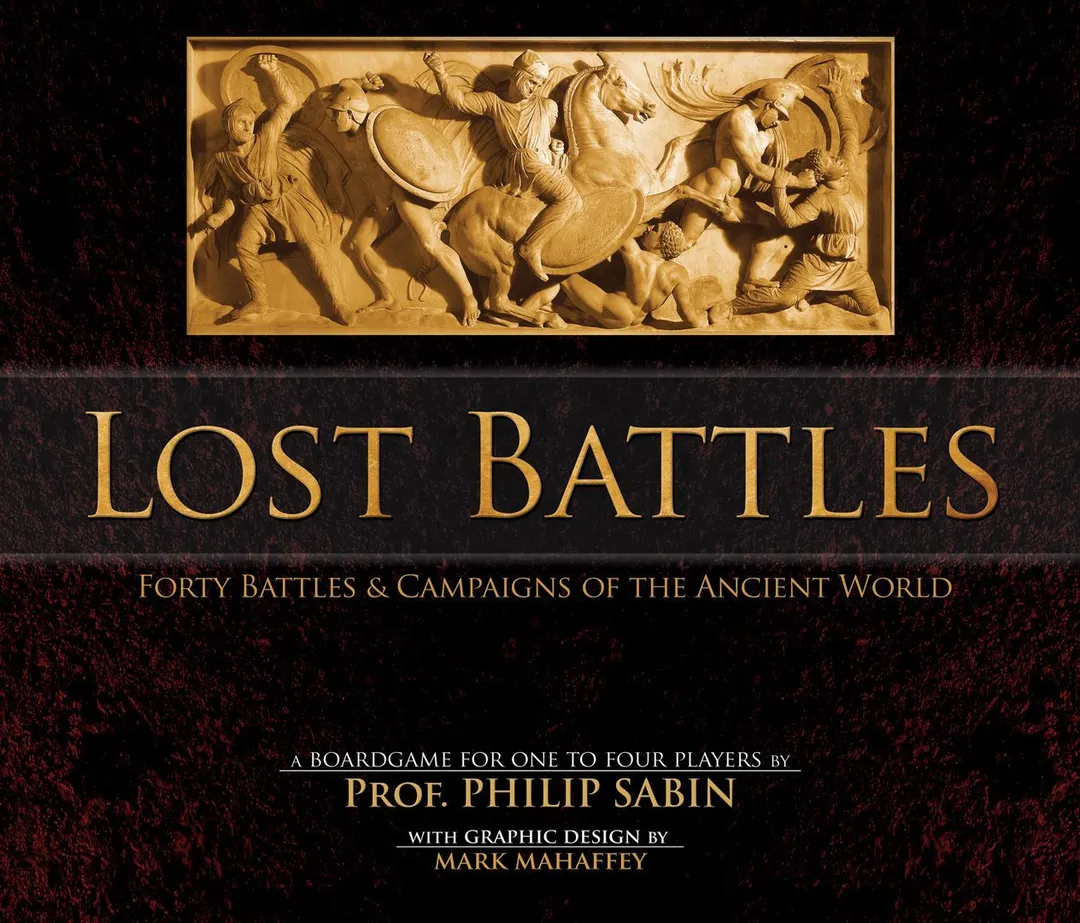
Lost Battles: Forty Battles & Campaigns of the Ancient World è un gioco da tavolo pubblicato nel 2011 per 1–4 giocatori, con partite da 140 minuti e dai 12 anni in su. È stato ideato da Philip Sabin e le sue meccaniche principali sono Dice Rolling, Grid Movement e Modular Board.








In inglese
"Lost Battles" is forty games in one. The game covers battles and campaigns in the Mediterranean and Near East from the Persian defeat at Marathon in 490 BC to Caesar's victory at Pharsalus in 48 BC. It has been exhaustively tested and refined over the past several years, and is based on Professor Philip Sabin's decades of research and simulation design on ancient warfare; and it includes an updated copy of his book, with extensive historical and design notes on every scenario. The game can be fought on three levels - the grand tactical, the grand strategic, or a combination of the two. At the grand tactical level, 1 or 2 players may refight any of 35 different land battles such as Leuctra, Gaugamela, Raphia, Cannae, Cynoscephalae or the Sambre - far more than in any other single boxed game. At the grand strategic level, 1 to 4 players may refight the epic duels of the two centuries from 350 to 150 BC, starting with the eclipse of Achaemenid Persia by Alexander of Macedon, and ending with Hannibal's campaigns and the conquest of Carthage and the Hellenistic states by the resurgent Roman republic. The most ambitious games combine these two levels, and see 1 to 4 players using tactical battles to resolve strategic campaigns across part or all of this two century period, or else refighting a series of historical battles to decide conflicts such as the three-cornered contest for dominance between Athens, Sparta and Thebes from the start of the Peloponnesian War to the death of Epaminondas. The accent throughout is on combining historical accuracy with speed and accessibility. The free-standing strategic game may be completed in just 30 minutes, while individual land battles may be re-fought in two hours or less. There is constant player interaction, and a series of tortuous dilemmas - how should the scarce command points be allocated across the battlefront, which troop types should be put in the lead against particular opponents, should units attack all-out at the cost of becoming exhausted themselves, and should generals join the fighting to rally their disheartened men at the risk of being killed and so making things far worse? The game includes all the many troop types from hoplites, legionaries, phalangites and archers to cataphracts, scythed chariots and war elephants, and it includes simple rules to reflect the huge differences in generalship and troop quality and to allow outclassed armies to win a handicapped 'game victory' even if they are defeated on the field, as long as they do better than they did historically. All aspects of the game are avowedly solitaire-friendly, and can be run by a single player swapping sides just as easily as by one or more players per side. Tactical battles are fought on a 5 x 4 grid of full-colour 5 inch square hard mounted terrain tiles, which dovetail to form any desired battlefield. The individually die-cut counters have rounded corners and are also in full-colour; they depict the various different troop types. The strategic game is fought on a hard mounted map showing the area from Spain to India.
Secondo il catalogo, Lost Battles: Forty Battles & Campaigns of the Ancient World supporta da 1 a 4 giocatori. L’intervallo corrisponde al numero di giocatori indicato dall’editore, quindi il gioco si può preparare per qualsiasi gruppo entro quei limiti. Preparazione, alcune regole e punteggio possono comunque variare in base al numero di giocatori: controlla la configurazione esatta nel regolamento della tua edizione.
La durata indicata per Lost Battles: Forty Battles & Campaigns of the Ancient World è di 140 minuti, la stima dell’editore per una partita completa. La durata effettiva dipende dal gruppo, dal numero di giocatori e dalla conoscenza delle regole: le prime partite durano di più, i gruppi esperti finiscono prima. Preparazione e spiegazione delle regole non sono comprese nella stima.
Il catalogo indica Lost Battles: Forty Battles & Campaigns of the Ancient World dai 12 anni in su. È la raccomandazione dell’editore e tiene conto della lettura richiesta, della complessità delle regole e dei componenti piccoli, non solo del tema. I più giovani spesso possono giocare con l’aiuto di un adulto: controlla l’età consigliata sulla tua edizione e l’esperienza del tuo gruppo con i giochi da tavolo.
Lost Battles: Forty Battles & Campaigns of the Ancient World ha un punteggio di complessità di 3,1 su 5 secondo i giocatori di BoardGameGeek, il che lo rende un gioco di media complessità. Il punteggio riflette quanta conoscenza delle regole, pianificazione e decisioni richiede una partita tipica. I giochi impegnativi richiedono una prima spiegazione più lunga, quindi conviene usare una guida di preparazione.
Lost Battles: Forty Battles & Campaigns of the Ancient World appartiene a queste categorie: Wargame e Ancient. Le sue meccaniche principali sono Dice Rolling, Grid Movement e Modular Board. Le categorie descrivono il tema e l’ambientazione di un gioco, mentre le meccaniche descrivono ciò che i giocatori fanno davvero nel proprio turno. Ogni meccanica porta a una pagina del catalogo con giochi simili.
Gli autori accreditati di Lost Battles: Forty Battles & Campaigns of the Ancient World sono: Philip Sabin. Questi crediti provengono dai dati pubblicati del gioco e indicano le persone responsabili della sua progettazione, non gli illustratori o gli editori. Le pagine degli autori su MeepleRules raccolgono altri titoli degli stessi autori, utili quando un gioco ti piace e ne cerchi di simili.
Il catalogo classifica Lost Battles: Forty Battles & Campaigns of the Ancient World come gioco base. Si gioca da solo con i componenti presenti nella scatola e non richiede altri titoli. Le espansioni, se esistono, aggiungono nuovo contenuto o nuove regole e sono elencate separatamente nel catalogo con un collegamento a questo gioco base.