
- Posizione BGG
- BGG #672
- Valutazione BGG
- 7,9
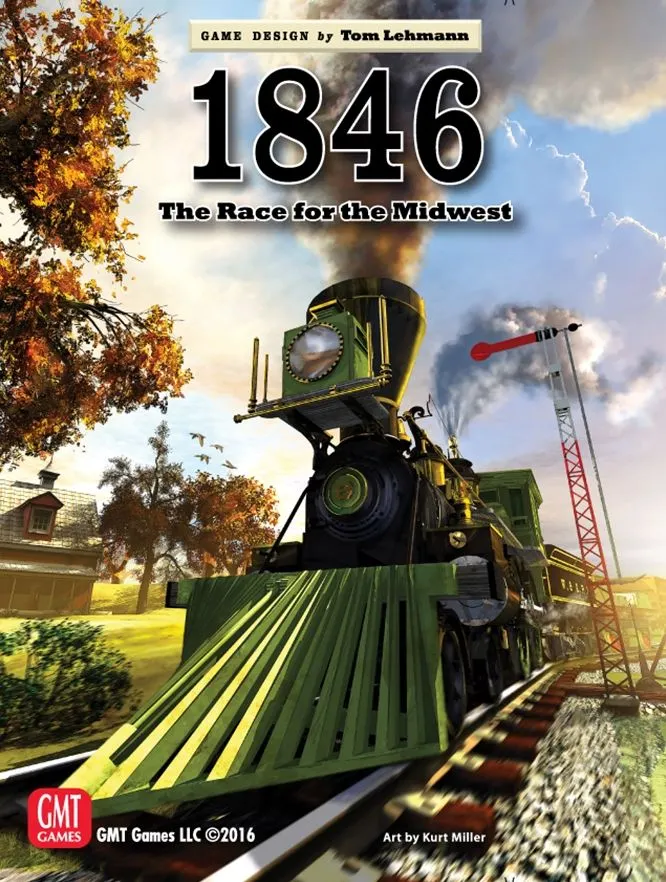
1846: The Race for the Midwest
- 3–5 giocatori
- 120–240 min
- Complessità 4,0/5
- 2005
2003
Aiuto con le regole di Magna Grecia
Spiegazioni chiare di turni, effetti delle carte e situazioni dubbie, con riferimenti alle fonti ufficiali e cronologia delle domande salvata.
Per 2 giocatori
Cosa vuoi sapere?
Le risposte vengono dal regolamento ufficiale, con la pagina da verificare.
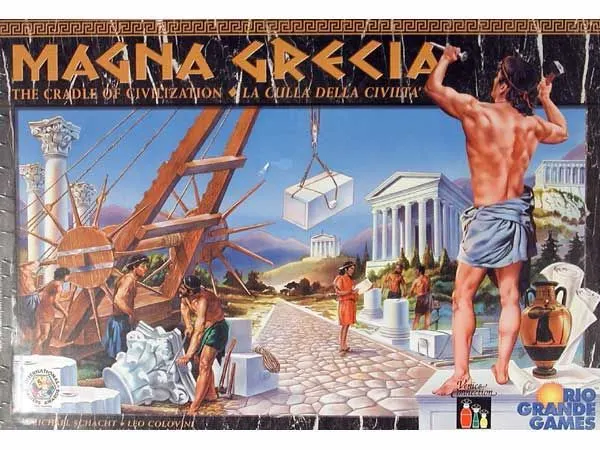
Magna Grecia è un gioco da tavolo pubblicato nel 2003 per 2–4 giocatori, con partite da 75 minuti e dai 12 anni in su. È stato ideato da Michael Schacht e Leo Colovini e le sue meccaniche principali sono Ownership, Tile Placement e Network and Route Building.


In inglese
From spielbox-online.de, translated via altavista babel fish (with a lot of manual tweaks): Magna Grecia (The cradle of the civilization) is the main attraction of the year with Clementoni. The game is a joint work of Leo Colovini and Michael Schacht. The southern region of Italy was called Magna Grecia and was settled 2,500 years ago by Greek merchants and adventurers. Before the arrival of the Greeks, the country was inhabited by only a few small tribes. Fruitful soil, navigable rivers, large forests, and bronze and silver mines offered enormous development possibilities. Larger cities developed, such as Tarantum, Syracuse, Katane, Locri, and Naxos. In addition, there were numerous villages of which no trace remains. A local road system promoted trade, and rich markets developed in the cities. More and more rivalries between the cities arose, particularly over control of the Oracle, which represented an important source for fame and wealth. Sufficient material for an evening of play. Each player must successfully settle and develop Magna Grecia. At favorable points, markets are built, villages are developed into cities and interconnected by a road system. Only thus may the interior be opened and the Oracle controlled. Constructing your own large city is often very expensive, and it is sometimes worthwhile to build instead in the neutral villages or opponents' cities. The board is covered with a hexagon grid on which pieces of road, towns, or markets are placed. A game is 12 rounds long. Each round is determined by an action map, which is set up at the beginning of play according to a certain pattern. The map specifies the player sequence and indicates to which extent the three basic actions (road construction, city building, and supply) may be used. There are also, of course, certain building rules to be considered. Additionally, markets can be established, the value of which depends on the number of connected locations. The Oracle is shown on the board. In order to control the Oracle, a player must connect one of his own cities to it by road. But if several cities are connected to an Oracle, the most important city takes precedence, determined by the number of locations connected to the city (not including Oracles). Markets and the Oracle determine when the game ends.
Secondo il catalogo, Magna Grecia supporta da 2 a 4 giocatori. L’intervallo corrisponde al numero di giocatori indicato dall’editore, quindi il gioco si può preparare per qualsiasi gruppo entro quei limiti. Preparazione, alcune regole e punteggio possono comunque variare in base al numero di giocatori: controlla la configurazione esatta nel regolamento della tua edizione.
La durata indicata per Magna Grecia è di 75 minuti, la stima dell’editore per una partita completa. La durata effettiva dipende dal gruppo, dal numero di giocatori e dalla conoscenza delle regole: le prime partite durano di più, i gruppi esperti finiscono prima. Preparazione e spiegazione delle regole non sono comprese nella stima.
Il catalogo indica Magna Grecia dai 12 anni in su. È la raccomandazione dell’editore e tiene conto della lettura richiesta, della complessità delle regole e dei componenti piccoli, non solo del tema. I più giovani spesso possono giocare con l’aiuto di un adulto: controlla l’età consigliata sulla tua edizione e l’esperienza del tuo gruppo con i giochi da tavolo.
Magna Grecia ha un punteggio di complessità di 3,0 su 5 secondo i giocatori di BoardGameGeek, il che lo rende un gioco piuttosto leggero. Il punteggio riflette quanta conoscenza delle regole, pianificazione e decisioni richiede una partita tipica. I giochi impegnativi richiedono una prima spiegazione più lunga, quindi conviene usare una guida di preparazione.
Magna Grecia appartiene a queste categorie: Territory Building e Ancient. Le sue meccaniche principali sono Ownership, Tile Placement e Network and Route Building. Le categorie descrivono il tema e l’ambientazione di un gioco, mentre le meccaniche descrivono ciò che i giocatori fanno davvero nel proprio turno. Ogni meccanica porta a una pagina del catalogo con giochi simili.
Gli autori accreditati di Magna Grecia sono: Michael Schacht e Leo Colovini. Questi crediti provengono dai dati pubblicati del gioco e indicano le persone responsabili della sua progettazione, non gli illustratori o gli editori. Le pagine degli autori su MeepleRules raccolgono altri titoli degli stessi autori, utili quando un gioco ti piace e ne cerchi di simili.
Il catalogo classifica Magna Grecia come gioco base. Si gioca da solo con i componenti presenti nella scatola e non richiede altri titoli. Le espansioni, se esistono, aggiungono nuovo contenuto o nuove regole e sono elencate separatamente nel catalogo con un collegamento a questo gioco base.