
- Valutazione BGG
- 7,3
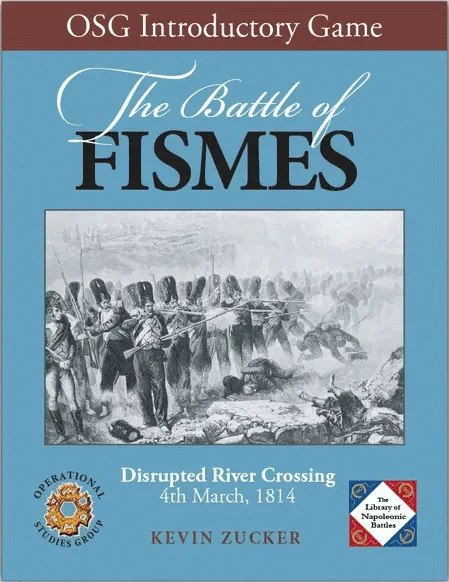
The Battle of Fismes: Disrupted River Crossing
- 2 giocatori
- Complessità 3,5/5
- 2019
2019
Aiuto con le regole di Napoleon Retreats: Campaign in France, Part II
Spiegazioni chiare di turni, effetti delle carte e situazioni dubbie, con riferimenti alle fonti ufficiali e cronologia delle domande salvata.
Per 2 giocatori
Cosa vuoi sapere?
Le risposte vengono dal regolamento ufficiale, con la pagina da verificare.
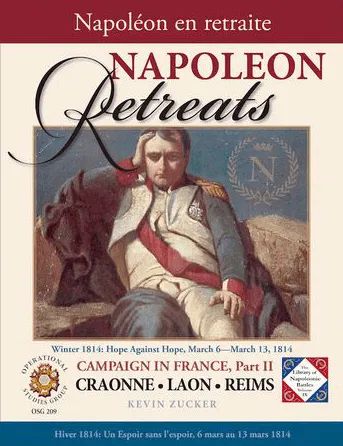
Napoleon Retreats: Campaign in France, Part II è un gioco da tavolo pubblicato nel 2019 per 2–4 giocatori, con partite da 60 minuti e dai 10 anni in su. È stato ideato da Kevin Zucker e le sue meccaniche principali sono Dice Rolling, Hexagon Grid e Simulation.

In inglese
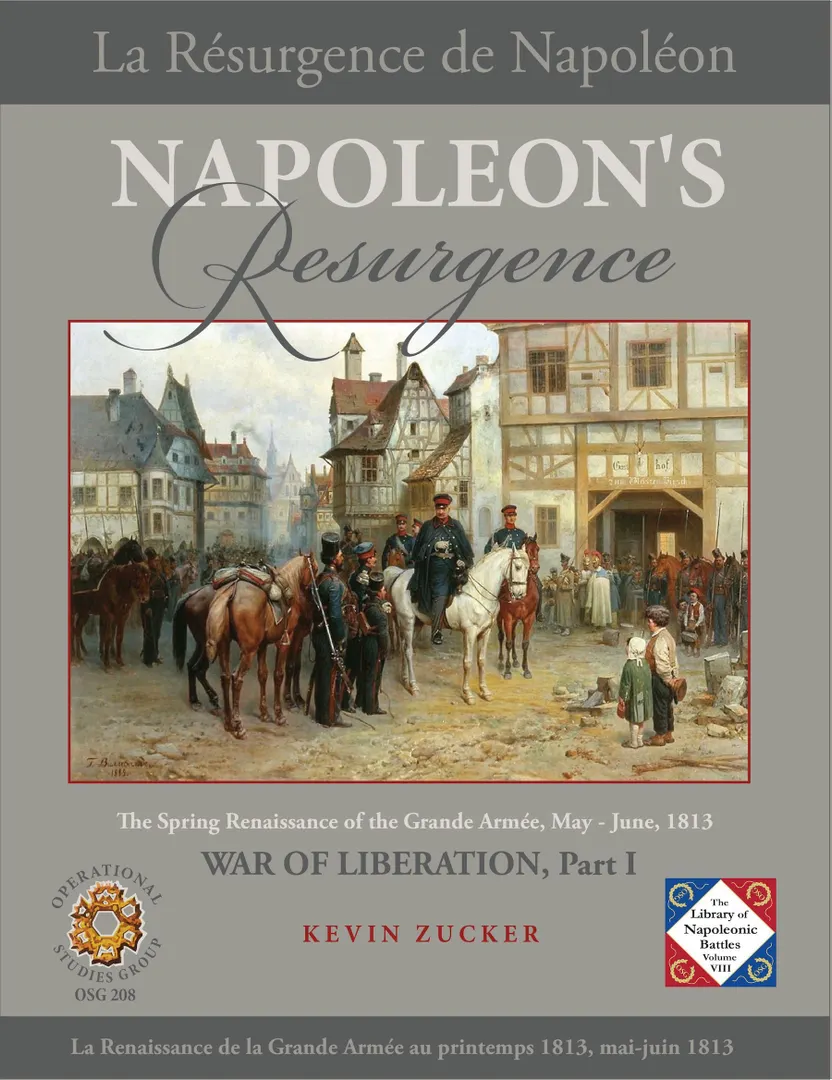
Napoleon Retreats - Campaign in France II Winter 1814: Hope Against Hope After dispatching Blücher’s Army of Silesia at Vauchamps, Napoleon diverted temporarily toward the Seine at Montereau, for an inconclusive brush with Schwarzenberg’s Army of Bohemia. His inveterate foe Blücher apparently had learned no lessons and threatened to move again on Paris. By March 3rd Napoleon was returning northward along the bank of the Ourcq River. The fall of Soissons, cheaply surrendered by General Moreau, saw the quarry escape over the Aisne River to link-up with 43,000 reinforcements near Laon, raising his strength to over 100,000. While the Emperor concentrated between Fismes and Berry au Bac, Blücher continued to retreat on Laon. Reaching Craonne, the Emperor decided to advance along the chemin des dames to test Blücher’s position on the plateau, and clear the flank of his advance on Laon. The next game of the TLNB-Series covers the Campaign in France, Part II: 6 March to 13 March 1814. The major battle was Laon, on 9-10 March, when Napoleon, with 37,000, went up against Blücher's position, on the hill of Laon, with 85,000. (Marshal Marmont with a separate VI Corps was supposed to support the attack, but he was dispersed in a night combat.) Blücher wasn't feeling well and failed to pursue. One more battle was to follow (after two days for R&R) and Napoleon won that battle: Reims, against St. Priest. So actually, he won two out of three. Battles Simulated Craonne, Struggle for the plateau des dames, 7 March The chemin des dames runs the length of a continuous ridge from the N2 to the N44, the two main highways leading north to Laon. Blücher stationed Sacken and Woronzoff’s infantry on the plateau just west of Craonne. Napoleon decided on a frontal attack up the chemin on what he believed to be no more than a 20,000-man rearguard. The Russians begrudgingly gave ground, gaining it back in a counterattack, and throwing Ney off the Plateau. Once the French Guard cavalry had stabilized the situation, the Russian right flank began to give way under combined pressure of infantry and cavalry. Napoleon directed 88 guns from the Guard artillery to destroy the Russian center and sent the Guard infantry to attack along the chemin to complete the victory. The Russians withdrew in good order. Laon, Beginning of the End, 9-10 March Marshal Ney advanced on Laon in the morning snow. Bülow with 17,000 men held the suburbs of Semilly and Ardon. On the plain west of Laon, Winzingerode was posted with 25,000 men; east of Laon at Athies, Yorck and Kleist held another 25,000 men; Langeron and Sacken were in reserve with 36,000; Napoleon attacked with fewer than 40,000. As the southern suburbs traded hands, Blücher thought that he was being attacked just by an advanced guard, but Napoleon threw everything into Ney’s attack up until 6 PM. Marmont commanded a separate force of 10,000 which had managed to fight their way to Athies by 5 PM, camping for the night. At 7:30, the Prussian Yorck launched a combined arms attack that routed Marmont’s entire camp. A small group of French Guardsmen managed to halt the pursuit. Marmont lost 45 guns, all his wagons, and 3,500 men. Blücher lost a chance to destroy his foe’s small army. Reims, A Quick Success en passant, 13 March On March 12th the Russian General St. Priest snatched Reims from its small French garrison. Hearing of this, Napoleon and his small force moved east on the 13th, beginning their attack at 4 PM, quickly driving out the enemy, and cutting communications between Blücher and Schwarzenberg at the same time. Only 10,000 French troops were actually engaged against 15,000 of St. Priest. St. Priest was killed along with 3,000 men while losing 23 guns. Campaign Game, 6 -13 March All three maps fit together to create an irregular playing area 44"x68" and covering an entire week of fighting. • Three 22" x 34" maps • 560 die-cut units • 100 playing cards • Two rulebooks • 15 player aid cards • Game Box STANDARD TLNB-GAME SYSTEM: • scale: 480m (525 yards)/ hex; • strength: 500-800 men/SP; • turn-duration: 1 hour/turn
Secondo il catalogo, Napoleon Retreats: Campaign in France, Part II supporta da 2 a 4 giocatori. L’intervallo corrisponde al numero di giocatori indicato dall’editore, quindi il gioco si può preparare per qualsiasi gruppo entro quei limiti. Preparazione, alcune regole e punteggio possono comunque variare in base al numero di giocatori: controlla la configurazione esatta nel regolamento della tua edizione.
La durata indicata per Napoleon Retreats: Campaign in France, Part II è di 60 minuti, la stima dell’editore per una partita completa. La durata effettiva dipende dal gruppo, dal numero di giocatori e dalla conoscenza delle regole: le prime partite durano di più, i gruppi esperti finiscono prima. Preparazione e spiegazione delle regole non sono comprese nella stima.
Il catalogo indica Napoleon Retreats: Campaign in France, Part II dai 10 anni in su. È la raccomandazione dell’editore e tiene conto della lettura richiesta, della complessità delle regole e dei componenti piccoli, non solo del tema. I più giovani spesso possono giocare con l’aiuto di un adulto: controlla l’età consigliata sulla tua edizione e l’esperienza del tuo gruppo con i giochi da tavolo.
Napoleon Retreats: Campaign in France, Part II ha un punteggio di complessità di 3,0 su 5 secondo i giocatori di BoardGameGeek, il che lo rende un gioco di media complessità. Il punteggio riflette quanta conoscenza delle regole, pianificazione e decisioni richiede una partita tipica. I giochi impegnativi richiedono una prima spiegazione più lunga, quindi conviene usare una guida di preparazione.
Napoleon Retreats: Campaign in France, Part II appartiene a queste categorie: Wargame e Napoleonic. Le sue meccaniche principali sono Dice Rolling, Hexagon Grid e Simulation. Le categorie descrivono il tema e l’ambientazione di un gioco, mentre le meccaniche descrivono ciò che i giocatori fanno davvero nel proprio turno. Ogni meccanica porta a una pagina del catalogo con giochi simili.
Gli autori accreditati di Napoleon Retreats: Campaign in France, Part II sono: Kevin Zucker. Questi crediti provengono dai dati pubblicati del gioco e indicano le persone responsabili della sua progettazione, non gli illustratori o gli editori. Le pagine degli autori su MeepleRules raccolgono altri titoli degli stessi autori, utili quando un gioco ti piace e ne cerchi di simili.
Il catalogo classifica Napoleon Retreats: Campaign in France, Part II come gioco base. Si gioca da solo con i componenti presenti nella scatola e non richiede altri titoli. Le espansioni, se esistono, aggiungono nuovo contenuto o nuove regole e sono elencate separatamente nel catalogo con un collegamento a questo gioco base.