
- Posizione BGG
- BGG #5169
- Valutazione BGG
- 8,0
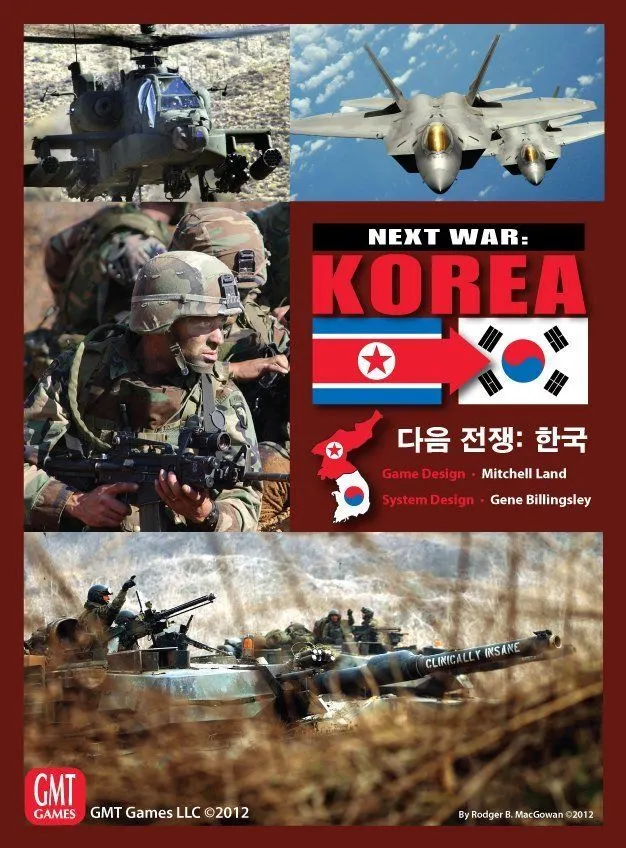
Next War: Korea
- 1–2 giocatori
- 120–480 min
- Complessità 4,3/5
- 2012
2014
Aiuto con le regole di Next War: Taiwan
Spiegazioni chiare di turni, effetti delle carte e situazioni dubbie, con riferimenti alle fonti ufficiali e cronologia delle domande salvata.
Per 1 giocatore
Cosa vuoi sapere?
Le risposte vengono dal regolamento ufficiale, con la pagina da verificare.
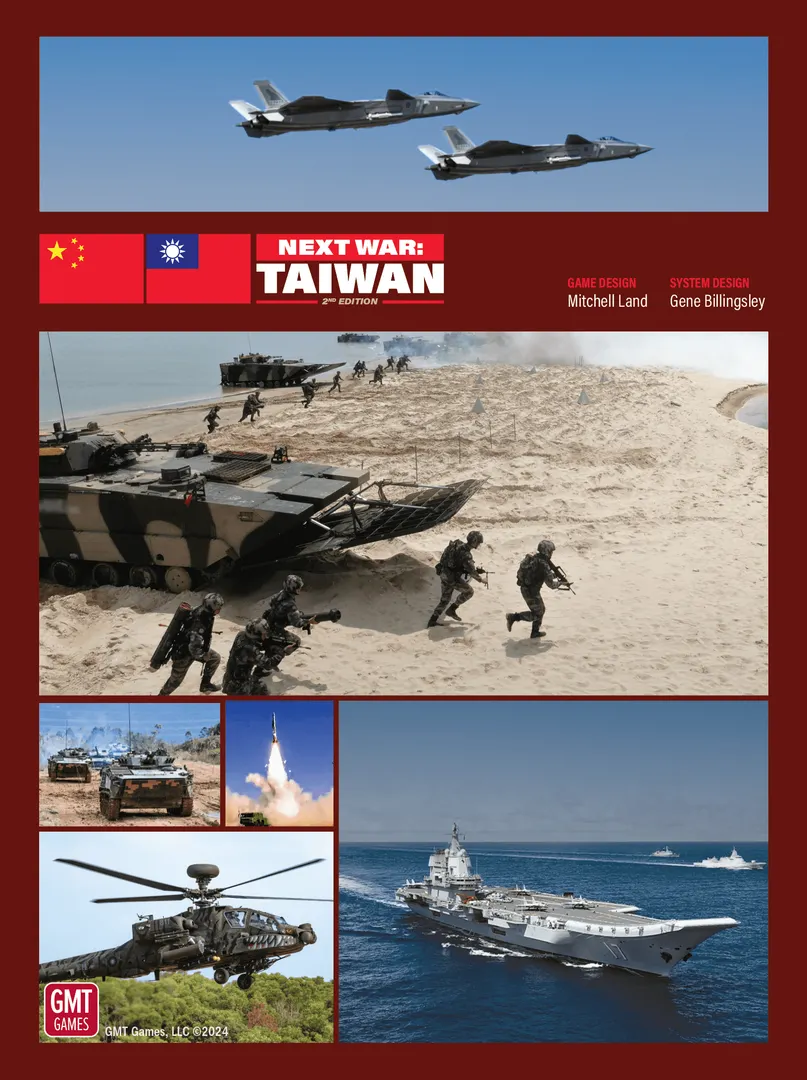
Next War: Taiwan è un gioco da tavolo pubblicato nel 2014 per 1–2 giocatori, con partite da 120 a 480 minuti e dai 12 anni in su. È stato ideato da Gene Billingsley e Mitchell Land e le sue meccaniche principali sono Hexagon Grid.
In inglese
Over seventy years later, and the divisions still run deeper than the straits which separate the Republic of China (the ROC) from the People's Republic of China (the PRC). Times have changed greatly since the PRC failed to conquer the island of Taiwan from the nationalists' Republic of China at the end of the Chinese Civil War in 1949 and the states that were even then separated by politics and economics have grown further apart as both sides now hurl men, weapons, and material into the maelstrom of modern combat in an attempt to settle their bitter division once and for all. Next War: Taiwan, the next volume in GMT's series of Next War games and the follow-on to Next War: Korea, allows players to fight a near future war in and around the island of Taiwan. In this sequel, the communist leadership of the PRC have decided that its time to end its rhetoric and posturing and bring the long-lost democratically governed ROC island into the fold of the Socialist Harmonious Society. Due to the nature of the "terrain" surrounding Taiwan, the game features an expanded, yet still abstracted and playable, naval system including submarine threats, ASW, mine warfare, and anti-naval strikes. In addition, rules exist for combining Next War: Taiwan with Next War: Korea to simulate an expanded conflict. Note: the Next War series is not an Introductory wargame. Rather, we have intended herein to create a system (and a series) that will allow detailed study of modern warfare in various venues as well as engaging gameplay. That said, the Standard Game rules encompass a fairly straightforward ruleset that will, we think, be considered pretty "easy to learn" by experienced wargamers. So players who choose to play Standard Game scenarios can have a relatively quick game when that's what suits them. The real flavor of a war in the theatre, though, comes through in the Advanced Game, where you get much more control over airpower and can more clearly see each side's strengths and weaknesses. For players who want a "mini-monster game" experience, playing the Advanced Game Campaign Scenarios with some or all of the optional rules will definitely "deliver." Ownership of Next War: Korea will NOT be required to play. Units Ground units in Next War: Taiwan represent primarily brigades, regiments, and battalions of the armies of the PRC and ROC and the United States. All ground units are rated for their attack and defense strengths, movement capabilities, and unit efficiency. Air units represent fighter, bomber, and attack squadrons of the major combatants and are rated for All-Weather Capabilities as well as their range, average pilot skill, and their abilities in Air-to-Air Combat, Close Air Support, and Strike missions. Naval units and capabilities are abstracted somewhat in the Next War series. A "Sea Control" mechanism reflects the results of the surface and sub-surface battles, while the game's naval unit counters represent the major Aircraft Carrier Battle Groups and Amphibious Ready Groups of the US Navy. Additional amphibious capabilities are represented by the Special Forces capabilities of each side. Changes to the naval system include Naval Display Play Aid to allow for movement, air ranges, etc. in the seas surrounding Taiwan a Submarine Threat Level and ASW Level matrix for the PRC and Allies respectively to represent the subsurface conflict naval mine warfare allowing either side to attempt to deny usage of Beaches for Amphibious Assaults or Ports and Beachheads for Sea Transport anti-Naval Strikes (including Cruise Missiles) allowing each side to force enemy Naval units to withdraw or risk losses Maps and Terrain The game's map presents the island of modern-day Taiwan at a scale of roughly 7.5 miles per hex. The map covers the entire island and includes several holding boxes and tracking displays. Game System A game turn is generally composed of: Weather Determination. Bad weather can severely hamper air and naval operations activity and can significantly slow ground operations. Initiative Determination and Air/Naval Phase, wherein Air Superiority levels and air availability are determined and Sea Control is established or modified. Special Operations Phases in the Advanced Game allowing players to utilize their special operators in various recon and raid missions behind enemy lines. Strike Phases in the Advanced Game allowing players to launch air strikes, cruise missiles, and artillery and SSM strikes. One or more Movement and Combat Phases that allow both sides to move, react, and fight, with an advantage to the Initiative player on non-Contested turns Arrival of Reinforcements and Replacements Victory Determination Combat resolution examines not only unit strengths but also unit efficiency (representing training, doctrine, and morale), as well as the terrain where the combat takes place. The CRT tends to be very bloody in nature, reflecting what we believe will be a degree of attritional warfare early due to the lethality of modern weapons. As in many games, casualties represent not only actual combat losses but also losses of unit cohesion brought about by the rapid pace with which modern armies are able to engage and exploit on the battlefield. Scenarios There are several Standard Game scenarios. The first three are small and cover the first weeks of the war by dividing the island into roughly three equal sections. These focus on the initial assaults by the PRC to establish beachheads and take Ports and introduce players to the basic mechanics of the system, while giving them insight into attack and defense strategies for the "big game." Players can also play the entire Campaign Game which uses the entire map and all of the Standard Game rules. One other scenario is provided which examines a theoretical U.S. Amphibious landing in an attempt to take back the island. The Advanced Game Scenarios come in three flavors à la NATO: The Next War in Europe: Strategic Surprise, Tactical Surprise, and Extended Buildup. This offers the players the ability to game out a variety of "At Start" war scenarios based on varying levels of readiness. There is also an International Posture Matrix à la Flashpoint: Golan – The Fifth Arab-Israeli War to allow players to experiment with a variety of intervention options for the non-Chinese players in the region. In addition, there is a full set of rules covering how to play a combined Next War: Taiwan/Korea game. In Next War: Taiwan, the Taiwan Straits are on fire with the Goliath of the PRC arrayed against the David of the ROC. Can you, as the People's Liberation Army/Naval commander, conquer the long separated island in four weeks before the full might of the U.S. can be brought to bear? Can you, as the Republic of China's Army commander, hold out against the renewed Communist assault until help arrives? And what will happen in Korea while all this is going on? There’s only one way to find out... Components 1 22x34" map 1 11x17" Naval Display 3 9/16" counter sheets 2 rulebooks (Standard + Advanced Rules and Game Specific Rules) 6 8.5x11" Player Aids 2 11x17" Player Aids 1 10-sided die Game Design and Development: Mitchell Land Original System Design: Gene Billingsley TIME SCALE 3.5 days per turn MAP SCALE 7.5 miles per hex UNIT SCALE Brigade / Regiment / Battalion NUMBER OF PLAYERS One or two (can be played in teams)
Secondo il catalogo, Next War: Taiwan supporta da 1 a 2 giocatori. L’intervallo corrisponde al numero di giocatori indicato dall’editore, quindi il gioco si può preparare per qualsiasi gruppo entro quei limiti. Preparazione, alcune regole e punteggio possono comunque variare in base al numero di giocatori: controlla la configurazione esatta nel regolamento della tua edizione.
La durata indicata per Next War: Taiwan è di 120–480 minuti, la stima dell’editore per una partita completa. La durata effettiva dipende dal gruppo, dal numero di giocatori e dalla conoscenza delle regole: le prime partite durano di più, i gruppi esperti finiscono prima. Preparazione e spiegazione delle regole non sono comprese nella stima.
Il catalogo indica Next War: Taiwan dai 12 anni in su. È la raccomandazione dell’editore e tiene conto della lettura richiesta, della complessità delle regole e dei componenti piccoli, non solo del tema. I più giovani spesso possono giocare con l’aiuto di un adulto: controlla l’età consigliata sulla tua edizione e l’esperienza del tuo gruppo con i giochi da tavolo.
Next War: Taiwan ha un punteggio di complessità di 4,3 su 5 secondo i giocatori di BoardGameGeek, il che lo rende un gioco impegnativo. Il punteggio riflette quanta conoscenza delle regole, pianificazione e decisioni richiede una partita tipica. I giochi impegnativi richiedono una prima spiegazione più lunga, quindi conviene usare una guida di preparazione.
Next War: Taiwan appartiene a queste categorie: Wargame e Modern Warfare. Le sue meccaniche principali sono Hexagon Grid. Le categorie descrivono il tema e l’ambientazione di un gioco, mentre le meccaniche descrivono ciò che i giocatori fanno davvero nel proprio turno. Ogni meccanica porta a una pagina del catalogo con giochi simili.
Gli autori accreditati di Next War: Taiwan sono: Gene Billingsley e Mitchell Land. Questi crediti provengono dai dati pubblicati del gioco e indicano le persone responsabili della sua progettazione, non gli illustratori o gli editori. Le pagine degli autori su MeepleRules raccolgono altri titoli degli stessi autori, utili quando un gioco ti piace e ne cerchi di simili.
Il catalogo classifica Next War: Taiwan come gioco base. Si gioca da solo con i componenti presenti nella scatola e non richiede altri titoli. Le espansioni, se esistono, aggiungono nuovo contenuto o nuove regole e sono elencate separatamente nel catalogo con un collegamento a questo gioco base.