
- Valutazione BGG
- 8,0
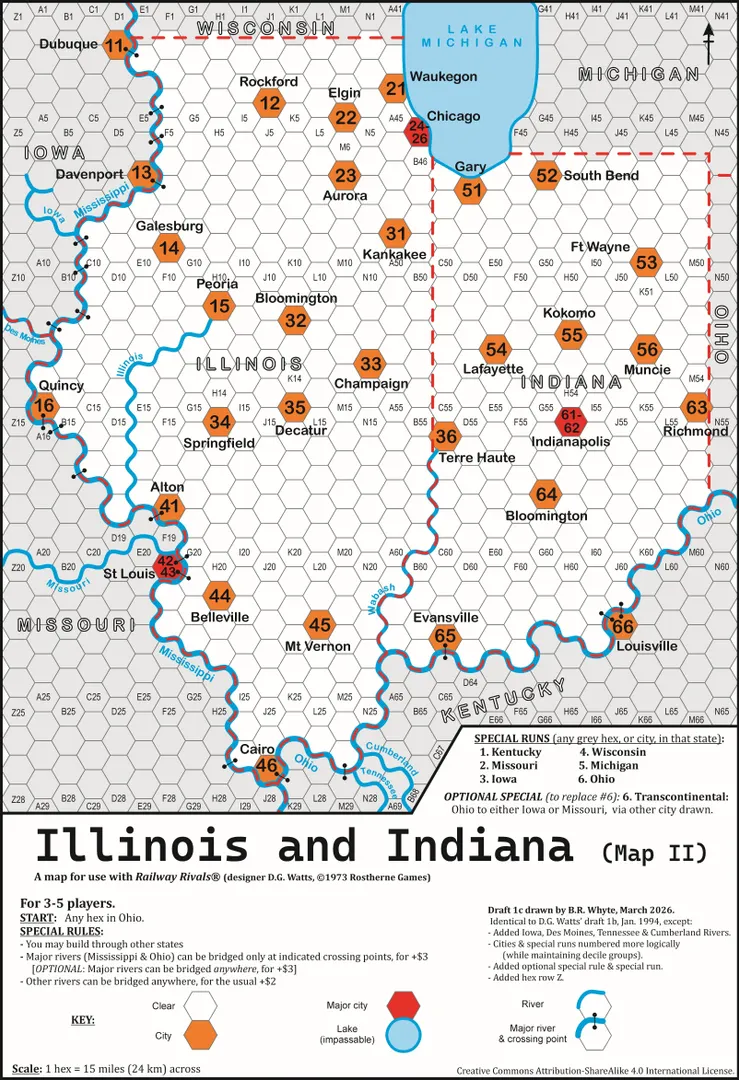
Railway Rivals Map II: Illinois and Indiana
- 2–6 giocatori
- 90 min
- 1994
1979
Aiuto con le regole di Railway Rivals
Spiegazioni chiare di turni, effetti delle carte e situazioni dubbie, con riferimenti alle fonti ufficiali e cronologia delle domande salvata.
Per 2 giocatori
Cosa vuoi sapere?
Le risposte vengono dal regolamento ufficiale, con la pagina da verificare.
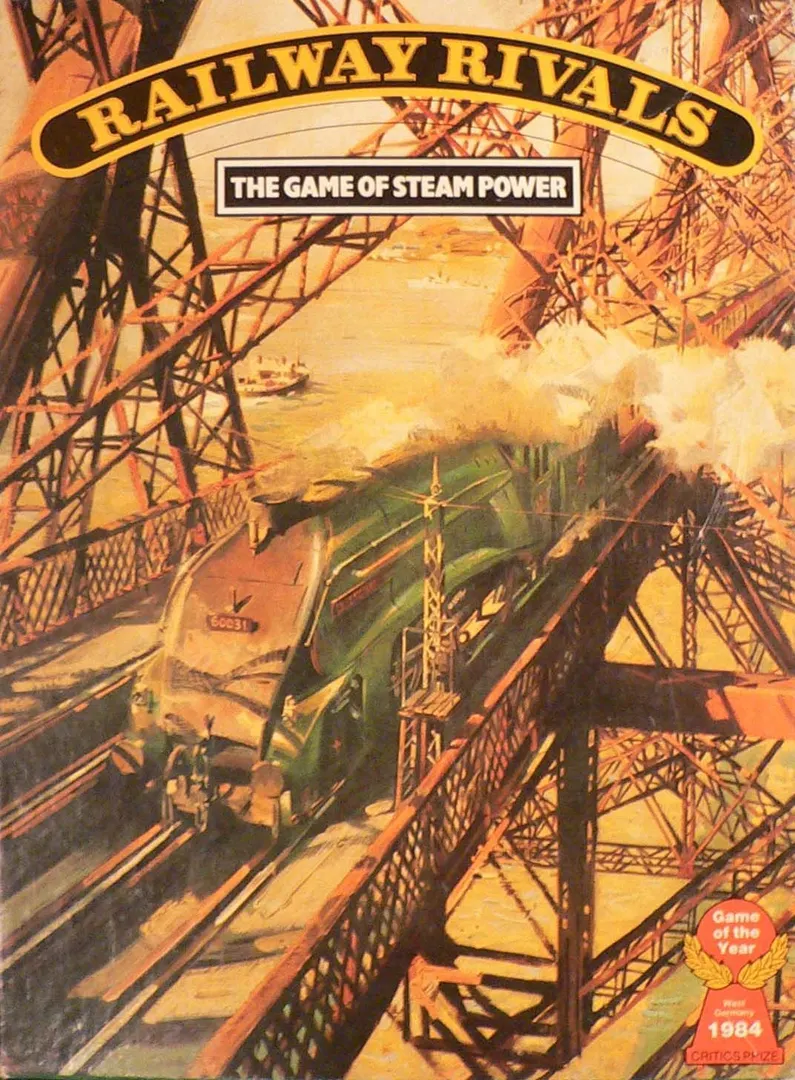
Railway Rivals è un gioco da tavolo pubblicato nel 1979 per 2–6 giocatori, con partite da 90 minuti e dai 10 anni in su. È stato ideato da David G. Watts e le sue meccaniche principali sono Line Drawing.



In inglese
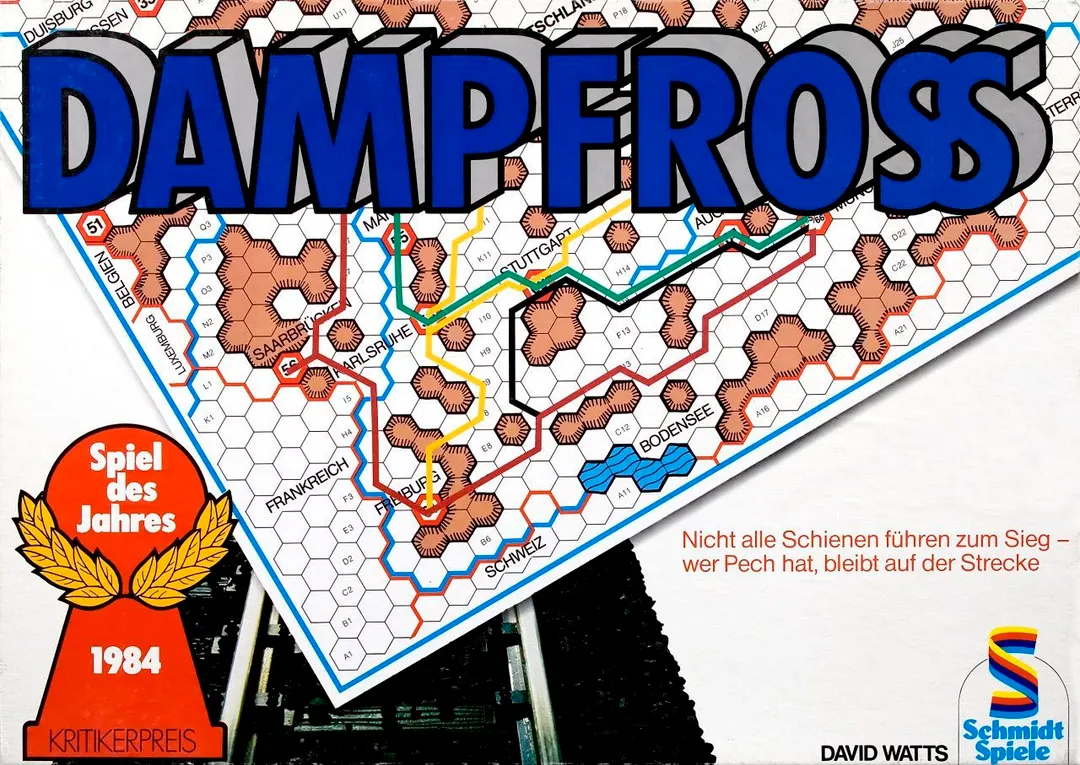
This is a classic simple railway racing game, perhaps the first modern railroading game, where you draw the railway lines on hex-board. This one uses the sort of colored marker pens you can wipe off with a damp cloth after the game. The game goes through phases; initially you draw tracks and earn money for linking cities. When a number of cities are joined, you start racing, the cities being chosen randomly. The races are simple dice-rollers and the 1st & 2nd place get prize money. After a couple of races, you draw some more tracks, then race some more and so on. The railways cost more if you go over mountains etc, but this gives you shorter routes. You can run parallel to other lines at a cost, or simply link into another player's track and rent the tracks of other players when you race. The board has a UK map on one side and a US map on the other, both giving amusing challenges, and the game has good repeat value. The designer David Watts has published a lot of stand alone Railway Rivals maps, and there is another edition of this game, Dampfross published by Laurin. Re-implemented by: Dampfross
Secondo il catalogo, Railway Rivals supporta da 2 a 6 giocatori. L’intervallo corrisponde al numero di giocatori indicato dall’editore, quindi il gioco si può preparare per qualsiasi gruppo entro quei limiti. Preparazione, alcune regole e punteggio possono comunque variare in base al numero di giocatori: controlla la configurazione esatta nel regolamento della tua edizione.
La durata indicata per Railway Rivals è di 90 minuti, la stima dell’editore per una partita completa. La durata effettiva dipende dal gruppo, dal numero di giocatori e dalla conoscenza delle regole: le prime partite durano di più, i gruppi esperti finiscono prima. Preparazione e spiegazione delle regole non sono comprese nella stima.
Il catalogo indica Railway Rivals dai 10 anni in su. È la raccomandazione dell’editore e tiene conto della lettura richiesta, della complessità delle regole e dei componenti piccoli, non solo del tema. I più giovani spesso possono giocare con l’aiuto di un adulto: controlla l’età consigliata sulla tua edizione e l’esperienza del tuo gruppo con i giochi da tavolo.
Railway Rivals ha un punteggio di complessità di 2,3 su 5 secondo i giocatori di BoardGameGeek, il che lo rende un gioco piuttosto leggero. Il punteggio riflette quanta conoscenza delle regole, pianificazione e decisioni richiede una partita tipica. I giochi impegnativi richiedono una prima spiegazione più lunga, quindi conviene usare una guida di preparazione.
Railway Rivals appartiene a queste categorie: Racing e Trains. Le sue meccaniche principali sono Line Drawing. Le categorie descrivono il tema e l’ambientazione di un gioco, mentre le meccaniche descrivono ciò che i giocatori fanno davvero nel proprio turno. Ogni meccanica porta a una pagina del catalogo con giochi simili.
Gli autori accreditati di Railway Rivals sono: David G. Watts. Questi crediti provengono dai dati pubblicati del gioco e indicano le persone responsabili della sua progettazione, non gli illustratori o gli editori. Le pagine degli autori su MeepleRules raccolgono altri titoli degli stessi autori, utili quando un gioco ti piace e ne cerchi di simili.
Il catalogo classifica Railway Rivals come gioco base. Si gioca da solo con i componenti presenti nella scatola e non richiede altri titoli. Le espansioni, se esistono, aggiungono nuovo contenuto o nuove regole e sono elencate separatamente nel catalogo con un collegamento a questo gioco base.