
- Posizione BGG
- BGG #408
- Valutazione BGG
- 8,0
Marvel United: X-Men
- 1–5 giocatori
- 40 min
- Complessità 2,0/5
- 2021
2014
Aiuto con le regole di Richard I
Spiegazioni chiare di turni, effetti delle carte e situazioni dubbie, con riferimenti alle fonti ufficiali e cronologia delle domande salvata.
Per 3 giocatori
Cosa vuoi sapere?
Le risposte vengono dal regolamento ufficiale, con la pagina da verificare.
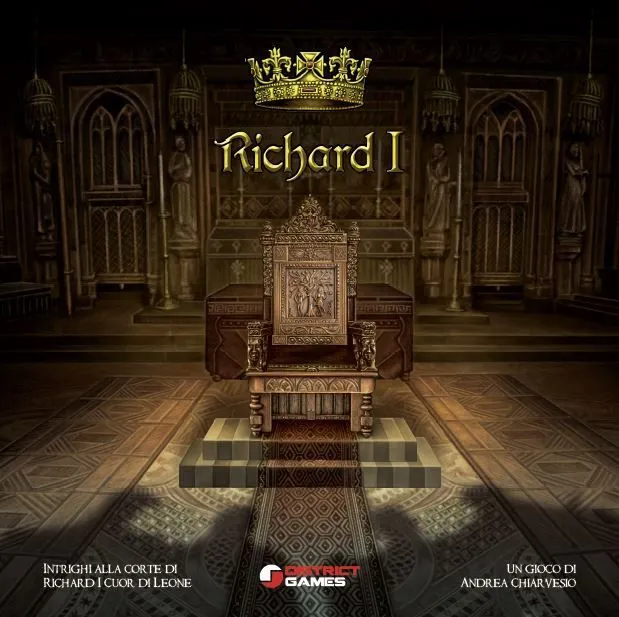
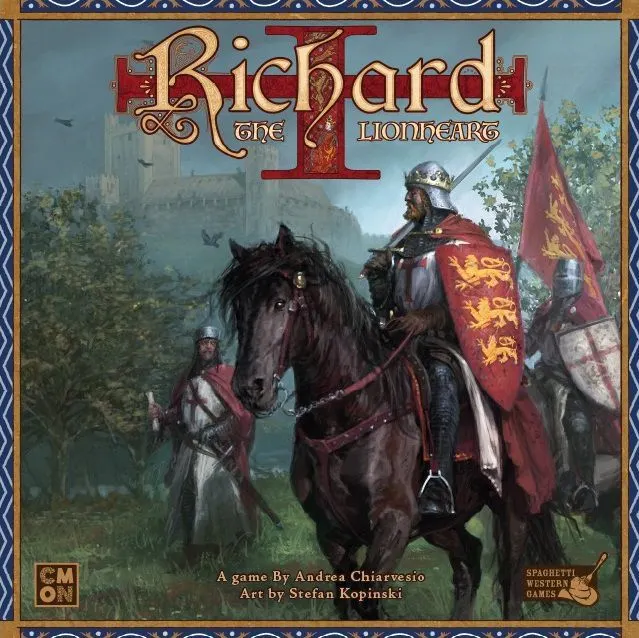
Richard I è un gioco da tavolo pubblicato nel 2014 per 3–8 giocatori, con partite da 60 minuti e dai 12 anni in su. È stato ideato da Andrea Chiarvesio e le sue meccaniche principali sono Variable Player Powers, Cooperative Game e Team-Based Game.


In inglese
England, a land so harsh that forged heroes and conquerors, where the people are so indomitable that not even the Roman Empire managed to subjugate them. England has built an extensive empire on which the sun never set, vastly extending its domain beyond the British Isles on the spur of the Plantagenets, a royal lineage that dominated much of medieval European history, a dynasty forged from steel and blood, a lineage that would prevail for more than half a millennium. Plantagenet is a name that inspires admiration among enemies and fear among allies. Henry II, the first Plantagenet king to extend and stabilize his domains, contracted a political marriage with Eleanor of Aquitaine, a marriage intended to generate heirs to the throne. This strategic alliance by marriage produced four heirs: children who would rebel against their own father, more than once, leading to war, bloodshed and pacification, the stuff history is made of. Who is going to inherit the throne? Who will prove to be worthy of the illustrious name of Plantagenet? After years of battles and rivalry, only two of the heirs survived. The first, opposed by his own father, is a man with a destiny marked out by his own land, which he rarely set foot on as he was preoccupied for his entire life in conquests beyond the British Isles. The hope of an entire era would depend on his choices. The difference between being the usurper or the chosen one would depend on his actions. He is Richard I of England, better known as Richard the Lionheart. The other, the last born, was far removed from the throne. Overshadowed by his own family, derided by his own people and saddled with the unfortunate title of “Lackland”, John Lackland had the opportunity of a lifetime: Richard left for the Crusades and John could claim the throne for himself in Richard’s absence. But would he have the mettle of a king? Would he surpass his more illustrious brother Richard? Would he be able to counter his brother’s supporters? A wise choice as to with whom to form an alliance is crucial to one’s place in history. Only brave choices will crown the true king of England, and only those who loyally and valiantly supported him in the conquest and administration of the kingdom would be remembered in history. This is a choice that only the strong and the wise would make.This is history. In Richard I, the players assume the role of the characters who remained in England when King Richard I left for the Crusades. They have to decide which side to take without knowing whether Richard I will return home a victor with glory and riches, or he won't come back at all (but there are many possible intermediate outcomes). During the game, the players take turns to influence the different characters available in order to earn prestige points (PPs) for themselves, but also to use their powers to influence the Crusade from far away by sending resources. A player might even decide to betray his own side, if worrying news were to come from the East... At the end of the game, the outcome of the Crusade leads to an increase of PPs for the players who were deployed by the faction which has achieved its goal, but the game has only one winner: the player who has accumulated the most PPs, regardless of the faction to which he belongs! The object of the game is to amass the most Prestige Points (PP) by wisely choosing alliances and exerting influence on the performance of the Crusade.
Secondo il catalogo, Richard I supporta da 3 a 8 giocatori. L’intervallo corrisponde al numero di giocatori indicato dall’editore, quindi il gioco si può preparare per qualsiasi gruppo entro quei limiti. Preparazione, alcune regole e punteggio possono comunque variare in base al numero di giocatori: controlla la configurazione esatta nel regolamento della tua edizione.
La durata indicata per Richard I è di 60 minuti, la stima dell’editore per una partita completa. La durata effettiva dipende dal gruppo, dal numero di giocatori e dalla conoscenza delle regole: le prime partite durano di più, i gruppi esperti finiscono prima. Preparazione e spiegazione delle regole non sono comprese nella stima.
Il catalogo indica Richard I dai 12 anni in su. È la raccomandazione dell’editore e tiene conto della lettura richiesta, della complessità delle regole e dei componenti piccoli, non solo del tema. I più giovani spesso possono giocare con l’aiuto di un adulto: controlla l’età consigliata sulla tua edizione e l’esperienza del tuo gruppo con i giochi da tavolo.
Richard I ha un punteggio di complessità di 2,6 su 5 secondo i giocatori di BoardGameGeek, il che lo rende un gioco piuttosto leggero. Il punteggio riflette quanta conoscenza delle regole, pianificazione e decisioni richiede una partita tipica. I giochi impegnativi richiedono una prima spiegazione più lunga, quindi conviene usare una guida di preparazione.
Richard I appartiene a queste categorie: Medieval. Le sue meccaniche principali sono Variable Player Powers, Cooperative Game e Team-Based Game. Le categorie descrivono il tema e l’ambientazione di un gioco, mentre le meccaniche descrivono ciò che i giocatori fanno davvero nel proprio turno. Ogni meccanica porta a una pagina del catalogo con giochi simili.
Gli autori accreditati di Richard I sono: Andrea Chiarvesio. Questi crediti provengono dai dati pubblicati del gioco e indicano le persone responsabili della sua progettazione, non gli illustratori o gli editori. Le pagine degli autori su MeepleRules raccolgono altri titoli degli stessi autori, utili quando un gioco ti piace e ne cerchi di simili.
Il catalogo classifica Richard I come gioco base. Si gioca da solo con i componenti presenti nella scatola e non richiede altri titoli. Le espansioni, se esistono, aggiungono nuovo contenuto o nuove regole e sono elencate separatamente nel catalogo con un collegamento a questo gioco base.