

- Posizione BGG
- BGG #24.446
- Valutazione BGG
- 6,1
Cloak & Dagger
- 2–4 giocatori
- 30–60 min
- Complessità 1,6/5
- 1984
2019
Aiuto con le regole di Secret Night at Davis Manor
Spiegazioni chiare di turni, effetti delle carte e situazioni dubbie, con riferimenti alle fonti ufficiali e cronologia delle domande salvata.
Per 4 giocatori
Cosa vuoi sapere?
Le risposte vengono dal regolamento ufficiale, con la pagina da verificare.
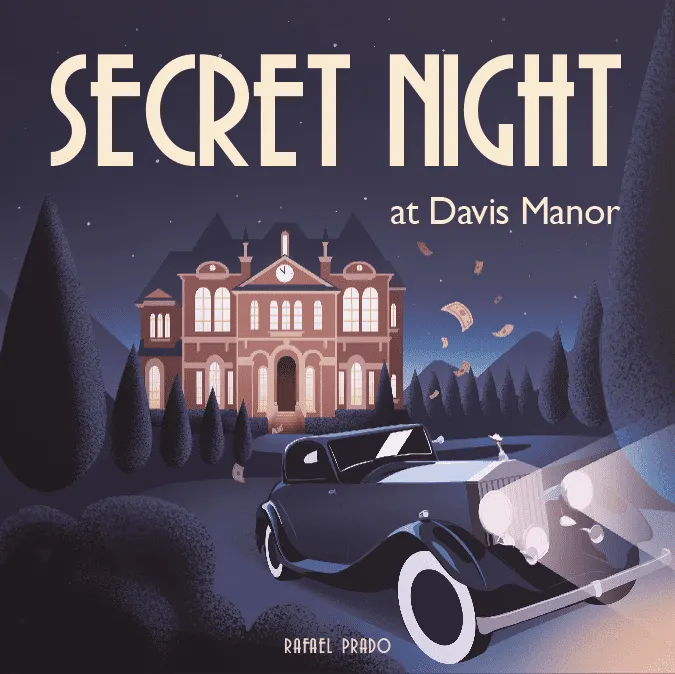
Secret Night at Davis Manor è un gioco da tavolo pubblicato nel 2019 per 4–8 giocatori, con partite da 60 a 120 minuti e dai 12 anni in su. È stato ideato da Rafael Prado e le sue meccaniche principali sono Variable Player Powers, Roll / Spin and Move e Team-Based Game.






In inglese
Secret Night at Davis Manor is a team-based board game set in 1928 York, England. It takes place in Davis Manor. Players secretly take on the role of police and thieves, and they must co-operate to achieve their objectives: The thieves have to take the money and escape with it in a vehicle, while the police have to arrest the thieves. Script: England, 1928, following a period of scarcity in the wake of the first world war, Europe is experiencing a period of artistic and economic splendor. In celebration of this new era of prosperity a grand dinner has been organised at the Davis Manor. The greatest Luminaries and elites of the time are set to attend, however all is not what it seems! The police have received warning that a master thief is planning to attend the event and steal the Davis Manor fortune. This thief is rumoured to never act alone, pulling off heists using hidden accomplices. Instead of cancelling the event a daring plan has been hatched! The chief inspector himself will attend the party, along with hidden detective agents. Using their skills, cunning and powers of deduction they will attempt to catch a thief! But be careful.. Not everyone is as they seem in Davis Manor and a lot can happen in the Secret Night. How to play resume: Roles: The Master Thief and the Chief Inspector reveal their roles and keep them shown.The rest of the players will keep their roles hidden. Characters: Each character has a special skill. The mansion: There are 16 rooms in the mansion.They are represented by their names on the perimeter of the Main Board. At the beginning of the game the object cards are shuffled (green circle at the back) and 16 of them are randomly placed face up in each room held by the Main Board. The rest of the object cards are stacked face down as a draw deck. Mechanics: Draw one card, spin the roulette to move the pawn around the board by the number rolled, and perform actions with object cards and/or the Action Square. During their movement, the player can do as many actions as they wants/are able to. The most common action is to perform a search. Being on a green search hex gives you the opportunity to take the card stored in the associated room slot on the edge of the Main Board. Once checked, you should keep one of the cards in your hand (at your choice) in the slot of the room hidden face down. Inventory: The maximum number of cards at the end of your turn is 3, and 1 must always be shown face up next to the player board (even if you only have 1 card in total). Action square: Once per turn, when you are next to another pawn, you may use the Action Square to perform an action: -To Trade cards with another player, either, 1 for 1 , 2 for 2 or 3 for 3. -To Steal a card: The target victim shuffles all his cards (shown and hidden) before he is robbed. The player performing the action then chooses 1 card blindly. -Push: Move a player up to 2 squares. If he encounters an obstacle: (wall, other player) stops. -Whisper a secret: Use it to have a private conversation (whispering to the ear) with another player. This can be useful for plotting strategies or bluffing. In addition to these actions, players may use the object cards. End of the game: The game ends at dawn (9 turns - 6:00 am) or when a team's score counter reaches 10 points. If the game ends in a tie and the Deceiver (the role for games with odd players) is not in play, the first team to score wins.
Secondo il catalogo, Secret Night at Davis Manor supporta da 4 a 8 giocatori. L’intervallo corrisponde al numero di giocatori indicato dall’editore, quindi il gioco si può preparare per qualsiasi gruppo entro quei limiti. Preparazione, alcune regole e punteggio possono comunque variare in base al numero di giocatori: controlla la configurazione esatta nel regolamento della tua edizione.
La durata indicata per Secret Night at Davis Manor è di 60–120 minuti, la stima dell’editore per una partita completa. La durata effettiva dipende dal gruppo, dal numero di giocatori e dalla conoscenza delle regole: le prime partite durano di più, i gruppi esperti finiscono prima. Preparazione e spiegazione delle regole non sono comprese nella stima.
Il catalogo indica Secret Night at Davis Manor dai 12 anni in su. È la raccomandazione dell’editore e tiene conto della lettura richiesta, della complessità delle regole e dei componenti piccoli, non solo del tema. I più giovani spesso possono giocare con l’aiuto di un adulto: controlla l’età consigliata sulla tua edizione e l’esperienza del tuo gruppo con i giochi da tavolo.
Secret Night at Davis Manor ha un punteggio di complessità di 2,7 su 5 secondo i giocatori di BoardGameGeek, il che lo rende un gioco piuttosto leggero. Il punteggio riflette quanta conoscenza delle regole, pianificazione e decisioni richiede una partita tipica. I giochi impegnativi richiedono una prima spiegazione più lunga, quindi conviene usare una guida di preparazione.
Secret Night at Davis Manor appartiene a queste categorie: Murder / Mystery e Spies / Secret Agents. Le sue meccaniche principali sono Variable Player Powers, Roll / Spin and Move e Team-Based Game. Le categorie descrivono il tema e l’ambientazione di un gioco, mentre le meccaniche descrivono ciò che i giocatori fanno davvero nel proprio turno. Ogni meccanica porta a una pagina del catalogo con giochi simili.
Gli autori accreditati di Secret Night at Davis Manor sono: Rafael Prado. Questi crediti provengono dai dati pubblicati del gioco e indicano le persone responsabili della sua progettazione, non gli illustratori o gli editori. Le pagine degli autori su MeepleRules raccolgono altri titoli degli stessi autori, utili quando un gioco ti piace e ne cerchi di simili.
Il catalogo classifica Secret Night at Davis Manor come gioco base. Si gioca da solo con i componenti presenti nella scatola e non richiede altri titoli. Le espansioni, se esistono, aggiungono nuovo contenuto o nuove regole e sono elencate separatamente nel catalogo con un collegamento a questo gioco base.