

- Valutazione BGG
- 6,5
Shake Up: Where Did All The Tech In An IT Firm Go!?
- 1–2 giocatori
- 15–25 min
- Complessità 2,0/5
- 2019
2019
Aiuto con le regole di Shake Up
Spiegazioni chiare di turni, effetti delle carte e situazioni dubbie, con riferimenti alle fonti ufficiali e cronologia delle domande salvata.
Per 1 giocatore
Cosa vuoi sapere?
Le risposte vengono dal regolamento ufficiale, con la pagina da verificare.
Shake Up è un gioco da tavolo pubblicato nel 2019 per 1–2 giocatori, con partite da 15 a 25 minuti e dai 10 anni in su. È stato ideato da Dominic Michael Huang e le sue meccaniche principali sono Hand Management, Take That e Simulation.



In inglese
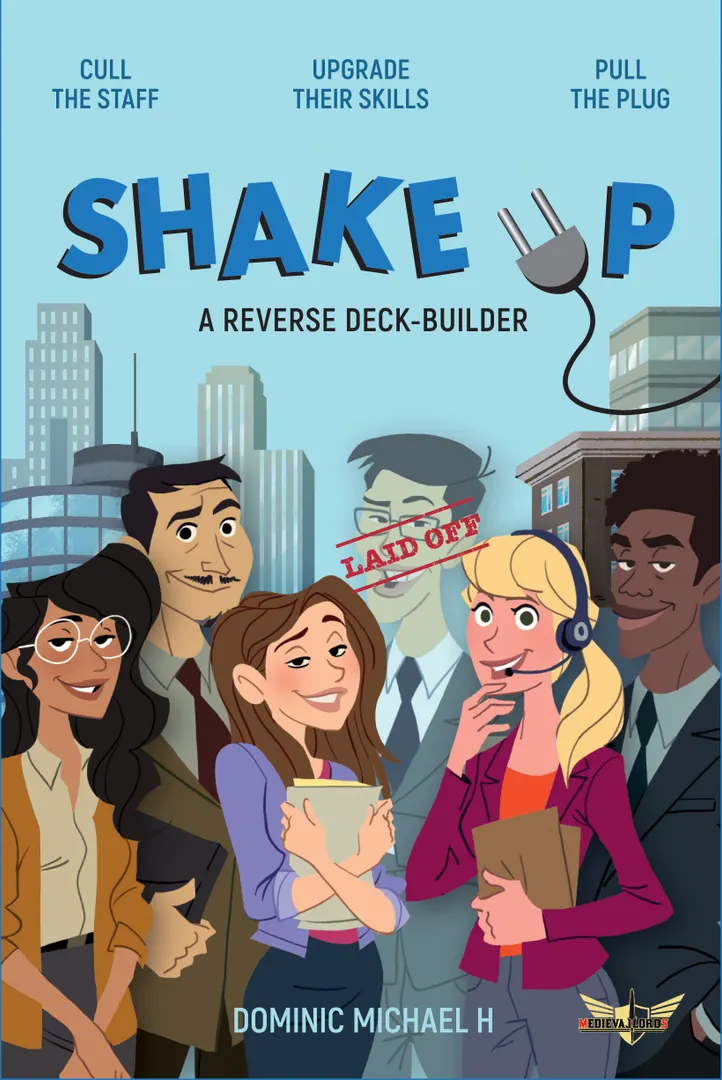
The IT company is staring Chapter 11 in the face. Its cost of operations is too high, its revenue too low. In a last ditch attempt, it is looking to hire a top tier business consultant to turn this around. Alas, there are many such persons claiming to be the best. To filter mere noise from the elite, the company has called upon the consultants with the most potential to share their business proposals - You are one such. Shake Up sits in a very rare tabletop genre: reverse deck-building or also known as a deck destruction game. Players each have their own deck of cards, which are completely identical decks since they represent the same employees of the same IT company. How each player handles the company will be different though, and that is where the better consultant will stand out. The first consultant to put the company into the green wins! Every turn players draw 4 cards from their own deck, and determine how to utilize those cards' abilities. Players are also allowed to perform a 'Lay Off' action, permanently removing an employee from the deck. While this may seem bad, it makes their deck more efficient in the style they want to build towards. They also save on that employee's salary, especially if it is a highly paid executive! Note however, that the higher ups usually have greater experience and better abilities. Starting off the game with some debt, players will slowly clear them away as well as make some profit through new business projects. How then do consultants interact in the game? Their sales folks can try to hustle the other team, messing up their rivals' business proposals! Of course, those same rivals will likely also have their own purchasing and accounting departments to protect themselves from red herring purchases. When does the game end? Each time a player's draw deck is emptied and recycled from its discard pile, she has a chance to call an Audit. When an Audit is called, that player counts her total revenue earned, then reduce it by the salary of all existing employees in her deck, as well as any unpaid loans. If it is still positive, she wins the game right away! Dare you call an Audit before your rival? Doing so is risky, since you either win the game right away or you gain more debt because you have to pay for wasting the auditors' time, putting you further from victory. Deck-builders are a common genre and folks try to add more powerful and advanced cards into their deck, which is typically comprised of basic cards. In reverse deck-building however, players begin with fully powered-up decks. The problem is one where veteran deck-builders will be familiar with - having too thick a deck will make it inefficient. Throughout the game, players will try to cull cards that are not part of their chosen strategy.
Secondo il catalogo, Shake Up supporta da 1 a 2 giocatori. L’intervallo corrisponde al numero di giocatori indicato dall’editore, quindi il gioco si può preparare per qualsiasi gruppo entro quei limiti. Preparazione, alcune regole e punteggio possono comunque variare in base al numero di giocatori: controlla la configurazione esatta nel regolamento della tua edizione.
La durata indicata per Shake Up è di 15–25 minuti, la stima dell’editore per una partita completa. La durata effettiva dipende dal gruppo, dal numero di giocatori e dalla conoscenza delle regole: le prime partite durano di più, i gruppi esperti finiscono prima. Preparazione e spiegazione delle regole non sono comprese nella stima.
Il catalogo indica Shake Up dai 10 anni in su. È la raccomandazione dell’editore e tiene conto della lettura richiesta, della complessità delle regole e dei componenti piccoli, non solo del tema. I più giovani spesso possono giocare con l’aiuto di un adulto: controlla l’età consigliata sulla tua edizione e l’esperienza del tuo gruppo con i giochi da tavolo.
Shake Up ha un punteggio di complessità di 2,2 su 5 secondo i giocatori di BoardGameGeek, il che lo rende un gioco piuttosto leggero. Il punteggio riflette quanta conoscenza delle regole, pianificazione e decisioni richiede una partita tipica. I giochi impegnativi richiedono una prima spiegazione più lunga, quindi conviene usare una guida di preparazione.
Shake Up appartiene a queste categorie: Card Game e Economic. Le sue meccaniche principali sono Hand Management, Take That e Simulation. Le categorie descrivono il tema e l’ambientazione di un gioco, mentre le meccaniche descrivono ciò che i giocatori fanno davvero nel proprio turno. Ogni meccanica porta a una pagina del catalogo con giochi simili.
Gli autori accreditati di Shake Up sono: Dominic Michael Huang. Questi crediti provengono dai dati pubblicati del gioco e indicano le persone responsabili della sua progettazione, non gli illustratori o gli editori. Le pagine degli autori su MeepleRules raccolgono altri titoli degli stessi autori, utili quando un gioco ti piace e ne cerchi di simili.
Il catalogo classifica Shake Up come gioco base. Si gioca da solo con i componenti presenti nella scatola e non richiede altri titoli. Le espansioni, se esistono, aggiungono nuovo contenuto o nuove regole e sono elencate separatamente nel catalogo con un collegamento a questo gioco base.