
- Posizione BGG
- BGG #370
- Valutazione BGG
- 7,4
Acquire
- 2–6 giocatori
- 90 min
- Complessità 2,5/5
- 1963
1971
Aiuto con le regole di Sleuth
Spiegazioni chiare di turni, effetti delle carte e situazioni dubbie, con riferimenti alle fonti ufficiali e cronologia delle domande salvata.
Per 3 giocatori
Cosa vuoi sapere?
Le risposte vengono dal regolamento ufficiale, con la pagina da verificare.
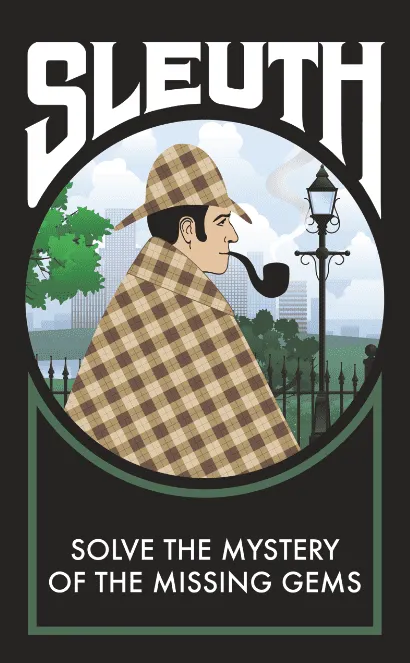
Sleuth è un gioco da tavolo pubblicato nel 1971 per 3–7 giocatori, con partite da 30 a 45 minuti e dai 10 anni in su. È stato ideato da Sid Sackson e le sue meccaniche principali sono Hand Management, Memory e Deduction.



In inglese
In Sleuth, a classic deduction game from master designer Sid Sackson originally released as part of the 3M Gamette Series, players are searching for a hidden gem, one of 36 gem cards hidden before the start of the game. The remainder of this gem deck – with each card showing 1-3 diamonds, pearls or opals in one of four colors – is distributed evenly among the players, with any remaining cards laid face up. Thus, you and everyone else starts with some information about what's not missing. A second deck contains 54 search cards, each showing one or two elements, such as diamonds, pairs, blue opals, red pearls, or an element of your choice. Each player receives four face-up search cards; on a turn, you choose one of those cards and ask an opponent how many gem cards they have of the type shown. If you ask for, say, pairs, the player must tell you how many pairs they hold but not which specific pairs; if you ask for something more specific, say, red diamonds, the player reveals to everyone how many such cards she holds while you get to look at them in secret. Players track information on a score pad. You can guess the hidden gem at any time, or on your turn you can ask any one question regardless of which search cards you have, then immediately make a guess by marking your sheet and checking the hidden gem card. If you're wrong, you keep playing but can only answer questions; if you're correct, you win. The simplicity of the rules and the cards belies the complexity of the game. In some cases you see cards, while in others you hear only the number of cards that an opponent holds, making it tough to deduce. Any notation system you devise must be both flexible and reliable, recording negative information as well as positive in order to tick off the possibilities one by one... Reimplements: The Case of the Elusive Assassin, with the core mechanisms of that game being used in Sleuth, minus the game board, movement and player proximity.
Secondo il catalogo, Sleuth supporta da 3 a 7 giocatori. L’intervallo corrisponde al numero di giocatori indicato dall’editore, quindi il gioco si può preparare per qualsiasi gruppo entro quei limiti. Preparazione, alcune regole e punteggio possono comunque variare in base al numero di giocatori: controlla la configurazione esatta nel regolamento della tua edizione.
La durata indicata per Sleuth è di 30–45 minuti, la stima dell’editore per una partita completa. La durata effettiva dipende dal gruppo, dal numero di giocatori e dalla conoscenza delle regole: le prime partite durano di più, i gruppi esperti finiscono prima. Preparazione e spiegazione delle regole non sono comprese nella stima.
Il catalogo indica Sleuth dai 10 anni in su. È la raccomandazione dell’editore e tiene conto della lettura richiesta, della complessità delle regole e dei componenti piccoli, non solo del tema. I più giovani spesso possono giocare con l’aiuto di un adulto: controlla l’età consigliata sulla tua edizione e l’esperienza del tuo gruppo con i giochi da tavolo.
Sleuth ha un punteggio di complessità di 2,5 su 5 secondo i giocatori di BoardGameGeek, il che lo rende un gioco piuttosto leggero. Il punteggio riflette quanta conoscenza delle regole, pianificazione e decisioni richiede una partita tipica. I giochi impegnativi richiedono una prima spiegazione più lunga, quindi conviene usare una guida di preparazione.
Sleuth appartiene a queste categorie: Card Game e Deduction. Le sue meccaniche principali sono Hand Management, Memory e Deduction. Le categorie descrivono il tema e l’ambientazione di un gioco, mentre le meccaniche descrivono ciò che i giocatori fanno davvero nel proprio turno. Ogni meccanica porta a una pagina del catalogo con giochi simili.
Gli autori accreditati di Sleuth sono: Sid Sackson. Questi crediti provengono dai dati pubblicati del gioco e indicano le persone responsabili della sua progettazione, non gli illustratori o gli editori. Le pagine degli autori su MeepleRules raccolgono altri titoli degli stessi autori, utili quando un gioco ti piace e ne cerchi di simili.
Il catalogo classifica Sleuth come gioco base. Si gioca da solo con i componenti presenti nella scatola e non richiede altri titoli. Le espansioni, se esistono, aggiungono nuovo contenuto o nuove regole e sono elencate separatamente nel catalogo con un collegamento a questo gioco base.