
- Posizione BGG
- BGG #18.211
- Valutazione BGG
- 6,5
TRUT
- 2–4 giocatori
- 5–15 min
- Complessità 1,7/5
- 1600
2021
Aiuto con le regole di Tea, Scones, and Arsenic
Spiegazioni chiare di turni, effetti delle carte e situazioni dubbie, con riferimenti alle fonti ufficiali e cronologia delle domande salvata.
Per 1 giocatore
Cosa vuoi sapere?
Le risposte vengono dal regolamento ufficiale, con la pagina da verificare.
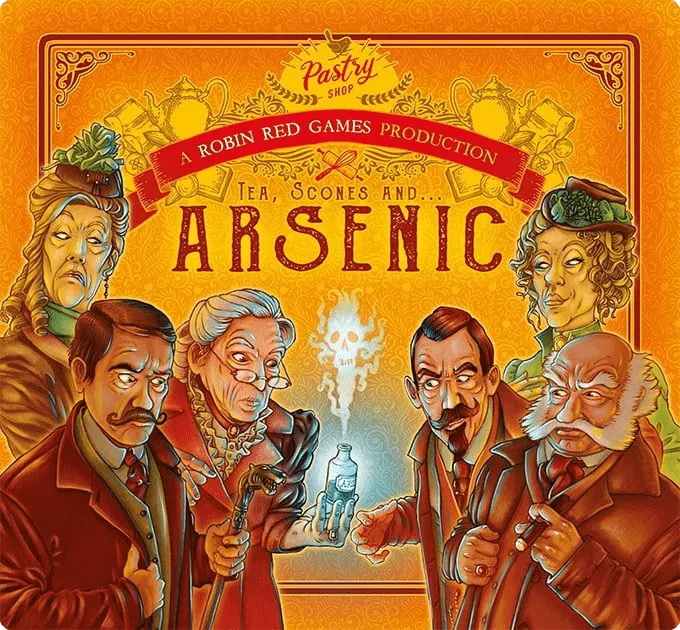
Tea, Scones, and Arsenic è un gioco da tavolo pubblicato nel 2021 per 1–6 giocatori, con partite da 15 a 30 minuti e dai 7 anni in su. È stato ideato da Pascal Boucher e le sue meccaniche principali sono Push Your Luck, Player Elimination e Deduction.



In inglese
You are members of an old English aristocratic family. Your uncle from America had the excellent idea of passing away bequeathing you his immense fortune. To celebrate the event, you decide to go for tea and enjoy some scones. However, each being equally greedy, each of the heirs decides to poison the cookies with Arsenic (a safe bet) in order to increase their share of their inheritance. Digestion promises to be difficult... Tea, Scones and ARSENIC is a family game, for 1 to 6 players. It’s a bluff party-game full of thought, strategy and a hint of luck. Goal of the game : Eat the most Scones without dying in excruciating pain. Setting up : Each player chooses a Cup board for their aristocrat (the choice of characters has no effect on the course of the game), and take 3 Sugar Cubes. The Scones are placed randomly, Poison side down, in the cookie box. You play with all the Scones, regardless of the number of players. Some Scones are normal, but others contain varying amounts of poison. The amount of poison is indicated at the back of the Scone. For each type of Scone, there are 2 harmless and 4 poisoned. The lethal dose at which a character succumbs to poison and is eliminated from the game differs depending on the number of players. The 1st player takes a Scone in hand and turns it over discreetly to know his dose of poison (the other players should not see anything), he can shuffle the Scones before picking if he want to. Either he eats it (he decides to keep it and places it in his Cup in front of him, Poison side hidden) or he puts it back in its place in the box and consumes a Sugar Cube to delay (he can shuffle the Scones afterward if he want to). In the course of the game, Scones pile up on his Cup. A player can look at his Scones at any time. In either case, their turn ends and it is the next player’s turn. When a player runs out of Sugar Cube, he is forced to eat the Scone. Each player, at the start of their turn (before playing), can decide that they have had enough, and stop playing (they take a turn each time it is their turn to play). In doing so, he forces the other players to continue for 2 more rounds (Honor rounds) without the possibility for them to stop. Once the 2 Honor Rounds have been completed, one of the surviving players (if any) may in round choose to stop. The remaining players therefore set off for 2 additional Honor Rounds. And so on… If a player reaches his natural resistance to poison (i.e. the number of arsenic doses he accumulated equals or exceeds the lethal dose), he dies (he is eliminated and his Scones are not counted). The deceased may choose to simply turn their board over to the Deceased side and laconically announce « I’m dead ». Or ... he may suddenly put his hands to his throat, uttering terrible rumblings interspersed with barely audible words such as « Cursed! », « Why so much hatred ... » or « Who will feed the dog? » Before slipping slowly from his chair and ending up lying on the floor in a grotesque position. To each his own style… —user summary
Secondo il catalogo, Tea, Scones, and Arsenic supporta da 1 a 6 giocatori. L’intervallo corrisponde al numero di giocatori indicato dall’editore, quindi il gioco si può preparare per qualsiasi gruppo entro quei limiti. Preparazione, alcune regole e punteggio possono comunque variare in base al numero di giocatori: controlla la configurazione esatta nel regolamento della tua edizione.
La durata indicata per Tea, Scones, and Arsenic è di 15–30 minuti, la stima dell’editore per una partita completa. La durata effettiva dipende dal gruppo, dal numero di giocatori e dalla conoscenza delle regole: le prime partite durano di più, i gruppi esperti finiscono prima. Preparazione e spiegazione delle regole non sono comprese nella stima.
Il catalogo indica Tea, Scones, and Arsenic dai 7 anni in su. È la raccomandazione dell’editore e tiene conto della lettura richiesta, della complessità delle regole e dei componenti piccoli, non solo del tema. I più giovani spesso possono giocare con l’aiuto di un adulto: controlla l’età consigliata sulla tua edizione e l’esperienza del tuo gruppo con i giochi da tavolo.
Tea, Scones, and Arsenic ha un punteggio di complessità di 1,3 su 5 secondo i giocatori di BoardGameGeek, il che lo rende un gioco leggero. Il punteggio riflette quanta conoscenza delle regole, pianificazione e decisioni richiede una partita tipica. I giochi impegnativi richiedono una prima spiegazione più lunga, quindi conviene usare una guida di preparazione.
Tea, Scones, and Arsenic appartiene a queste categorie: Humor, Party Game e Murder / Mystery. Le sue meccaniche principali sono Push Your Luck, Player Elimination e Deduction. Le categorie descrivono il tema e l’ambientazione di un gioco, mentre le meccaniche descrivono ciò che i giocatori fanno davvero nel proprio turno. Ogni meccanica porta a una pagina del catalogo con giochi simili.
Gli autori accreditati di Tea, Scones, and Arsenic sono: Pascal Boucher. Questi crediti provengono dai dati pubblicati del gioco e indicano le persone responsabili della sua progettazione, non gli illustratori o gli editori. Le pagine degli autori su MeepleRules raccolgono altri titoli degli stessi autori, utili quando un gioco ti piace e ne cerchi di simili.
Il catalogo classifica Tea, Scones, and Arsenic come gioco base. Si gioca da solo con i componenti presenti nella scatola e non richiede altri titoli. Le espansioni, se esistono, aggiungono nuovo contenuto o nuove regole e sono elencate separatamente nel catalogo con un collegamento a questo gioco base.