

- Posizione BGG
- BGG #4078
- Valutazione BGG
- 7,1
Flames of War: The World War II Miniatures Game
- 2 giocatori
- 120 min
- Complessità 3,3/5
- 2002
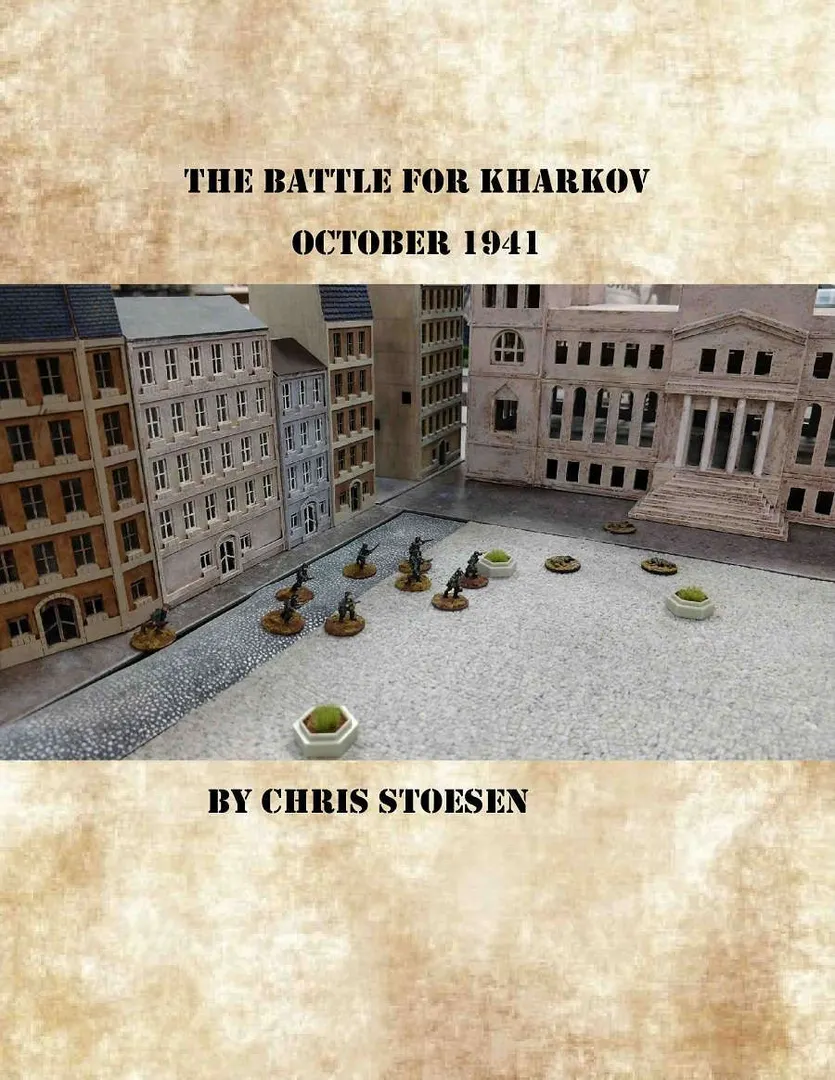
Aiuto con le regole di The Battle for Kharkov: October 1941
Spiegazioni chiare di turni, effetti delle carte e situazioni dubbie, con riferimenti alle fonti ufficiali e cronologia delle domande salvata.
Cosa vuoi sapere?
Le risposte vengono dal regolamento ufficiale, con la pagina da verificare.
The Battle for Kharkov: October 1941 è un’espansione di Chain of Command pubblicata nel 2017 per 2 giocatori, con partite da 120 a 180 minuti e dai 14 anni in su. È stato ideato da Chris Stoesen e le sue meccaniche principali sono Simulation e Scenario / Mission / Campaign Game.







In inglese
The Campaign for Kharkov contains two pint sized campaigns designed for the TooFatLardies Chain of Command rules. They are easily converted to any skirmish ruleset such as Bolt Action. One covers the advance of the German 57th Infantry Division and the other the German 101st Light Division. The attack came in October of 1941. This city would be the site of three major battles for the city. The interesting aspect of the October 1941 battle is in the nature of the troops involved. The Soviets had superiority in armor. The Germans advanced with only a single STUG battalion in support of the 57th ID. The Soviets fielded the T34 as well as several improvised armored vehicles such as the KhTZ-16. While not a success on the battlefield, it demonstrated the Soviet inventiveness under the extreme pressure of the blitzkrieg. There are twelve total scenarios in the campaign. Full force lists are available for both German Divisions and the Soviet troops present. Maps are based on aerial reconnaissance photographs taken by German troops in September 1941. —description from the publisher
Secondo il catalogo, The Battle for Kharkov: October 1941 supporta 2 giocatori. È il numero di giocatori indicato dall’editore, quindi il gioco è pensato esattamente per quel numero di partecipanti. Le varianti per gruppi di altre dimensioni, se esistono, sono descritte nel regolamento della tua edizione: consultalo prima di preparare una configurazione diversa.
La durata indicata per The Battle for Kharkov: October 1941 è di 120–180 minuti, la stima dell’editore per una partita completa. La durata effettiva dipende dal gruppo, dal numero di giocatori e dalla conoscenza delle regole: le prime partite durano di più, i gruppi esperti finiscono prima. Preparazione e spiegazione delle regole non sono comprese nella stima.
Il catalogo indica The Battle for Kharkov: October 1941 dai 14 anni in su. È la raccomandazione dell’editore e tiene conto della lettura richiesta, della complessità delle regole e dei componenti piccoli, non solo del tema. I più giovani spesso possono giocare con l’aiuto di un adulto: controlla l’età consigliata sulla tua edizione e l’esperienza del tuo gruppo con i giochi da tavolo.
The Battle for Kharkov: October 1941 appartiene a queste categorie: Wargame, Miniatures e World War II. Le sue meccaniche principali sono Simulation e Scenario / Mission / Campaign Game. Le categorie descrivono il tema e l’ambientazione di un gioco, mentre le meccaniche descrivono ciò che i giocatori fanno davvero nel proprio turno. Ogni meccanica porta a una pagina del catalogo con giochi simili.
Gli autori accreditati di The Battle for Kharkov: October 1941 sono: Chris Stoesen. Questi crediti provengono dai dati pubblicati del gioco e indicano le persone responsabili della sua progettazione, non gli illustratori o gli editori. Le pagine degli autori su MeepleRules raccolgono altri titoli degli stessi autori, utili quando un gioco ti piace e ne cerchi di simili.
Il catalogo classifica The Battle for Kharkov: October 1941 come espansione di Chain of Command. Le espansioni aggiungono contenuti, regole o scenari al gioco base e di solito non si possono giocare da sole, quindi per usarla ti serve Chain of Command. Controlla che la tua edizione di Chain of Command sia compatibile, perché alcune espansioni sono state riviste tra un’edizione e l’altra.