

- Posizione BGG
- BGG #1423
- Valutazione BGG
- 7,5
Ambush!
- 1 giocatore
- 180–240 min
- Complessità 3,3/5
- 1983
1981
Aiuto con le regole di The Sword and the Stars
Spiegazioni chiare di turni, effetti delle carte e situazioni dubbie, con riferimenti alle fonti ufficiali e cronologia delle domande salvata.
Cosa vuoi sapere?
Le risposte vengono dal regolamento ufficiale, con la pagina da verificare.
The Sword and the Stars è un gioco da tavolo pubblicato nel 1981 per 1–5 giocatori, con partite da 240 minuti e dai 12 anni in su. È stato ideato da Eric Lee Smith e le sue meccaniche principali sono Voting e Action Points.




In inglese
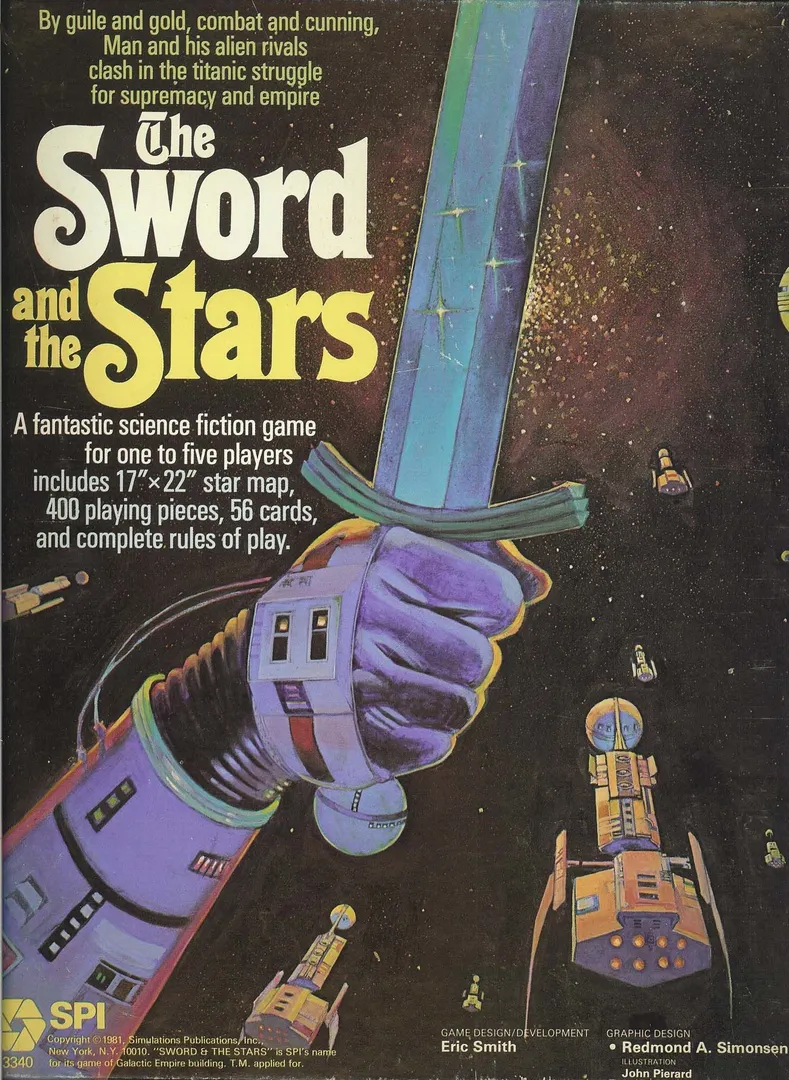
Sword and the Stars sets the stage for interstellar conflict between vying empires on such a scale (the map depicts about 1/4 of a spiral galaxy) that individual ships and even fleets become insignificant. You pay for and resolve entire interstellar campaigns with cards representing massive scale investment of manpower and resources over 4 Earth years of operations, each player round representing the passage of 20 years. Players direct the fate of interstellar empires through expansion or consolidation by means of conquests, raids, governing, building planetary defenses, commerce, and diplomacy. The game was derived from two existing popular SPI titles. While adding many subtle changes in its own right, it combines the highly successful system used in Empires of the Middle Ages with the graphic layout used for Freedom in the Galaxy. Technology and economics are abstracted, but both play a large role in just about every aspect of the game. Stargates allow players to conduct interstellar operations against any star system, free of range constraints. This means that in an interstellar war, nowhere is safe from your enemies. Includes a mechanism for a sort of Galactic Security Council, where players can scheme all sorts of mischief against each other. Ten scenarios (including the "Galactic Cycle" campaign game) are supplied. A "short" game will depict a period lasting about 200 years, while for the long "grand campaign" scenario it is recommended to play "at least" 1000 years. The Sword and the Stars is more compact than Empires. Includes 400 counters, 56 year cards, a 17 x 22" map depicting a total of 42 star systems. Maximum 5 players (3-4 recommended). Historical Note: Writing about SPI's Empires of the Middle Ages (q.v.), editor Kula included a sidebar quote from Redmond Simonsen to the effect that "a good number of people...would really enjoy the game if they'd just imagine that it's a science fictional or fantastic continent instead of Europe". Well, in 1981, the year after Empires of the Middle Ages was released, SPI produced another game using the same system and the missing science fiction premise, and The Sword and the Stars was born.
Secondo il catalogo, The Sword and the Stars supporta da 1 a 5 giocatori. L’intervallo corrisponde al numero di giocatori indicato dall’editore, quindi il gioco si può preparare per qualsiasi gruppo entro quei limiti. Preparazione, alcune regole e punteggio possono comunque variare in base al numero di giocatori: controlla la configurazione esatta nel regolamento della tua edizione.
La durata indicata per The Sword and the Stars è di 240 minuti, la stima dell’editore per una partita completa. La durata effettiva dipende dal gruppo, dal numero di giocatori e dalla conoscenza delle regole: le prime partite durano di più, i gruppi esperti finiscono prima. Preparazione e spiegazione delle regole non sono comprese nella stima.
Il catalogo indica The Sword and the Stars dai 12 anni in su. È la raccomandazione dell’editore e tiene conto della lettura richiesta, della complessità delle regole e dei componenti piccoli, non solo del tema. I più giovani spesso possono giocare con l’aiuto di un adulto: controlla l’età consigliata sulla tua edizione e l’esperienza del tuo gruppo con i giochi da tavolo.
The Sword and the Stars ha un punteggio di complessità di 2,9 su 5 secondo i giocatori di BoardGameGeek, il che lo rende un gioco piuttosto leggero. Il punteggio riflette quanta conoscenza delle regole, pianificazione e decisioni richiede una partita tipica. I giochi impegnativi richiedono una prima spiegazione più lunga, quindi conviene usare una guida di preparazione.
The Sword and the Stars appartiene a queste categorie: Economic, Wargame e Political. Le sue meccaniche principali sono Voting e Action Points. Le categorie descrivono il tema e l’ambientazione di un gioco, mentre le meccaniche descrivono ciò che i giocatori fanno davvero nel proprio turno. Ogni meccanica porta a una pagina del catalogo con giochi simili.
Gli autori accreditati di The Sword and the Stars sono: Eric Lee Smith. Questi crediti provengono dai dati pubblicati del gioco e indicano le persone responsabili della sua progettazione, non gli illustratori o gli editori. Le pagine degli autori su MeepleRules raccolgono altri titoli degli stessi autori, utili quando un gioco ti piace e ne cerchi di simili.
Il catalogo classifica The Sword and the Stars come gioco base. Si gioca da solo con i componenti presenti nella scatola e non richiede altri titoli. Le espansioni, se esistono, aggiungono nuovo contenuto o nuove regole e sono elencate separatamente nel catalogo con un collegamento a questo gioco base.