
- Posizione BGG
- BGG #5546
- Valutazione BGG
- 7,2
A Victory Denied: Crisis at Smolensk, July-September, 1941
- 2 giocatori
- 240 min
- Complessità 2,6/5
- 2009
2010
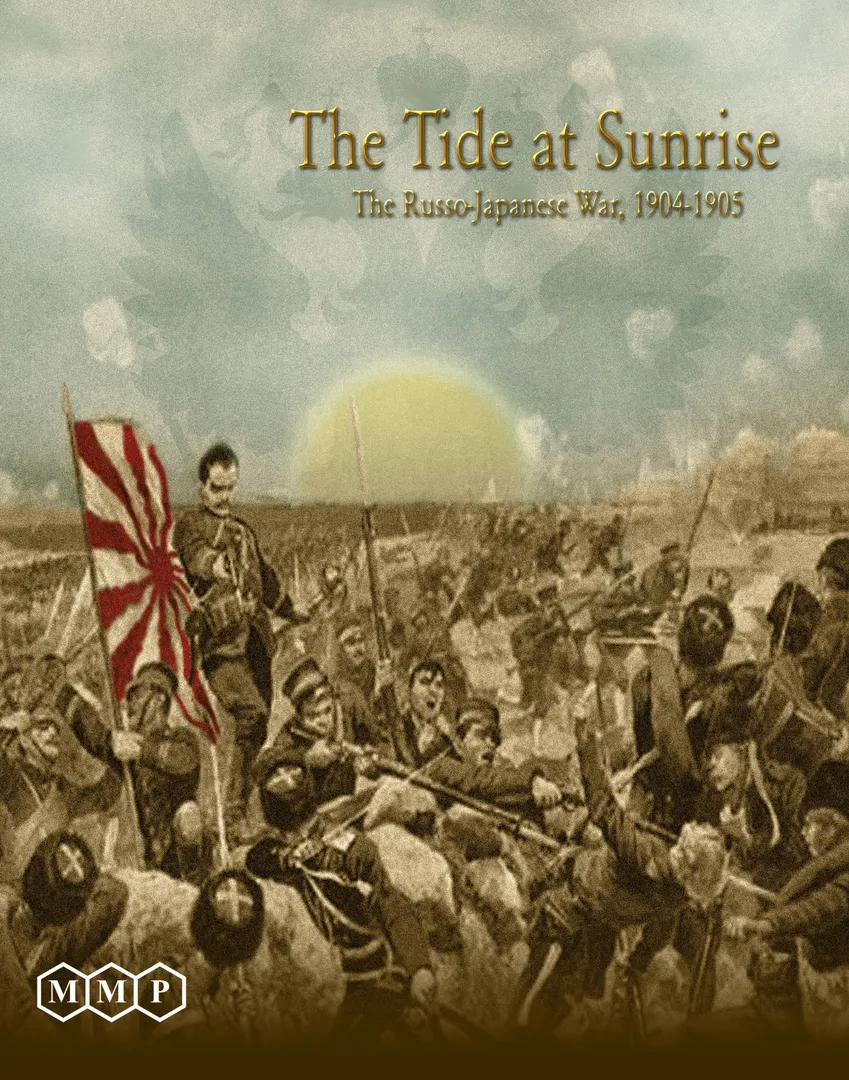
Aiuto con le regole di The Tide at Sunrise: The Russo-Japanese War, 1904-1905
Spiegazioni chiare di turni, effetti delle carte e situazioni dubbie, con riferimenti alle fonti ufficiali e cronologia delle domande salvata.
Per 2 giocatori
Cosa vuoi sapere?
Le risposte vengono dal regolamento ufficiale, con la pagina da verificare.
The Tide at Sunrise: The Russo-Japanese War, 1904-1905 è un gioco da tavolo pubblicato nel 2010 per 2 giocatori, con partite da 240 minuti e dai 12 anni in su. È stato ideato da Adam Starkweather e Yukihiro Kuroda e le sue meccaniche principali sono Dice Rolling, Hexagon Grid e Simulation.

In inglese
(from Multi-Man Publishing web site:) Tide at Sunrise continues the philosophy that began with A Victory Lost. Using tried and true mechanics but with some major twists, Tide at Sunrise will be a major test of player skill that is rarely seen in the wargaming hobby. Here, the base system is little more than the tried and true game from SPI called Napoleon at Waterloo. But not all is at it seems. Here is the sequence of play: Japanese Player Turn * Naval Phase * Transport Allocation * Movement Phase * Combat Phase * Replacement and Recovery Russian Player Turn * Colonel Akashi Secret Operations Phase * Transport Allocation Phase * Movement Phase * Combat Phase * Supply and Recovery Phase After the completion of both Player Turns, victory points are determined and, if the Japanese have not won a sudden death win, play continues to the next turn. The game focuses on two aspects of the actual event. Players have to manage their armies using an abstract logistical system called “Transport Points” in the game. The Japanese Transport Points are an abstraction of the merchant marine force that the Japanese had available in 1904 and 1905. This can be disrupted from Russian naval activity. The Russian Transport Points are an abstraction of the rail capacity of the newly built Trans-Siberian Railroad. Weather can affect this total if there are heavy snows in Siberia. Colonel Akashi can also stir up trouble and reduce the available Russian Transport totals with sudden strikes and riots in the Russian heartland. Both players use these points to bring on new forces and to replace battlefield losses. Finding the right balance of the two uses is key to being successful in the game. Secondly, players must find the delicate balance between defending and attacking on two separate fronts. How much defends and attacks towards the all-important port of Port Arthur and how much attacks or holds the tough mountain passes of Manchuria - the key to the open plains to the north – where terrain is less defensible and victory points are everywhere. Victory in the game is determined by success in the naval war, the capture of key terrain objectives and enemy losses. Game components: * One 22” by 39” full color map * 140 1/2” land formation counters * 44 1 1/4” by 5/8” ship counters * 16 page full color rulebook Game summary: * Playtime: 3-5 hours * Complexity: Simple * Solitaire rating: excellent Game scale: * Turns: 12 (each turn represents one month of real time) * Counters: Divisions and Brigades for the land units, Capital Ships for the naval units * Hex scale: 10 kilometers Game Credits: * Designer: Yukihiro Kuroda * Developer: Adam Starkweather * Graphic Artist: Niko Eskubi
Secondo il catalogo, The Tide at Sunrise: The Russo-Japanese War, 1904-1905 supporta 2 giocatori. È il numero di giocatori indicato dall’editore, quindi il gioco è pensato esattamente per quel numero di partecipanti. Le varianti per gruppi di altre dimensioni, se esistono, sono descritte nel regolamento della tua edizione: consultalo prima di preparare una configurazione diversa.
La durata indicata per The Tide at Sunrise: The Russo-Japanese War, 1904-1905 è di 240 minuti, la stima dell’editore per una partita completa. La durata effettiva dipende dal gruppo, dal numero di giocatori e dalla conoscenza delle regole: le prime partite durano di più, i gruppi esperti finiscono prima. Preparazione e spiegazione delle regole non sono comprese nella stima.
Il catalogo indica The Tide at Sunrise: The Russo-Japanese War, 1904-1905 dai 12 anni in su. È la raccomandazione dell’editore e tiene conto della lettura richiesta, della complessità delle regole e dei componenti piccoli, non solo del tema. I più giovani spesso possono giocare con l’aiuto di un adulto: controlla l’età consigliata sulla tua edizione e l’esperienza del tuo gruppo con i giochi da tavolo.
The Tide at Sunrise: The Russo-Japanese War, 1904-1905 ha un punteggio di complessità di 2,3 su 5 secondo i giocatori di BoardGameGeek, il che lo rende un gioco piuttosto leggero. Il punteggio riflette quanta conoscenza delle regole, pianificazione e decisioni richiede una partita tipica. I giochi impegnativi richiedono una prima spiegazione più lunga, quindi conviene usare una guida di preparazione.
The Tide at Sunrise: The Russo-Japanese War, 1904-1905 appartiene a queste categorie: Wargame e Post-Napoleonic. Le sue meccaniche principali sono Dice Rolling, Hexagon Grid e Simulation. Le categorie descrivono il tema e l’ambientazione di un gioco, mentre le meccaniche descrivono ciò che i giocatori fanno davvero nel proprio turno. Ogni meccanica porta a una pagina del catalogo con giochi simili.
Gli autori accreditati di The Tide at Sunrise: The Russo-Japanese War, 1904-1905 sono: Adam Starkweather e Yukihiro Kuroda. Questi crediti provengono dai dati pubblicati del gioco e indicano le persone responsabili della sua progettazione, non gli illustratori o gli editori. Le pagine degli autori su MeepleRules raccolgono altri titoli degli stessi autori, utili quando un gioco ti piace e ne cerchi di simili.
Il catalogo classifica The Tide at Sunrise: The Russo-Japanese War, 1904-1905 come gioco base. Si gioca da solo con i componenti presenti nella scatola e non richiede altri titoli. Le espansioni, se esistono, aggiungono nuovo contenuto o nuove regole e sono elencate separatamente nel catalogo con un collegamento a questo gioco base.