
- Posizione BGG
- BGG #18.092
- Valutazione BGG
- 8,0
World Cup!
- 2–16 giocatori
- 30–120 min
- 2023
2010
Aiuto con le regole di The World Cup Card Game 2010
Spiegazioni chiare di turni, effetti delle carte e situazioni dubbie, con riferimenti alle fonti ufficiali e cronologia delle domande salvata.
Per 2 giocatori
Cosa vuoi sapere?
Le risposte vengono dal regolamento ufficiale, con la pagina da verificare.
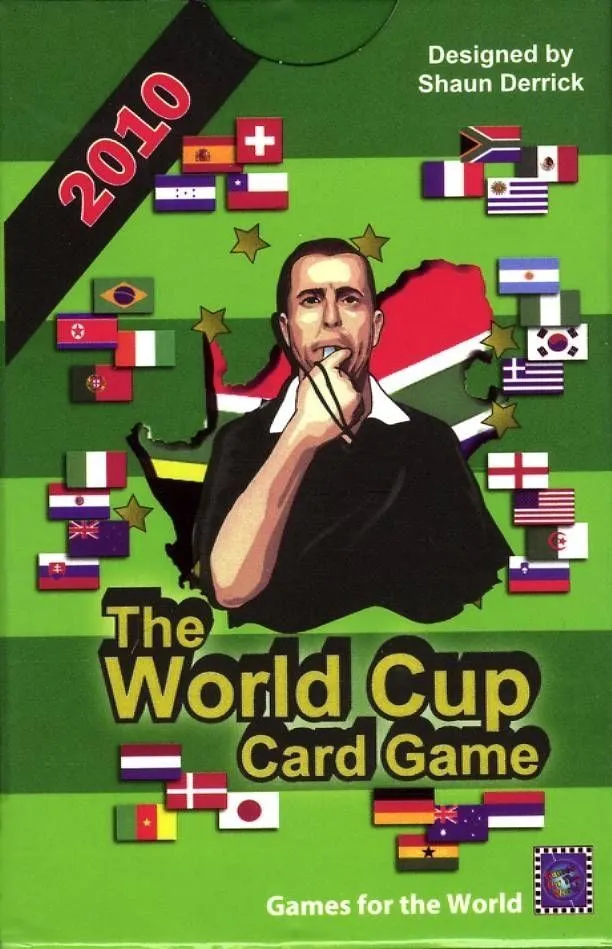
The World Cup Card Game 2010 è un gioco da tavolo pubblicato nel 2010 per 2–8 giocatori, con partite da 75 minuti e dai 10 anni in su. È stato ideato da Shaun Derrick e le sue meccaniche principali sono Hand Management.
In inglese
The greatest single sports show on earth takes place in South Africa this year (2010). The World Cup Card Game allows players to play through the whole tournament in around 75mins. The game consists of 65 cards. 32 of these represent all the national teams taking part. Another 32 cards are Action cards which are used to create the scorelines for each match. The final card is a summary list of what the Action cards can be used for. All the teams are randomly divided between the players. These are kept face-down on the table in front of the player until required. Each group is played match by match. The players controlling the four teams in Group 1: South Africa, Mexico, Uruguay and France now reveal those Team cards. Each team card is coloured according to the national football team strip, it also shows the national flag and a note stating their best performance ever achieved in any World Cup tournament. There is also a grey rectangle with the number of cards that team receives in the group stage - this is always 7 or 8. There is also a 2 Goal and 3 Goal symbol, sometimes covered by a cross. Any crossed symbol means that this particular team cannot use that type of card to it's full potential e.g, Argentina have the 3 Goal symbol crossed but the 2 Goal symbol uncrossed, therefore Argentina can only play a 3 Goal card as a 2 Goal card. The number of cards and the status of the 3 and 2 goal symbols distinguishes the better teams from the lesser teams. Brazil, for example, have 8 cards and no crossed symbols which gives them the maximum options; New Zealand have 7 cards and both symbols are crossed which gives them the fewest options. Despite the small difference between the various teams, the better teams generally have a better chance. However, the differences are not as great as in The World Cup Board Game. Play continues with the first group games being played in the order on the tournament format in the rules. The first game is South Africa v. Mexico, so each player controlling those teams play from 1 to 4 cards out of that teams' hand. The number of cards should be kept secret until both players have chosen, then they are both revealed. Goals are scored for that team in that match, Defences, Fouls and Offsides can reduce goals whereas Penalties and multiple Attacks add goals. Any spare Attacks and penalties require a card draw from the unused deck to see if they can be turned into goals. Each match is resolved in the same way. All scores from all games are recorded - best to use the pre-formatted scoresheet on the www.gamesfortheworld.co.uk/Downloads web page. The KO stages are played differently, more akin to the Board game. The Round of 16 is split into 2 sessions with 3 cards dealt to each player involved, irrespective of the number of teams. Cards can be played on any active team until the deck is exhausted and all cards played. From the Quarter-Finals onwards all games are played in each round simultaneously. Draws are resolved by card draws to determine if goals have been scored. Easy to play and a great sequel to the Board game.
Secondo il catalogo, The World Cup Card Game 2010 supporta da 2 a 8 giocatori. L’intervallo corrisponde al numero di giocatori indicato dall’editore, quindi il gioco si può preparare per qualsiasi gruppo entro quei limiti. Preparazione, alcune regole e punteggio possono comunque variare in base al numero di giocatori: controlla la configurazione esatta nel regolamento della tua edizione.
La durata indicata per The World Cup Card Game 2010 è di 75 minuti, la stima dell’editore per una partita completa. La durata effettiva dipende dal gruppo, dal numero di giocatori e dalla conoscenza delle regole: le prime partite durano di più, i gruppi esperti finiscono prima. Preparazione e spiegazione delle regole non sono comprese nella stima.
Il catalogo indica The World Cup Card Game 2010 dai 10 anni in su. È la raccomandazione dell’editore e tiene conto della lettura richiesta, della complessità delle regole e dei componenti piccoli, non solo del tema. I più giovani spesso possono giocare con l’aiuto di un adulto: controlla l’età consigliata sulla tua edizione e l’esperienza del tuo gruppo con i giochi da tavolo.
The World Cup Card Game 2010 ha un punteggio di complessità di 1,6 su 5 secondo i giocatori di BoardGameGeek, il che lo rende un gioco leggero. Il punteggio riflette quanta conoscenza delle regole, pianificazione e decisioni richiede una partita tipica. I giochi impegnativi richiedono una prima spiegazione più lunga, quindi conviene usare una guida di preparazione.
The World Cup Card Game 2010 appartiene a queste categorie: Card Game e Sports. Le sue meccaniche principali sono Hand Management. Le categorie descrivono il tema e l’ambientazione di un gioco, mentre le meccaniche descrivono ciò che i giocatori fanno davvero nel proprio turno. Ogni meccanica porta a una pagina del catalogo con giochi simili.
Gli autori accreditati di The World Cup Card Game 2010 sono: Shaun Derrick. Questi crediti provengono dai dati pubblicati del gioco e indicano le persone responsabili della sua progettazione, non gli illustratori o gli editori. Le pagine degli autori su MeepleRules raccolgono altri titoli degli stessi autori, utili quando un gioco ti piace e ne cerchi di simili.
Il catalogo classifica The World Cup Card Game 2010 come gioco base. Si gioca da solo con i componenti presenti nella scatola e non richiede altri titoli. Le espansioni, se esistono, aggiungono nuovo contenuto o nuove regole e sono elencate separatamente nel catalogo con un collegamento a questo gioco base.