
- Valutazione BGG
- 8,3
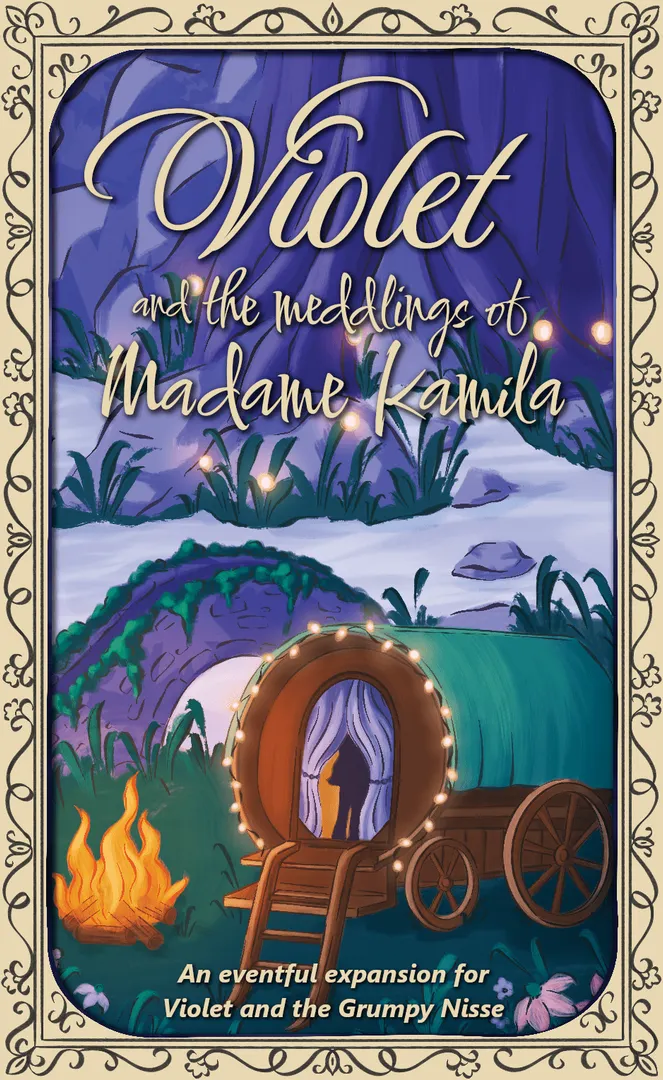
Violet and the meddlings of Madame Kamila
- 2 giocatori
- 20–30 min
- Complessità 2,0/5
- 2025
2022
Aiuto con le regole di Violet and the Grumpy Nisse
Spiegazioni chiare di turni, effetti delle carte e situazioni dubbie, con riferimenti alle fonti ufficiali e cronologia delle domande salvata.
Per 2 giocatori
Cosa vuoi sapere?
Le risposte vengono dal regolamento ufficiale, con la pagina da verificare.
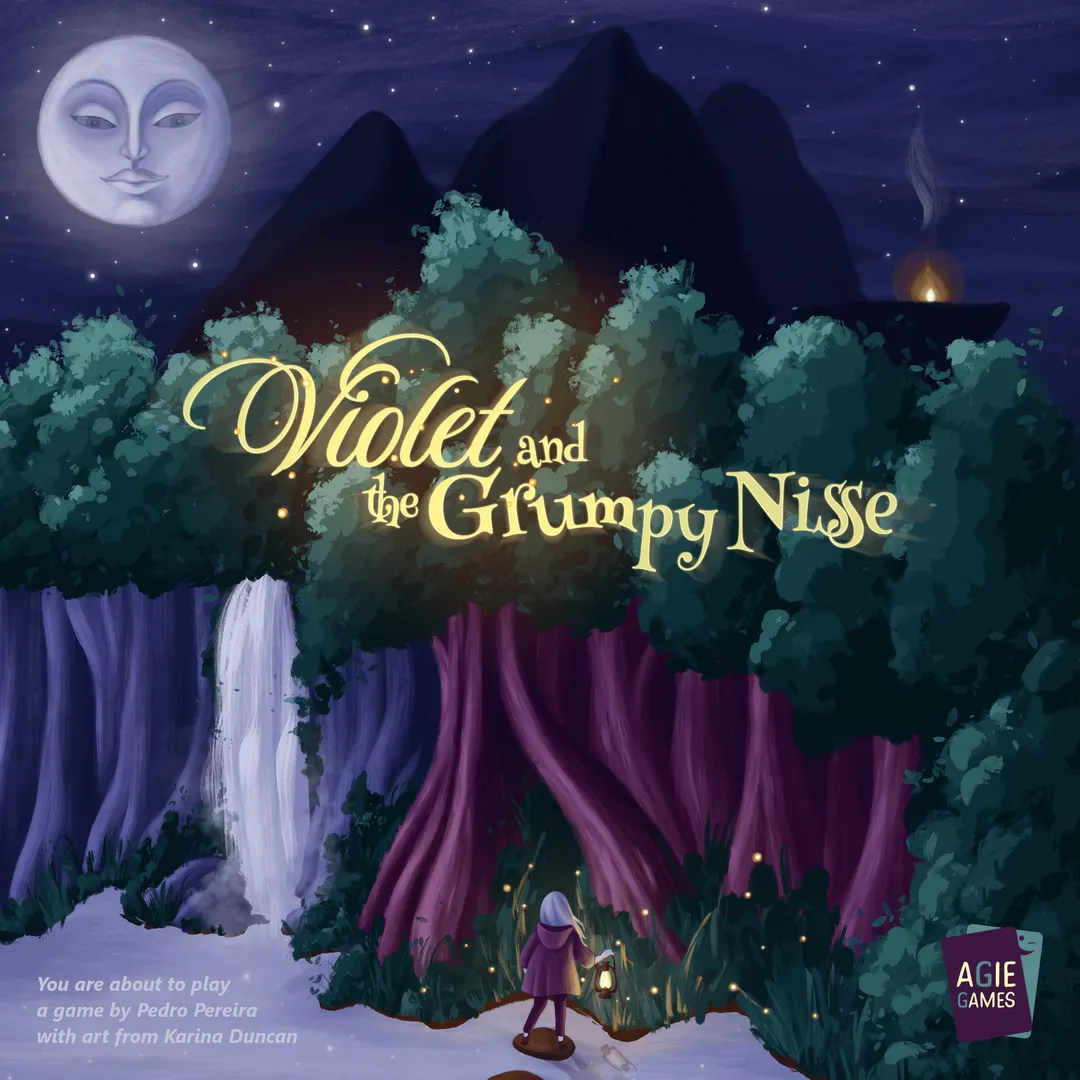
Violet and the Grumpy Nisse è un gioco da tavolo pubblicato nel 2022 per 2 giocatori, con partite da 20 a 30 minuti e dai 12 anni in su. È stato ideato da Pedro Pereira e le sue meccaniche principali sono Variable Player Powers, Open Drafting e Trick-taking.


In inglese
In Violet and the Grumpy Nisse, one player is Violet and the other is Torech, the very grumpy nisse (a creature from Nordic folklore similar to a gnome) who has been kicked out of every single household in the village and taken shelter in the woods, which he claimed as his own domain. Now, Violet is setting out to meet with her friend Ordep, the friendly troll, a journey that takes her right through the woods that Torech has claimed for himself. After being kicked out of the village, Torech cannot stand the idea of a human invading his home, let alone a human who is friends with a troll! So he is out to make Violet's journey as unpleasant as he possibly can, playing all sorts of tricks on her. Violet and the Grumpy Nisse is a two-player trick-taking game. Players take different approaches on how to play this game depending on who they are playing as: Violet has control over the pacing of the game, but is also more vulnerable to losing tricks as she has to manage her lantern, making sure it's always fueled so that she doesn't get lost in the darkness of the woods at night. She also wasn't expecting a nisse to cross her path; this can be scary, and she has to manage her fear so not to be overwhelmed by her own paranoia. Torech has very little control over the pacing of the game, but he does has a few tricks up his sleeve. As Violet's fear of him increases, he becomes bolder and sets out more and more traps that make it harder for Violet to reach her friend. Also, unlike Violet, losing a trick is not nearly as bad for Torech as it is for Violet. He, after all, is the master of tricks! The game ends with a win for Violet if she reaches the end of her journey. Torech wins if Violet's lantern runs out of fuel, or if her fear sneaks up on her before she gets to Ordep. What's unique about this trick taking game: It's highly thematic and instead of keeping track of scores on a pad, you will have Violet's pawn advancing on a map, that displays her progress and how close/far she is from winning the game. Torech has two tracks on the board he will be focusing on and that display how close/far he is from winning the game: Violet's fear, which he threatens with each trick he successfully plays on her (wins), and Violet's Light track, which he wants to run out as quickly as possible so that she gets lost. Trump will change over the course of a game as Violet journeys through the different parts of the landscape. Because Violet controls the pacing, she will be able to speed through them, or stay for a little longer to take advantage of a certain suit. Most cards have a special ability, however, a card's ability is triggered only if it isn't used as a trump (trump is determined by Violet's location on the map). Thanks to the many different traps Torech can use, each game will have different events play out at different timings, depending on how early Violet becomes a victim of her own fears.
Secondo il catalogo, Violet and the Grumpy Nisse supporta 2 giocatori. È il numero di giocatori indicato dall’editore, quindi il gioco è pensato esattamente per quel numero di partecipanti. Le varianti per gruppi di altre dimensioni, se esistono, sono descritte nel regolamento della tua edizione: consultalo prima di preparare una configurazione diversa.
La durata indicata per Violet and the Grumpy Nisse è di 20–30 minuti, la stima dell’editore per una partita completa. La durata effettiva dipende dal gruppo, dal numero di giocatori e dalla conoscenza delle regole: le prime partite durano di più, i gruppi esperti finiscono prima. Preparazione e spiegazione delle regole non sono comprese nella stima.
Il catalogo indica Violet and the Grumpy Nisse dai 12 anni in su. È la raccomandazione dell’editore e tiene conto della lettura richiesta, della complessità delle regole e dei componenti piccoli, non solo del tema. I più giovani spesso possono giocare con l’aiuto di un adulto: controlla l’età consigliata sulla tua edizione e l’esperienza del tuo gruppo con i giochi da tavolo.
Violet and the Grumpy Nisse ha un punteggio di complessità di 2,0 su 5 secondo i giocatori di BoardGameGeek, il che lo rende un gioco piuttosto leggero. Il punteggio riflette quanta conoscenza delle regole, pianificazione e decisioni richiede una partita tipica. I giochi impegnativi richiedono una prima spiegazione più lunga, quindi conviene usare una guida di preparazione.
Violet and the Grumpy Nisse appartiene a queste categorie: Card Game e Fantasy. Le sue meccaniche principali sono Variable Player Powers, Open Drafting e Trick-taking. Le categorie descrivono il tema e l’ambientazione di un gioco, mentre le meccaniche descrivono ciò che i giocatori fanno davvero nel proprio turno. Ogni meccanica porta a una pagina del catalogo con giochi simili.
Gli autori accreditati di Violet and the Grumpy Nisse sono: Pedro Pereira. Questi crediti provengono dai dati pubblicati del gioco e indicano le persone responsabili della sua progettazione, non gli illustratori o gli editori. Le pagine degli autori su MeepleRules raccolgono altri titoli degli stessi autori, utili quando un gioco ti piace e ne cerchi di simili.
Il catalogo classifica Violet and the Grumpy Nisse come gioco base. Si gioca da solo con i componenti presenti nella scatola e non richiede altri titoli. Le espansioni, se esistono, aggiungono nuovo contenuto o nuove regole e sono elencate separatamente nel catalogo con un collegamento a questo gioco base.