- Valutazione BGG
- 9,2
Wallenstein: Military Leaders – Expansion Module 3
- 3–5 giocatori
- 120 min
- 2016
2012
Aiuto con le regole di Wallenstein (Second Edition)
Spiegazioni chiare di turni, effetti delle carte e situazioni dubbie, con riferimenti alle fonti ufficiali e cronologia delle domande salvata.
Per 3 giocatori
Cosa vuoi sapere?
Le risposte vengono dal regolamento ufficiale, con la pagina da verificare.
Wallenstein (Second Edition) è un gioco da tavolo pubblicato nel 2012 per 3–5 giocatori, con partite da 90 a 120 minuti e dai 12 anni in su. È stato ideato da Dirk Henn e le sue meccaniche principali sono Area Movement, Area Majority / Influence e Simultaneous Action Selection.
In inglese
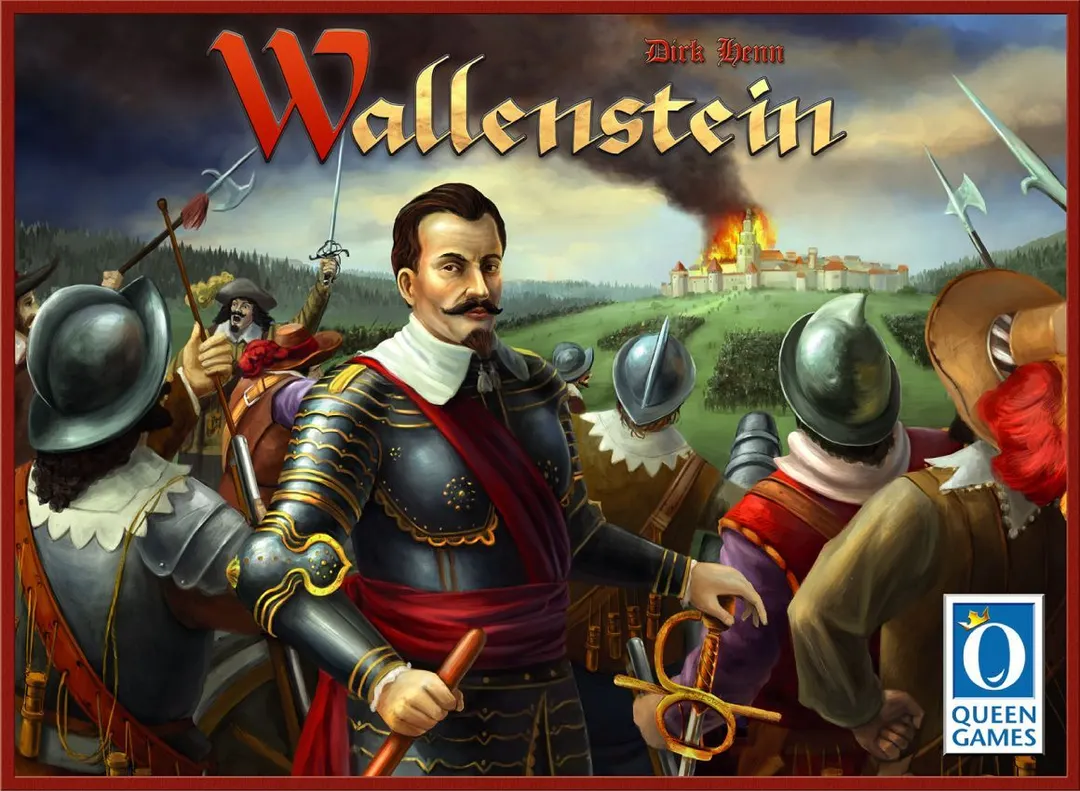
The 2012 rerelease of Wallenstein tweaks the 2002 title from designer Dirk Henn and publisher Queen Games, while including two new expansions. The setting and game play of the two games are mostly the same. In 1625, the Thirty Years' War is underway, and military leaders like Albrecht von Wallenstein and Gottfried Heinrich Graf zu Pappenheim are roaming the country, fighting for land, and trying to establish the best of everything for themselves. The game lasts two "years," with players taking actions in the spring, summer, and fall, then possibly suffering from grain shortage and revolts in the winter before scoring points for the year. After two years, the player with the most points – with points being scored for land and buildings under one's control – wins. In each of the "action" seasons, ten action cards are shuffled, then laid out, with five face-up and the rest face-down. The five bonus tiles (which provide extra money, grain, or armies) are also laid out. Each player then secretly assigns one of his county cards (or a blank card) to each of the ten actions on his individual player board, in addition to bidding for player order and choice of bonus tile. After revealing that round's event card and determining player order, players carry out actions in the order determined earlier, revealing which county is taking the current action, then revealing the next face-down action, thus giving players some information about when actions will occur, but not all. Taxing a county or taking grain from it can increase the chance of a revolt during winter, but without money you can't deploy troops or build palaces or churches and without grain you increase the chance of revolt. Combat and revolts are handled via a dice tower in which players drop army units and peasants (colored wooden cubes) into the top of the tower and see which ones emerge in the bottom tray (representing the fighting forces for that combat) and which get stuck in the tower's baffles to possibly emerge in the future. Wallenstein includes two expansions: "Emperor's Court," in which a player's army tokens that fall from the dice tower at the start of the game become courtiers who compete for favors (special actions) from the emperor; a player can convert armies to courtiers during the game, and whoever has the most courtiers in the court's entrance hall each turn gets first shot at the favors available. "Landsknechte," which can be used with "Emperor's Court" or on its own, consists of a set of four cards for each player stacked in a particular order. If after determining turn order, a player controls counties in four different regions, he removes the top card from the stack, then takes one of the bonuses (such as money or armies in the tray) shown on the newly revealed card. This stack resets after winter ends. Note that the box of this game states is for 2-5 players, but the game actually plays only with 3-5 players.
Secondo il catalogo, Wallenstein (Second Edition) supporta da 3 a 5 giocatori. L’intervallo corrisponde al numero di giocatori indicato dall’editore, quindi il gioco si può preparare per qualsiasi gruppo entro quei limiti. Preparazione, alcune regole e punteggio possono comunque variare in base al numero di giocatori: controlla la configurazione esatta nel regolamento della tua edizione.
La durata indicata per Wallenstein (Second Edition) è di 90–120 minuti, la stima dell’editore per una partita completa. La durata effettiva dipende dal gruppo, dal numero di giocatori e dalla conoscenza delle regole: le prime partite durano di più, i gruppi esperti finiscono prima. Preparazione e spiegazione delle regole non sono comprese nella stima.
Il catalogo indica Wallenstein (Second Edition) dai 12 anni in su. È la raccomandazione dell’editore e tiene conto della lettura richiesta, della complessità delle regole e dei componenti piccoli, non solo del tema. I più giovani spesso possono giocare con l’aiuto di un adulto: controlla l’età consigliata sulla tua edizione e l’esperienza del tuo gruppo con i giochi da tavolo.
Wallenstein (Second Edition) ha un punteggio di complessità di 3,2 su 5 secondo i giocatori di BoardGameGeek, il che lo rende un gioco di media complessità. Il punteggio riflette quanta conoscenza delle regole, pianificazione e decisioni richiede una partita tipica. I giochi impegnativi richiedono una prima spiegazione più lunga, quindi conviene usare una guida di preparazione.
Wallenstein (Second Edition) appartiene a queste categorie: Economic, Territory Building e Renaissance. Le sue meccaniche principali sono Area Movement, Area Majority / Influence e Simultaneous Action Selection. Le categorie descrivono il tema e l’ambientazione di un gioco, mentre le meccaniche descrivono ciò che i giocatori fanno davvero nel proprio turno. Ogni meccanica porta a una pagina del catalogo con giochi simili.
Gli autori accreditati di Wallenstein (Second Edition) sono: Dirk Henn. Questi crediti provengono dai dati pubblicati del gioco e indicano le persone responsabili della sua progettazione, non gli illustratori o gli editori. Le pagine degli autori su MeepleRules raccolgono altri titoli degli stessi autori, utili quando un gioco ti piace e ne cerchi di simili.
Il catalogo classifica Wallenstein (Second Edition) come gioco base. Si gioca da solo con i componenti presenti nella scatola e non richiede altri titoli. Le espansioni, se esistono, aggiungono nuovo contenuto o nuove regole e sono elencate separatamente nel catalogo con un collegamento a questo gioco base.