
- Posizione BGG
- BGG #5638
- Valutazione BGG
- 7,0
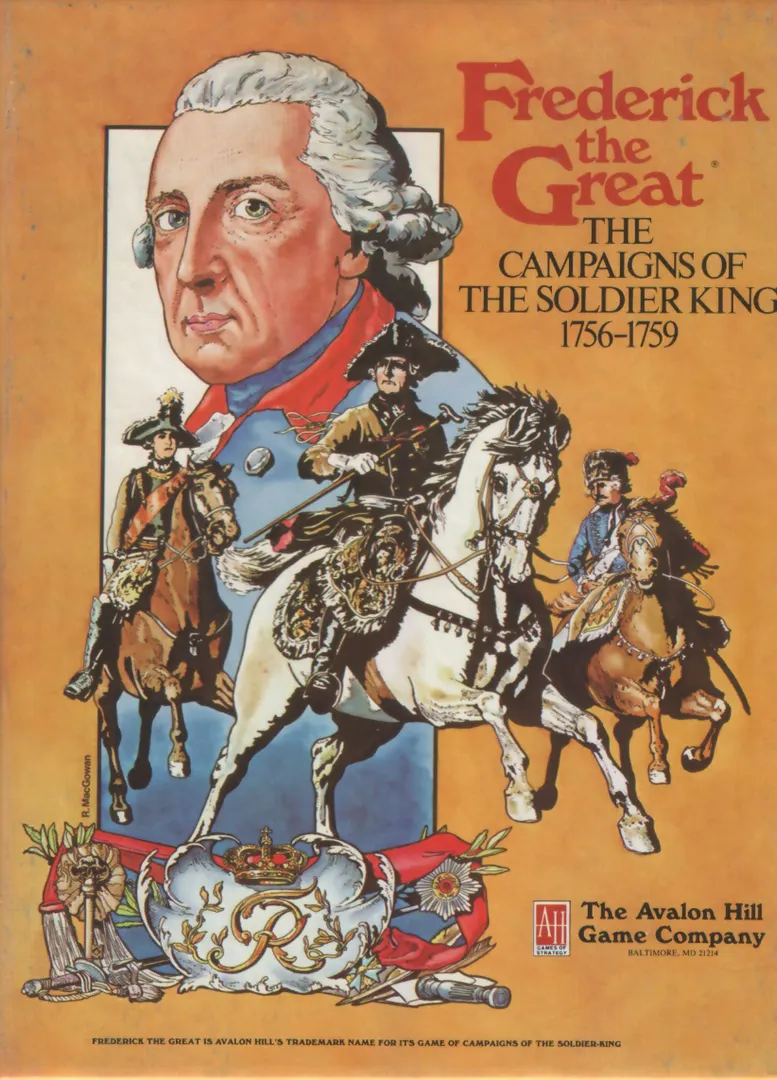
Frederick the Great: The Campaigns of The Soldier King 1756-1759
- 2–4 giocatori
- 180–240 min
- Complessità 2,7/5
- 1975
1976
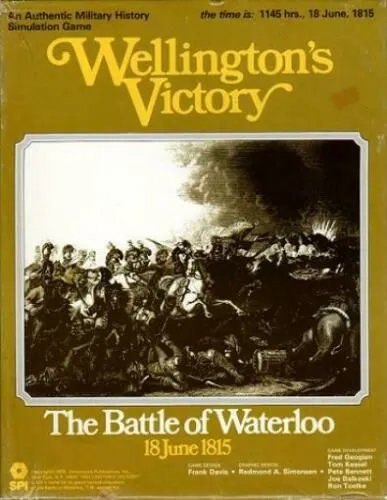
Aiuto con le regole di Wellington's Victory: Battle of Waterloo Game – June 18th, 1815
Spiegazioni chiare di turni, effetti delle carte e situazioni dubbie, con riferimenti alle fonti ufficiali e cronologia delle domande salvata.
Per 2 giocatori
Cosa vuoi sapere?
Le risposte vengono dal regolamento ufficiale, con la pagina da verificare.
Wellington's Victory: Battle of Waterloo Game – June 18th, 1815 è un gioco da tavolo pubblicato nel 1976 per 2 giocatori, con partite da 240 minuti e dai 12 anni in su. È stato ideato da Frank Davis e le sue meccaniche principali sono Dice Rolling, Hexagon Grid e Ratio / Combat Results Table.

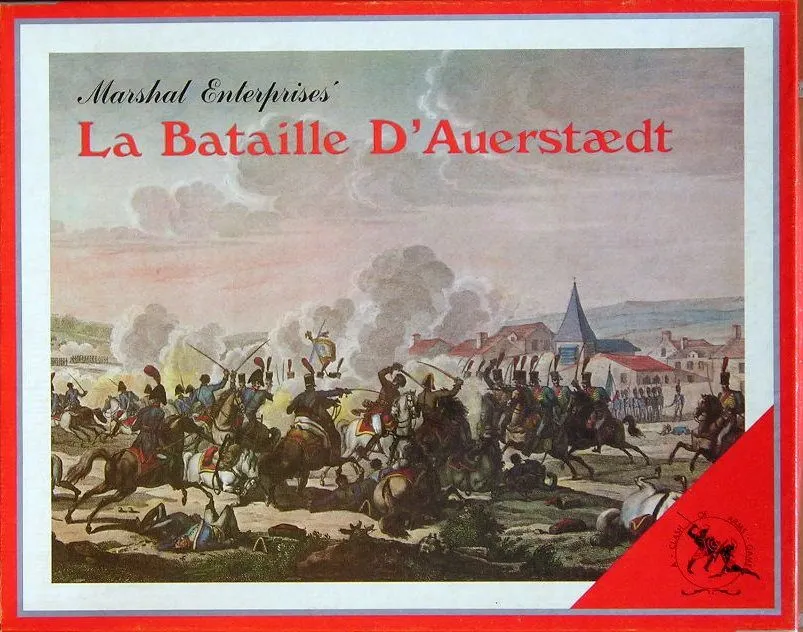





In inglese
[from the back of the flatpack edition] Wellington's Victory : The Battle of Waterloo - Four-color 68” x 44” contour map in four sections - Innovative Fire and Shock Combat mechanics - Line, Column, Square, Skirmish and Cavalry formations - Hougomont, La Haye Sainte and Plancenoit Scenarios - 40 Game-Turn Grand Battle Scenario Wellington's Victory is a grand tactical simulation of the Battle of Waterloo which occurred on June 18, 1815, at a minor crossroads south of Brussels, Belgium. The battle marked the first and only encounter of history's two most renowned generals, Sir Arthur Wellesley, Duke of Wellington, and Napoleon Bonaparte, Emperor of France. A brutal day-long French assault against the British held ridge brought Wellington's army to the brink of defeat. By later afternoon, however, the arrival of Wellington's allies tipped the odds decisively against the French; Napoleon chose to stake his empire on the outcome of a final attack by his most trusted troops – the Imperial Guard. Wellington's Victory is played on an innovative game map composed of four 34” x 22” map sections on which significant differences in ground contours are differentiated by color. There are five distinct contour levels depicted on the map as well as an extremely accurate survey of all battle field terrain features including Hougomont, La Haye Sainte, and almost every other farm and dwelling, woods and orchards, streams and ponds, and raised and sunken roads. Each of more than 500 French, Prussian and Anglo-Dutch combat and command units are fully identified by battalion, regiment, brigade, division and corps designations as well as numerical game values which differentiate each unit's strength, effectiveness, and mobility. The game utilizes a fifteen minute Game-Turn. Each mapsheet hex represents a distance of 100 yards. Each Strength Point represents 100 infantry or cavalry troops or one gun or howitzer within an artillery battery. Each Game-Turn employs a unique, asymmetrical, sequence of play in which Players alternately participate in a series of Phases covering activities which include the execution of chain of command mechanics (such as activating and committing reserve formations and initiating cavalry charges), rallying disordered and routed units, executing facing and formation changes (including a repertoire of infantry formations such as column, line, square and open order or skirmish formation), regular and grand tactical movement, and finally executing artillery and small arms fire as well as infantry and cavalry shock command. The Fire and Shock Combat mechanics which decide the battle were also designed to yield realistic results without sacrificing playability. Fire resolution requires no arithmetic calculation since each unit fires separately. The Relative Firepower Table used to resolve Fire Combat is a new type of CRT which directly interrelates the strength, formation and quality of the firing unit with the formation and terrain cover employed by the defending unit. The Shock Combat Table is also unique in that it employs an “odds” comparison to account for Troop strength differences between the attacker and defender and a “differential” comparison to account for any qualitative difference between the opposing forces. Losses, which are recorded directly on the map by placing a Strength marker under the unit suffering casualties, may result from either Fire or Shock combat. In general, however, Shock Combat is depicted as a “morale showdown” more useful for gaining ground than inflicting casualties. Morale, which Napoleon deemed to be three times as important as numerical strength on the battlefield, is accurately accounted for in the Effectiveness Rating assigned to every infantry battalion, cavalry regiment and artillery battery crew. Buyer's Guide for WELLINGTON'S VICTORY The following ratings are based on at least 100 player-replies to surveys conducted through Strategy & Tactics Magazine. Ratings are on a 1 (worst) to 9 (best) scale. Average ratings (for over 60 historical games in print) are: Acceptability-6.00, Complexity-5.00. Acceptability Rating: New Game Complexity Rating: (est.) 7.8 Avg. Playing Time [hrs.] (est.) 6.0 “Acceptability” depends a lot on which historical period interests you the most. “Complexity” ratings for other games are, for example, Monopoly – 2.34; Afrika Korps – 3.48; Diplomacy – 4.51; France, 1940 – 5.78; PanzerBlitz – 7.01. Most games average 2-3 hours playing time.
Secondo il catalogo, Wellington's Victory: Battle of Waterloo Game – June 18th, 1815 supporta 2 giocatori. È il numero di giocatori indicato dall’editore, quindi il gioco è pensato esattamente per quel numero di partecipanti. Le varianti per gruppi di altre dimensioni, se esistono, sono descritte nel regolamento della tua edizione: consultalo prima di preparare una configurazione diversa.
La durata indicata per Wellington's Victory: Battle of Waterloo Game – June 18th, 1815 è di 240 minuti, la stima dell’editore per una partita completa. La durata effettiva dipende dal gruppo, dal numero di giocatori e dalla conoscenza delle regole: le prime partite durano di più, i gruppi esperti finiscono prima. Preparazione e spiegazione delle regole non sono comprese nella stima.
Il catalogo indica Wellington's Victory: Battle of Waterloo Game – June 18th, 1815 dai 12 anni in su. È la raccomandazione dell’editore e tiene conto della lettura richiesta, della complessità delle regole e dei componenti piccoli, non solo del tema. I più giovani spesso possono giocare con l’aiuto di un adulto: controlla l’età consigliata sulla tua edizione e l’esperienza del tuo gruppo con i giochi da tavolo.
Wellington's Victory: Battle of Waterloo Game – June 18th, 1815 ha un punteggio di complessità di 4,2 su 5 secondo i giocatori di BoardGameGeek, il che lo rende un gioco impegnativo. Il punteggio riflette quanta conoscenza delle regole, pianificazione e decisioni richiede una partita tipica. I giochi impegnativi richiedono una prima spiegazione più lunga, quindi conviene usare una guida di preparazione.
Wellington's Victory: Battle of Waterloo Game – June 18th, 1815 appartiene a queste categorie: Wargame e Napoleonic. Le sue meccaniche principali sono Dice Rolling, Hexagon Grid e Ratio / Combat Results Table. Le categorie descrivono il tema e l’ambientazione di un gioco, mentre le meccaniche descrivono ciò che i giocatori fanno davvero nel proprio turno. Ogni meccanica porta a una pagina del catalogo con giochi simili.
Gli autori accreditati di Wellington's Victory: Battle of Waterloo Game – June 18th, 1815 sono: Frank Davis. Questi crediti provengono dai dati pubblicati del gioco e indicano le persone responsabili della sua progettazione, non gli illustratori o gli editori. Le pagine degli autori su MeepleRules raccolgono altri titoli degli stessi autori, utili quando un gioco ti piace e ne cerchi di simili.
Il catalogo classifica Wellington's Victory: Battle of Waterloo Game – June 18th, 1815 come gioco base. Si gioca da solo con i componenti presenti nella scatola e non richiede altri titoli. Le espansioni, se esistono, aggiungono nuovo contenuto o nuove regole e sono elencate separatamente nel catalogo con un collegamento a questo gioco base.