
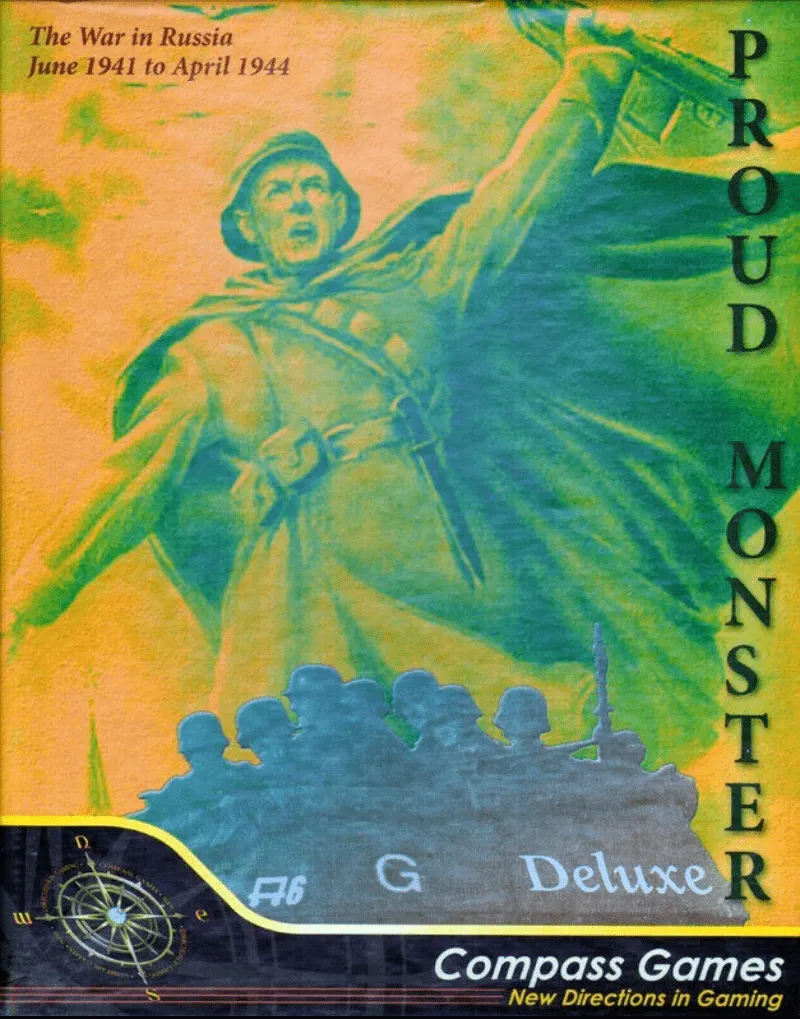
- Pozycja w BGG
- BGG #11 680
- Ocena BGG
- 7,8
Proud Monster Deluxe
- 2–6 graczy
- 1500 min
- Złożoność 3,5/5
- 2011
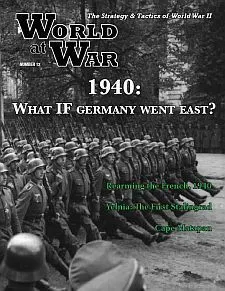
2010
Pomoc w zasadach gry 1940: What If Germany Went East?
Zrozumiałe wyjaśnienia tur, efektów kart i spornych sytuacji z odnośnikami do oficjalnych źródeł i zapisaną historią pytań.
Dla 2 graczy
Co chcesz wiedzieć?
Odpowiedzi pochodzą z oficjalnej instrukcji, ze stroną do sprawdzenia.
1940: What If Germany Went East? to gra planszowa wydana w 2010 roku dla 2–4 graczy, z rozgrywką trwającą 240 minut i dla osób od 12 lat. Projekt gry: Ty Bomba. Główne mechaniki: Hexagon Grid, Simulation i Ratio / Combat Results Table.
Po angielsku
The conjectured departure from the historic timeline that resulted in this alternative history wargame is assumed to have taken place in mid-September 1939. At that time, as his forces are completing the conquest of Poland, Hitler receives a flash of intuition. That is, he can’t help but notice the strategic paralysis of the Anglo-French, who do nothing to try to prevent the downfall of their fast-disappearing eastern ally Poland. From that he concludes it would be a waste of time to redeploy the Wehrmacht to the western front in 1940. He tells his generals: “The time will never be better to destroy the Bolshevik power than in the coming year. We will continue to have nothing to fear in the west. The British and French simply do not want war; they are afraid of it. Once we’ve taken Moscow, we’ll take Paris and London by telephone.” Accordingly, he also tells his foreign minister to drop all negotiations aimed at revising the original territorial split set out in the accords with the USSR the previous month. Most importantly, Lithuania, originally in the German “sphere of interest,” is not traded for a further slice of Polish territory. All of which has resulted in this low-complexity, strategic-level, alternative history wargame. In it, two to four players can investigate the possibilities inherent in a changed German strategy for 1940. The West Front map is scaled at 16 miles per hexagon. The Eastern Front map is scaled at 25 miles per hex. All Soviet units are armies; all other forces in the game are corps. Each game turn on both maps equals half a month. This game can be played by two, three or four. If two play, one commands the Germans, while the other commands both the Anglo-French and Soviets. If played by three, one player commands the Germans, one player commands the Anglo-French, and the third commands the Soviets. If four play, one player commands the Germans on the west map; the second commands the Germans on the east map; the third commands the Soviets, and the fourth commands the Anglo-French. The rules contain some 17,000 words, which means experienced players can finish it in about four hours. Rules cover such things as: neutrals, fog of war, airpower, 7th Flieger Corps, Soviet 1st Shock Army, fortifications, and more. The turn sequence is as follows. German Player Turn A. German Airpower & Strategic Transfer Phase B. German West Front Movement Phase C. German West Front Combat Phase D. German East Front Movement or Combat Phase E. German East Front Combat or Movement Phase F. German Replacement Phase G. German Moscow-Capture Resolution Phase H. German Terminal Supply Check Phase Soviet Player Turn A. Soviet Movement Phase B. Soviet Combat Phase C. Soviet Grand-Strategy Phase 1. Resolve Far East Front 2. Resolve Arctic Front 3. Resolve Southwest Front D. Soviet Terminal Supply Check Phase E. Soviet Reinforcement & Replacement Placement Phase Anglo-French Player Turn A. Anglo-French Armor Doctrine Phase B. Anglo-French Movement Phase C. Anglo-French Combat Phase D. Anglo-French Terminal Supply Check Phase E. Anglo-French Replacement Phase
Według katalogu 1940: What If Germany Went East? obsługuje od 2 do 4 graczy. Ten zakres odpowiada liczbie graczy podanej przez wydawcę, więc grę można przygotować dla dowolnej grupy w jego granicach. Przygotowanie, niektóre zasady i punktacja mogą jednak różnić się w zależności od liczby graczy; dokładną konfigurację sprawdź w instrukcji swojego wydania.
Podany czas rozgrywki w 1940: What If Germany Went East? wynosi 240 minut. To szacunek wydawcy dla pełnej partii. Rzeczywisty czas zależy od grupy, liczby graczy i znajomości zasad: pierwsze partie zwykle trwają dłużej, a doświadczone grupy kończą szybciej. Przygotowanie gry i tłumaczenie zasad nie są wliczone w ten szacunek.
Katalog podaje dla 1940: What If Germany Went East? wiek od 12 lat. To zalecenie wydawcy, które uwzględnia wymagania dotyczące czytania, złożoność zasad i drobne elementy, a nie tylko tematykę. Młodsi gracze często mogą dołączyć z pomocą dorosłego; sprawdź zalecenie wiekowe swojego wydania i weź pod uwagę doświadczenie grupy z grami planszowymi.
1940: What If Germany Went East? ma ocenę złożoności 2,0 na 5 według graczy BoardGameGeek, co czyni ją grą raczej lekką. Ocena pokazuje, ile znajomości zasad, planowania i podejmowania decyzji wymaga typowa rozgrywka. Cięższe gry wymagają dłuższego pierwszego tłumaczenia, dlatego przed wieczorem z grami warto skorzystać z przewodnika przygotowania.
1940: What If Germany Went East? należy do tych kategorii: Wargame i World War II. Główne mechaniki to Hexagon Grid, Simulation i Ratio / Combat Results Table. Kategorie opisują temat i świat gry, a mechaniki to, co gracze faktycznie robią w swojej turze. Każda mechanika prowadzi do strony katalogu z podobnymi grami, co pomaga znaleźć coś porównywalnego na kolejny wieczór.
Autorzy wymienieni przy 1940: What If Germany Went East? to: Ty Bomba. Te informacje pochodzą z opublikowanych danych gry i wskazują osoby odpowiedzialne za jej projekt, a nie ilustratorów czy wydawców. Strony autorów w MeepleRules zbierają inne tytuły tych samych twórców, co pomaga, gdy gra ci się podoba i szukasz podobnych.
W katalogu 1940: What If Germany Went East? figuruje jako gra podstawowa. Można w nią grać samodzielnie, korzystając z elementów z pudełka, bez żadnego innego tytułu. Dodatki, jeśli istnieją, dokładają nową zawartość lub zasady i są wymienione w katalogu osobno, z odnośnikiem do tej gry podstawowej.